Judith Van de Water is professor of internal medicine at the University of California, Davis and director of the UC Davis Center for Children’s Environmental Health.
Judy Van de Water
Professor
University of California, Davis
From this contributor
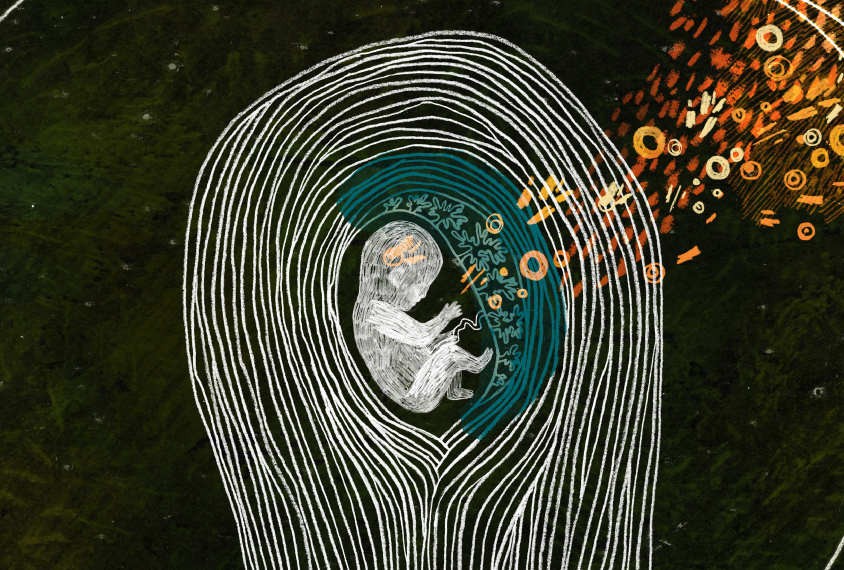
What the placenta could reveal about autism
Understanding the interactions between the placenta and the uterine lining could explain how maternal immune activation leads to autism.
What the placenta could reveal about autism
By
Judy Van de Water
19 February 2019 | 4 min read

Premature ideas
A New York Times opinion column on 25 August suggested that at least some cases of autism could be considered inflammatory disorders. But this theory is still in its infancy.
Explore more from The Transmitter
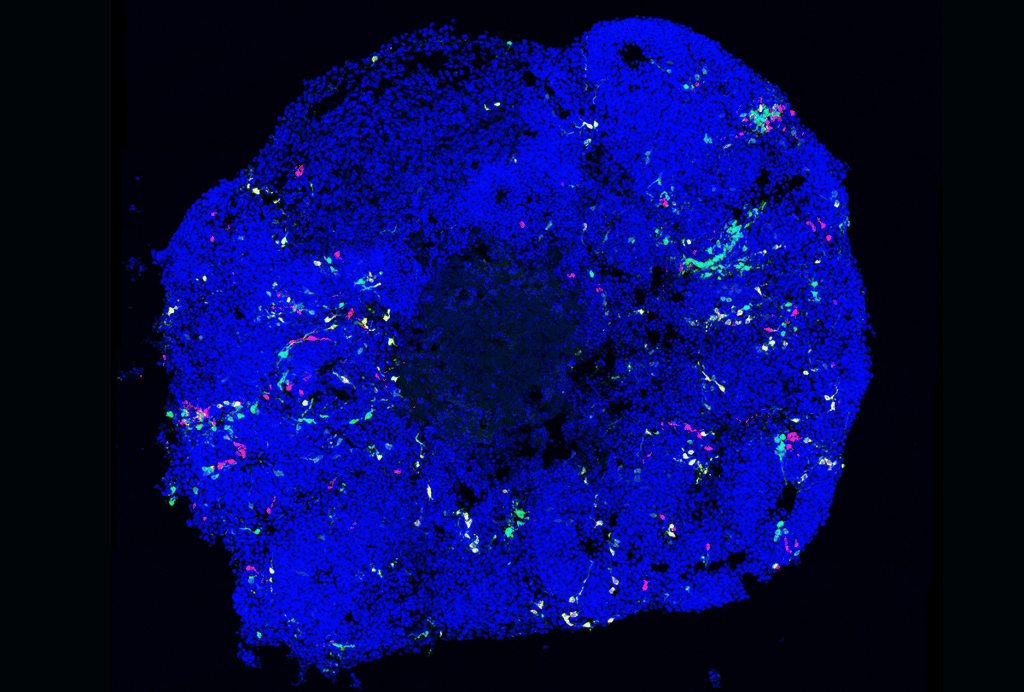
Hasty stem cells highlight potential limitation with cortical organoids
The models recapitulate many key developmental processes, but some radial glial cells in mouse organoids make neurons earlier than they should.
Hasty stem cells highlight potential limitation with cortical organoids
The models recapitulate many key developmental processes, but some radial glial cells in mouse organoids make neurons earlier than they should.
By
Giorgia Guglielmi
22 September 2026 | 4 min read

Two populations of neurons, two effects on sociability; and more
Here is a roundup of autism-related news and research spotted around the web for the week of 21 September.
Two populations of neurons, two effects on sociability; and more
Here is a roundup of autism-related news and research spotted around the web for the week of 21 September.
By
Jill Adams
22 September 2026 | 2 min read
Finding the Rett syndrome gene and ways to fix it
Kevin Mitchell talks with Huda Zoghbi about her work identifying the MECP2 gene, its role in the brain and therapies to address its dysfunction.
Finding the Rett syndrome gene and ways to fix it
Kevin Mitchell talks with Huda Zoghbi about her work identifying the MECP2 gene, its role in the brain and therapies to address its dysfunction.
By
Kevin Mitchell
21 September 2026 | 4 min read