Basal ganglia
Recent articles
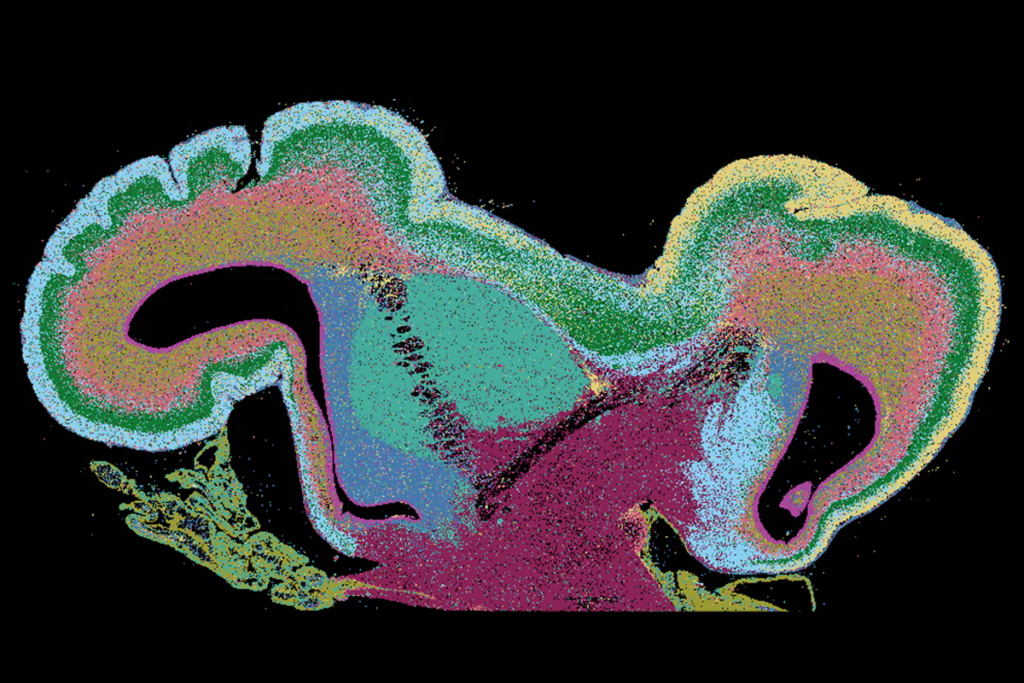
Among brain changes studied in autism, spotlight shifts to subcortex
The striatum and thalamus are more likely than the cerebral cortex to express autism variants or bear transcriptional changes, two unpublished studies find.
Among brain changes studied in autism, spotlight shifts to subcortex
The striatum and thalamus are more likely than the cerebral cortex to express autism variants or bear transcriptional changes, two unpublished studies find.
David Robbe challenges conventional notions of time and memory
Inspired by his own behavioral neuroscience research and the philosophy of Henri Bergson, Robbe makes the case that we don't have clocks in our brains but instead perceive time by way of our interactions with the world.
David Robbe challenges conventional notions of time and memory
Inspired by his own behavioral neuroscience research and the philosophy of Henri Bergson, Robbe makes the case that we don't have clocks in our brains but instead perceive time by way of our interactions with the world.
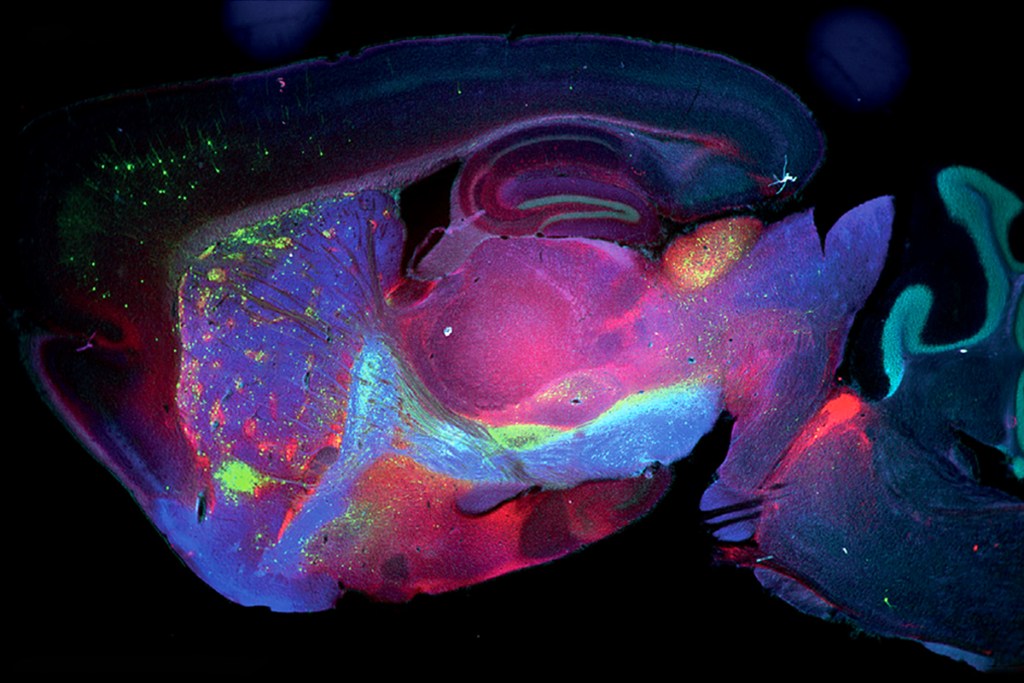
Newly characterized striatal circuits add twist to ‘go/no-go’ model of movement control
The two novel pathways control dopamine release in opposing ways and may link motivation and mood to action, a new study shows.
Newly characterized striatal circuits add twist to ‘go/no-go’ model of movement control
The two novel pathways control dopamine release in opposing ways and may link motivation and mood to action, a new study shows.
Explore more from The Transmitter
How new technologies can bring primatologists and systems neuroscientists together
The two groups study the same behavioral phenomena yet rarely interact or read each other's work—a mutual blind spot that weakens both fields. New technologies offer a chance to bring them together.
How new technologies can bring primatologists and systems neuroscientists together
The two groups study the same behavioral phenomena yet rarely interact or read each other's work—a mutual blind spot that weakens both fields. New technologies offer a chance to bring them together.

Creating community through grant support
Fiona Sanderson, a senior program manager at the Brain Canada Foundation, shares how she got into grant administration and how she helps connect researchers with funding and one another.
Creating community through grant support
Fiona Sanderson, a senior program manager at the Brain Canada Foundation, shares how she got into grant administration and how she helps connect researchers with funding and one another.
This paper changed my life: A first glimpse into the ‘middle’ of brain processing
Work by Jeffrey Moran and Robert Desimone showed that monkeys could focus their attention on different stimuli in their visual field without shifting their gaze. Their work marked a key milestone in the emergence of cognitive neuroscience.
This paper changed my life: A first glimpse into the ‘middle’ of brain processing
Work by Jeffrey Moran and Robert Desimone showed that monkeys could focus their attention on different stimuli in their visual field without shifting their gaze. Their work marked a key milestone in the emergence of cognitive neuroscience.