Ilina Singh is professor of neuroscience and society at the University of Oxford in the United Kingdom.

Ilina Singh
Professor, University of Oxford
University of Oxford
From this contributor

Questions for Ilina Singh: Ethics of ‘baby sib’ studies
Researchers are studying the infant siblings of children with autism, with hopes of improving the disorder’s diagnosis and treatment. They need to recognize the risks of these ‘baby sib’ studies, cautions ethicist Ilina Singh.
Questions for Ilina Singh: Ethics of ‘baby sib’ studies
By
Nicholette Zeliadt
14 July 2015 | 6 min read
Explore more from The Transmitter
Is it time for neuroscience to shift its focus from a computational mind to a navigating mind?
Andrea Hiott explains her navigational approach to the mind, and why now is the time to embrace seemingly paradoxical findings in neuroscience.
Is it time for neuroscience to shift its focus from a computational mind to a navigating mind?
Andrea Hiott explains her navigational approach to the mind, and why now is the time to embrace seemingly paradoxical findings in neuroscience.
By
Paul Middlebrooks
21 October 2026 | 1 min read
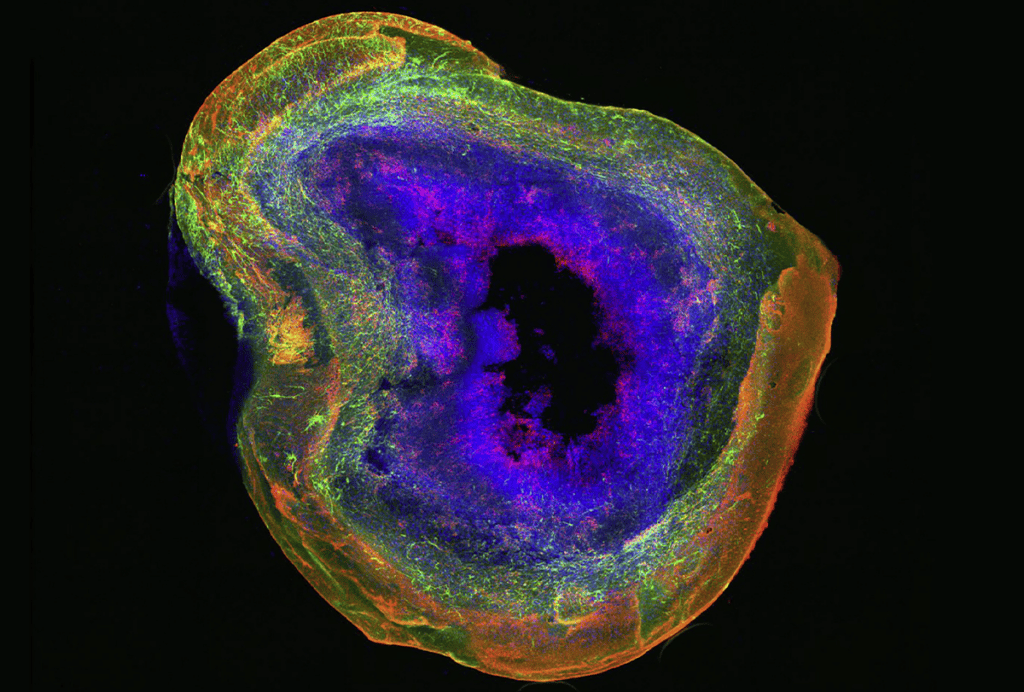
Human brain organoids come of age—but still have room to grow
The U.S. government has touted organoids as an alternative to animals for studying the brain. The model has improved since its debut in 2013, but scientists are still working to overcome key limitations: immaturity, consistency and the lack of vascularization.
Human brain organoids come of age—but still have room to grow
The U.S. government has touted organoids as an alternative to animals for studying the brain. The model has improved since its debut in 2013, but scientists are still working to overcome key limitations: immaturity, consistency and the lack of vascularization.
By
Claudia López Lloreda
21 October 2026 | 9 min read

Finding neuroheterogeneity’s sweet spot
Once thought to be detrimental to memory processing, neuronal diversity—at the right ‘Goldilocks’ dose—is a new boon to theoretical neuroscience.
Finding neuroheterogeneity’s sweet spot
Once thought to be detrimental to memory processing, neuronal diversity—at the right ‘Goldilocks’ dose—is a new boon to theoretical neuroscience.
By
Natalia Mesa
20 October 2026 | 7 min read