Kai Gietzen
From this contributor
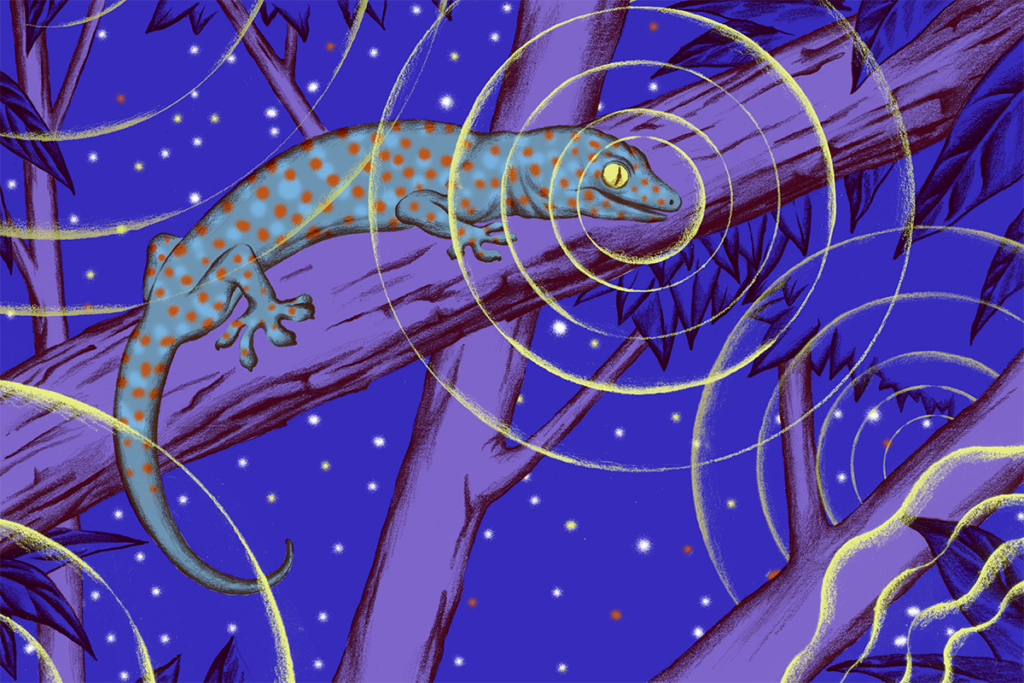
Neuro’s ark: Sounding out the evolution of hearing with geckos
Catherine Carr explains her discovery that geckos retain a vibration-sensing pathway previously thought to be lost when animals moved onto land.
Neuro’s ark: Sounding out the evolution of hearing with geckos

Neuro’s ark: Spying on the secret sensory world of ticks
Carola Städele, a self-proclaimed “tick magnet,” studies the arachnids’ sensory neurobiology—in other words, how these tiny parasites zero in on their next meal.
Neuro’s ark: Spying on the secret sensory world of ticks
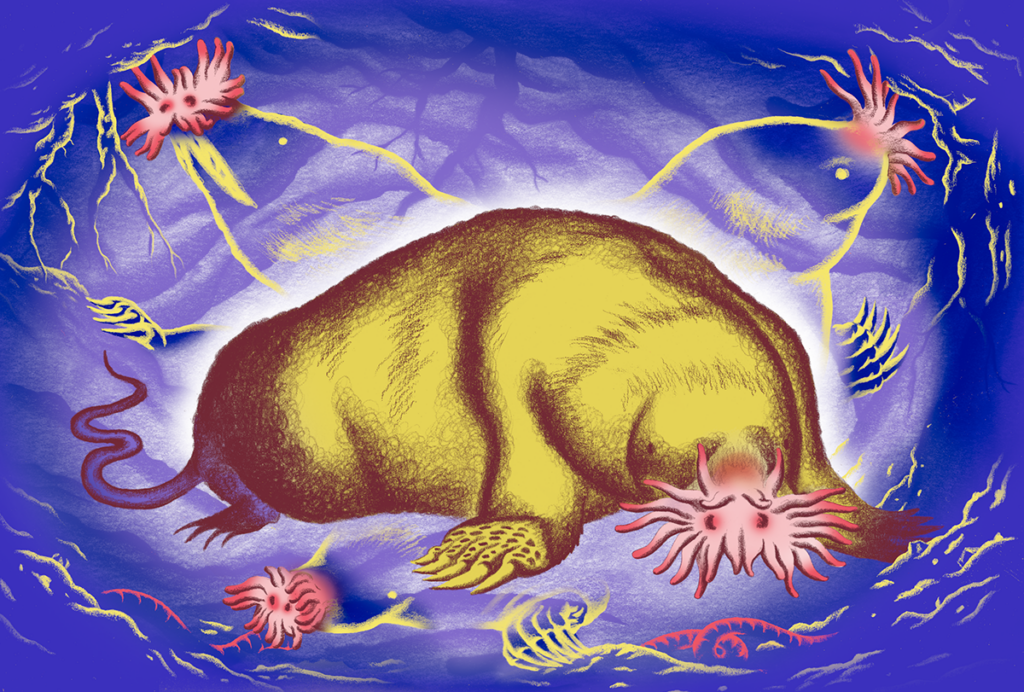
Neuro’s ark: Understanding fast foraging with star-nosed moles
“MacArthur genius” Kenneth Catania outlined the physiology behind the moles’ stellar foraging skills two decades ago. Next, he wants to better characterize their food-seeking behavior.
Neuro’s ark: Understanding fast foraging with star-nosed moles
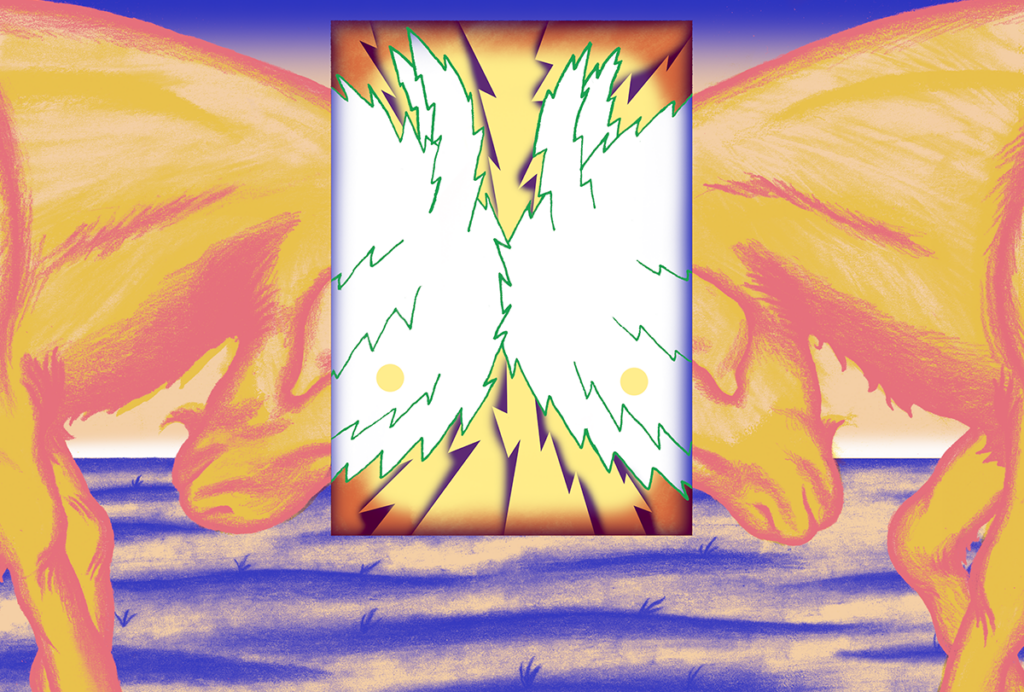
Neuro’s ark: How goats can model neurodegeneration
Since debunking an urban legend that headbutting animals don’t damage their brain, Nicole Ackermans has been investigating how the behavior correlates with neurodegeneration.
Neuro’s ark: How goats can model neurodegeneration
Explore more from The Transmitter
Why neural foundation models work, and what they might—and might not—teach us about the brain
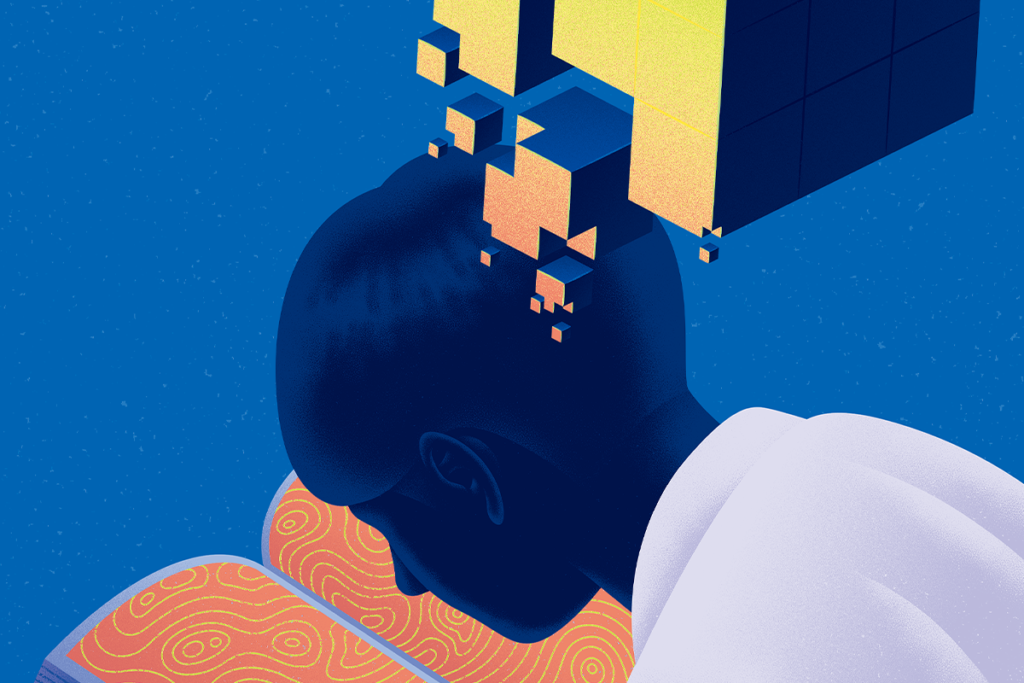
These models can partly generalize across species, brain regions and tasks, suggesting that a set of machine-learnable rules govern neural population activity. But will we be able to understand them?
Why neural foundation models work, and what they might—and might not—teach us about the brain
These models can partly generalize across species, brain regions and tasks, suggesting that a set of machine-learnable rules govern neural population activity. But will we be able to understand them?
Error equation predicts brain’s ability to generalize
Four statistical measurements of neural network geometry capture how well brains and artificial networks use what they already know to solve new problems, a study suggests.
Error equation predicts brain’s ability to generalize
Four statistical measurements of neural network geometry capture how well brains and artificial networks use what they already know to solve new problems, a study suggests.

Embrace complexity to improve the translatability of basic neuroscience
Researchers must learn to view heterogeneity as an essential feature of the systems they study and a central consideration in experimental design, not a variable to control for or reduce.
Embrace complexity to improve the translatability of basic neuroscience
Researchers must learn to view heterogeneity as an essential feature of the systems they study and a central consideration in experimental design, not a variable to control for or reduce.