Nanthia Suthana is professor of neurosurgery, biomedical engineering and neurobiology at Duke University. Her lab studies the neural mechanisms of human memory, emotion and spatial navigation using intracranial recordings, neuromodulation and wearable technologies during real-world behavior. Her work bridges basic neuroscience and clinical translation, with the goal of developing novel treatments for neurological and psychiatric disorders. Suthana earned her B.S. and Ph.D. at the University of California, Los Angeles. She has led interdisciplinary research programs integrating neuroscience, engineering and clinical practice, with an emphasis on studying brain function in naturalistic settings.

Nanthia Suthana
Professor of neurosurgery, biomedical engineering and neurobiology
Duke University
From this contributor
Selected articles
- “Human neural dynamics of real-world and imagined navigation” | Nature Human Behavior
- “Boundary-anchored neural mechanisms of location-encoding for self and others” | Nature
- “Wireless programmable recording and stimulation of deep brain activity in freely moving humans” | Neuron
- “A wearable platform for closed-loop stimulation and recording of single-neuron and local field potential activity in freely moving humans” | Nature Neuroscience
- “A pilot study of closed-loop neuromodulation for treatment-resistant post-traumatic stress disorder” | Nature Communications
Explore more from The Transmitter
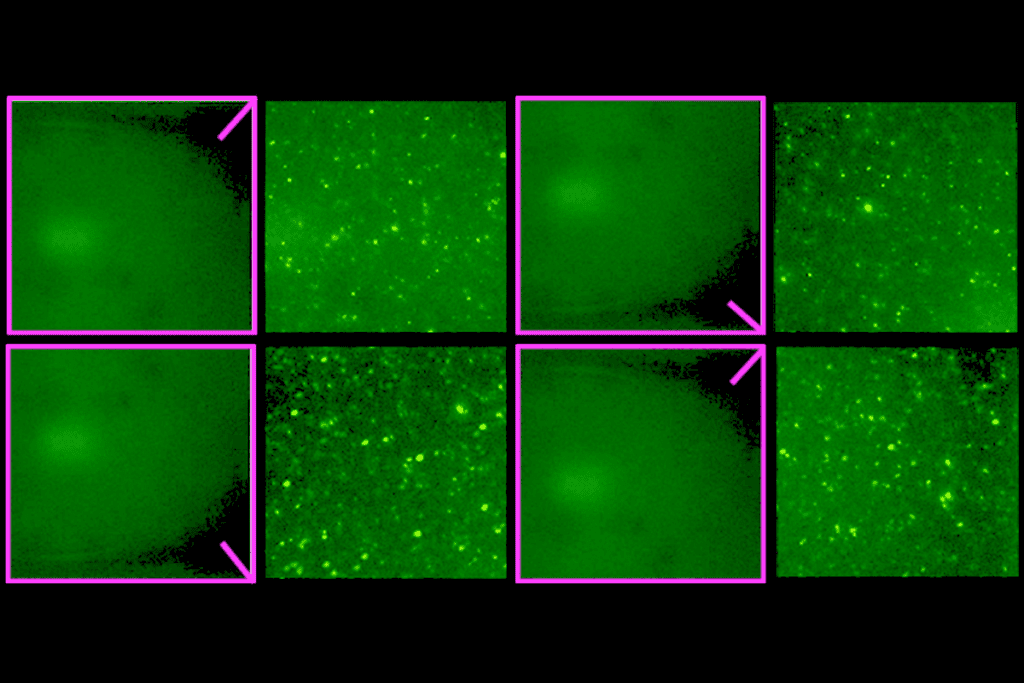
University probe leads to retraction of four neural tube studies
The University of Maryland conducted an internal investigation that identified image duplications and other data integrity issues in the studies, according to the retraction notices.
University probe leads to retraction of four neural tube studies
The University of Maryland conducted an internal investigation that identified image duplications and other data integrity issues in the studies, according to the retraction notices.
By
Claudia López Lloreda
16 October 2026 | 6 min read
Highly cited autism paper earns expression of concern over data duplications
The notice, published in Nature last week, also addressed an image duplication identified by a prominent research-integrity sleuth.
Highly cited autism paper earns expression of concern over data duplications
The notice, published in Nature last week, also addressed an image duplication identified by a prominent research-integrity sleuth.
By
Madeline Shaw
16 October 2026 | 4 min read
Govern neurodata by how it’s used, not where it’s from
New neurodata laws will shape how researchers gather, share and reuse brain data. A use-based governance protects basic researchers and those whose data are being used, without freezing science.
Govern neurodata by how it’s used, not where it’s from
New neurodata laws will shape how researchers gather, share and reuse brain data. A use-based governance protects basic researchers and those whose data are being used, without freezing science.
By
José M. Muñoz
16 October 2026 | 7 min read