Across the United States and Europe, funding is flowing to develop and advance non-animal-based research methods.
Last week, the U.S. National Institutes of Health announced $150 million—its first round of funding under the Complement Animal Research in Experimentation program—dedicated to the study and testing of novel alternative methods (NAMs), such as organoids and computational modeling technologies.
This outlay signals an “inflection point” for NAMs, says Danilo Tagle, who retired in January from his role as director of the Office of Special Initiatives at the National Center for Advancing Translational Sciences and is now an adviser on NAMs for the NIH. “NIH decided that it is time to move this field forward in a big way and to put major investments in this,” he says.
The announcement follows changes at the NIH that push for the integration of NAMs into research proposals, as reported by The Transmitter. The NIH also plans to contribute about $20 million to the Validation & Qualification Network, an initiative that enables partnerships with other federal agencies and more than 40 industry partners and nonprofit organizations in the private sector, in an effort to make the program global, Tagle adds.
A similar funding boost in Europe has followed the European Union Biotech Act proposed last December, which emphasized the importance of accelerating the development of NAMs. In February, the EU opened a call for proposals that involve NAMs. That same month, Horizon Europe, an EU research funding initiative, launched a program—called VISI-ON-BRAIN: Cutting-edge Human In Vitro and In Silico Biomedical Tools on Brain Disorders—that plans to train 15 doctoral researchers across eight countries in in-vitro and in-silico approaches to study human neurological diseases.
This investment in NAMs may be outpacing the science, particularly for the study of complex cognition, because these models have not been entirely validated, says Arnold Kriegstein, professor of neurology at the University of California, San Francisco. “There’s a tendency to prematurely use imperfect models as though they were already perfected.”
S
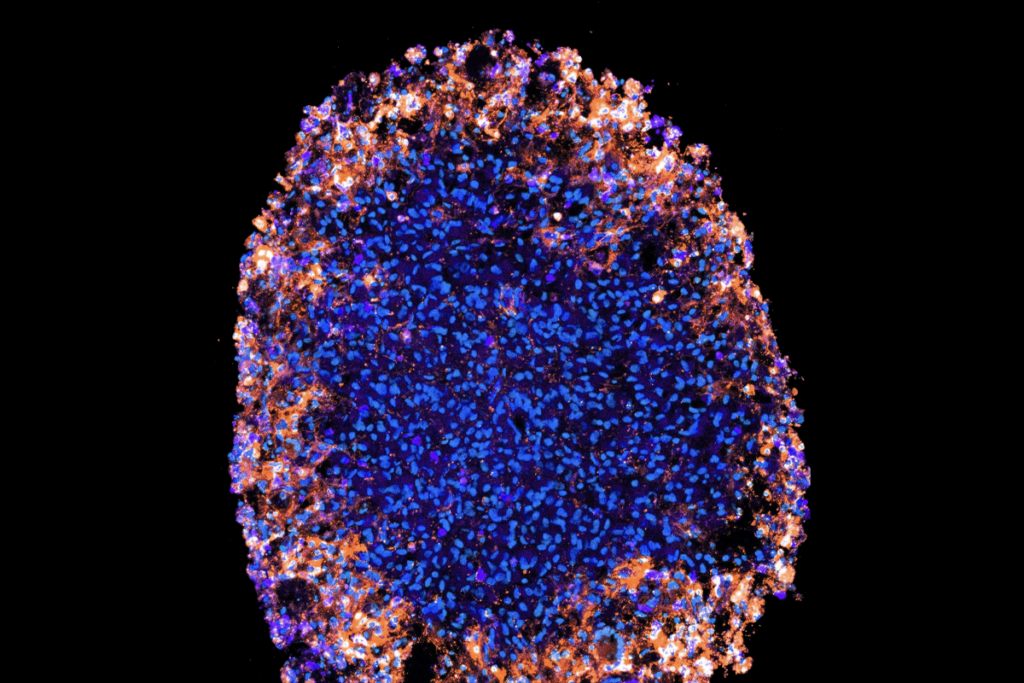
One of the five technology development centers will be dedicated to testing and using the Drug Research Organoid-Integrated Development Platform, or DROIDp, to develop a model that will allow the study of higher-order processes such as learning and memory, says Lena Smirnova, assistant professor of environmental health and engineering at Johns Hopkins University and lead principal investigator on the grant. Johns Hopkins University received $15 million across five years for 11 principal investigators to establish the center, Smirnova says.
But organoids have a long way to go before they can be used to study learning and memory, says Kriegstein, who researches neurodevelopment using brain organoids. “There’s a lot more useful things that could be done to better understand the function of organoids and how well they actually reflect what goes on in the human brain.”
Organizations in Europe, such as the League of European Research Universities, have expressed similar concerns regarding NAMs, particularly in response to the push to phase out animal research.
The recently proposed EU Biotech Act states that “NAMs applied in biological research, early discovery, preclinical development … have the potential to generate scientific and technological data that are comparable to, or in some cases more informative and generated more rapidly than, those obtained through current standard methods.”
But this month, the European Brain Council released a statement asking that increased funding for NAMs be accompanied by sustained support for fundamental neuroscience and robust validation frameworks. NAMs should be “investigated in a scientifically nuanced manner that recognises their complementarity with, rather than substitution for, existing models, including animal research,” the council wrote.
Some aspects of human biology may be especially difficult to capture with NAMs, says Gustavo Stolovitzky, professor of pathology at New York University and lead principal investigator of the NYU-Sage NAMs Data Hub and Coordination Center. But ultimately, the goal is to have the new technologies work in parallel with animal research and have them complement each other, he says.
“We need to give it time,” he says. “The proposal is not to end animal experimentation but explore the limits where we can reduce it, both for ethical reasons but also for acceleration of the research.”