Policy
Recent articles
Funding for animal research alternatives reaches ‘inflection point’
The United States and Europe are dedicating hundreds of millions of dollars in funding to advance novel alternative methods, but not all neuroscientists see this as a positive step.
Funding for animal research alternatives reaches ‘inflection point’
The United States and Europe are dedicating hundreds of millions of dollars in funding to advance novel alternative methods, but not all neuroscientists see this as a positive step.

Neuroscientists challenge NIH’s proposed human-data access policy
The changes would restrict the sharing of human neuroimaging, transcriptomic and genetic data.
Neuroscientists challenge NIH’s proposed human-data access policy
The changes would restrict the sharing of human neuroimaging, transcriptomic and genetic data.

New autism committee positions itself as science-backed alternative to government group
The Independent Autism Coordinating Committee plans to meet at the same time as the U.S. federal Interagency Autism Coordinating Committee later this month—and offer its own research agenda.
New autism committee positions itself as science-backed alternative to government group
The Independent Autism Coordinating Committee plans to meet at the same time as the U.S. federal Interagency Autism Coordinating Committee later this month—and offer its own research agenda.
Two primate centers drop ‘primate’ from their name
The Washington and Tulane National Biomedical Research Centers—formerly called National Primate Research Centers—say they made the change to better reflect the breadth of research performed at the centers.
Two primate centers drop ‘primate’ from their name
The Washington and Tulane National Biomedical Research Centers—formerly called National Primate Research Centers—say they made the change to better reflect the breadth of research performed at the centers.

Is there a neuroscientist in the House?
Sam Wang, a neuroscientist running for the U.S. House of Representatives, has been considering American democracy for decades.
Is there a neuroscientist in the House?
Sam Wang, a neuroscientist running for the U.S. House of Representatives, has been considering American democracy for decades.
Oregon primate research center to negotiate with NIH on possible transition to sanctuary
The board of directors at Oregon Health & Science University, which runs the primate center, voted unanimously in favor of the move.
Oregon primate research center to negotiate with NIH on possible transition to sanctuary
The board of directors at Oregon Health & Science University, which runs the primate center, voted unanimously in favor of the move.

NIH scraps policy that classified basic research in people as clinical trials
The policy aimed to increase the transparency of research in humans but created “a bureaucratic nightmare” for basic neuroscientists.
NIH scraps policy that classified basic research in people as clinical trials
The policy aimed to increase the transparency of research in humans but created “a bureaucratic nightmare” for basic neuroscientists.

‘Peer review is our strength’: Q&A with Walter Koroshetz, former NINDS director
In his first week off the job, the former National Institute of Neurological Disorders and Stroke director urges U.S. scientists to remain optimistic about the future of neuroscience research, even if the executive branch “may not value what we do.”
‘Peer review is our strength’: Q&A with Walter Koroshetz, former NINDS director
In his first week off the job, the former National Institute of Neurological Disorders and Stroke director urges U.S. scientists to remain optimistic about the future of neuroscience research, even if the executive branch “may not value what we do.”

After NINDS director ouster, 40 neuroscience organizations press U.S. Congress for oversight over hiring process
A letter signed by the groups asks Congress to ensure that scientific expertise remains a priority in the search for a new director of the National Institute of Neurological Disorders and Stroke.
After NINDS director ouster, 40 neuroscience organizations press U.S. Congress for oversight over hiring process
A letter signed by the groups asks Congress to ensure that scientific expertise remains a priority in the search for a new director of the National Institute of Neurological Disorders and Stroke.
BRAIN Initiative researchers ‘dream big’ amid shifts in leadership, funding
But whether the initiative’s road map for the next decade is feasible remains an open question.
BRAIN Initiative researchers ‘dream big’ amid shifts in leadership, funding
But whether the initiative’s road map for the next decade is feasible remains an open question.
Explore more from The Transmitter
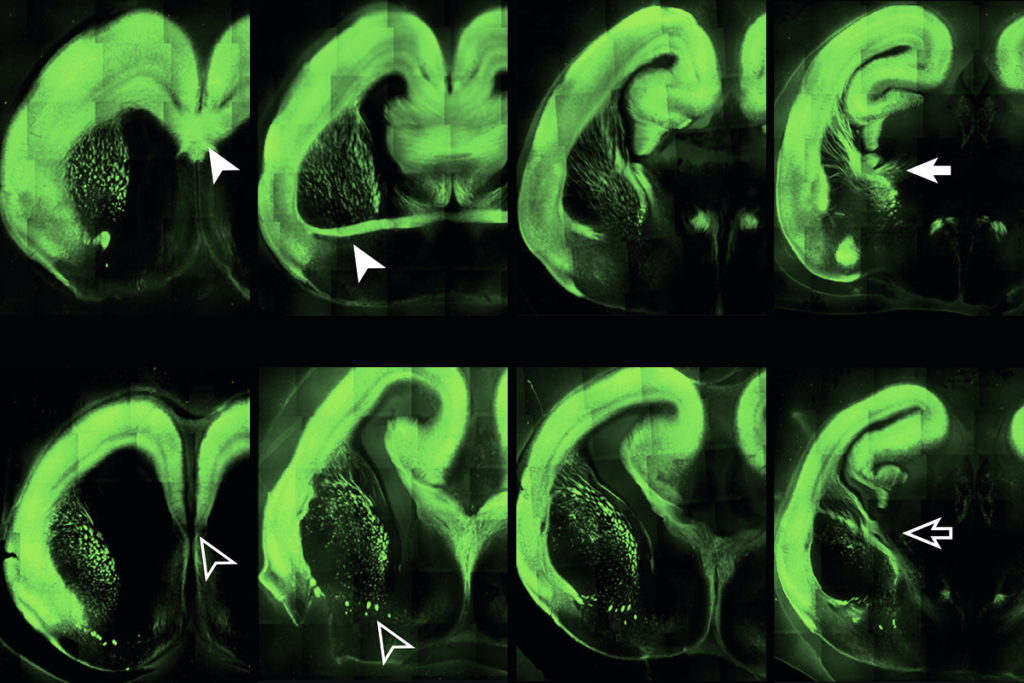
Cortical evolution, ZBTB18, and more
Here is a roundup of autism-related news and research spotted around the web for the week of 30 March.
Cortical evolution, ZBTB18, and more
Here is a roundup of autism-related news and research spotted around the web for the week of 30 March.
Letter asks Congress for nearly $500 million to sustain BRAIN Initiative
The one-time boost would help counter the planned end this year to one of the program’s long-standing funding streams, which will result in a $195 million drop in funding for fiscal year 2027.
Letter asks Congress for nearly $500 million to sustain BRAIN Initiative
The one-time boost would help counter the planned end this year to one of the program’s long-standing funding streams, which will result in a $195 million drop in funding for fiscal year 2027.

How to teach programming in the age of AI
Scientists and educators are concerned about students using artificial intelligence to shortcut their learning. But there are also opportunities, especially when it comes to teaching neuroscience students how to code.
How to teach programming in the age of AI
Scientists and educators are concerned about students using artificial intelligence to shortcut their learning. But there are also opportunities, especially when it comes to teaching neuroscience students how to code.