When Shan Siddiqi arrived in Australia in February to speak at the 2026 Noosa Brain Workshop, he was still thinking about a paper published in Nature Neuroscience three weeks prior. The work had criticized lesion network mapping (LNM), a neuroimaging method that Siddiqi uses as the basis for much of his work.
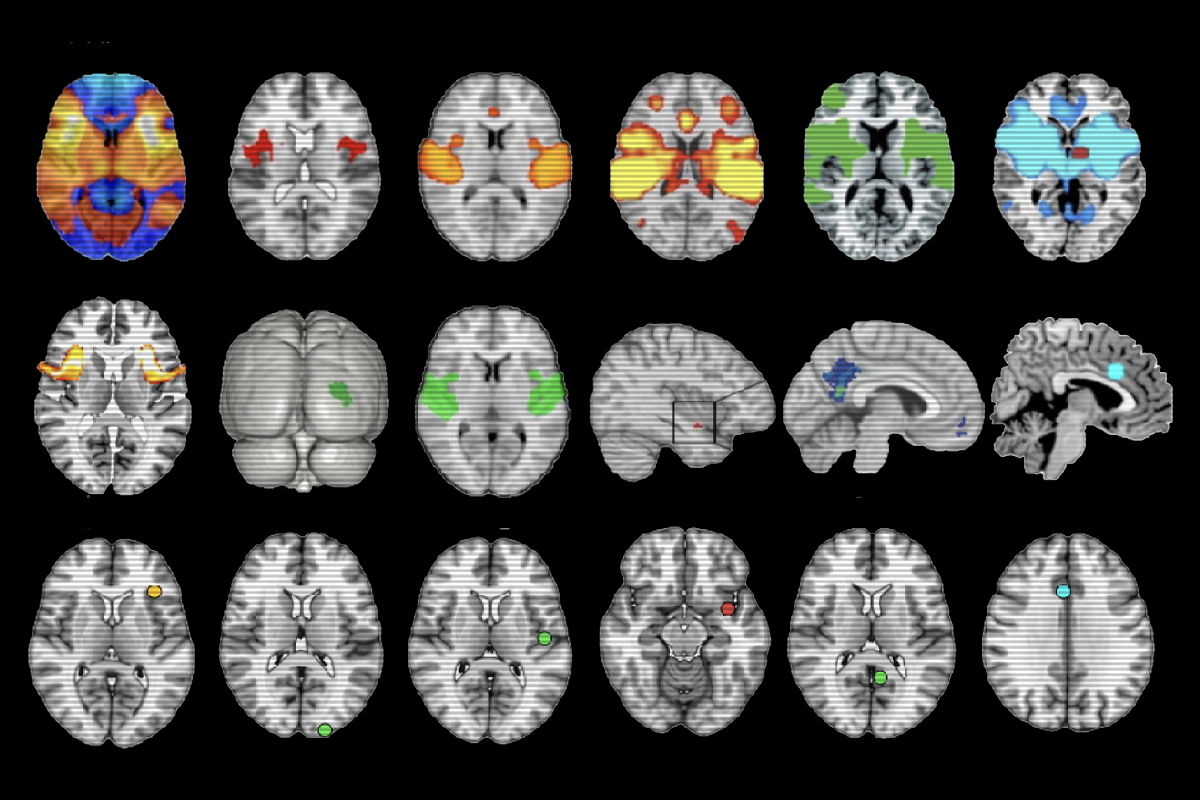
LNM uses the location of brain lesions in various health conditions to infer information about networks of brain activity altered in those conditions. But the January paper claimed the approach produces biased results, and points to largely the same brain networks no matter the condition.
After reading the full paper, however, Siddiqi, associate professor of psychiatry at Harvard Medical School, decided the authors’ criticism was toothless—it highlighted issues that he and his colleagues were aware of, and had already developed methods to address.
Yet to his dismay, in the following days and weeks the criticism kept coming, both on social media and in news articles, including one by The Transmitter.
The issue hung over the conference, too. During a social event on the first night of the Noosa meeting, other attendees asked Siddiqi, as a leading proponent of the method, for his thoughts, and he decided he needed to address the criticism in his talk the following day.
The next afternoon, he told the audience of senior neuroimaging researchers that he took the challenge raised in the paper seriously, and said it had caused him and his co-author Michael D. Fox to reanalyze their data in collaboration with neuroimaging statisticians. He then presented the two competing hypotheses to the audience—LNM findings are disease specific versus LNM is mathematically flawed—and explained how he and Fox tested both with real data. The results seemed to validate LNM, Siddiqi said, leading him to conclude that the critique rested on incorrect assumptions about how the method is implemented.
Still, he was open to hearing feedback, he told the crowd. Siddiqi and his team posted their reanalysis as a preprint two days later on bioRxiv, becoming part of a wave of new discussion around the method. Some agreed that LNM has limitations, but said those limitations could be overcome with appropriate statistical tests, many of which are already being implemented. Others argued against the criticisms in the Nature Neuroscience paper, asserting that the authors had overstated the amount of overlap across conditions.
Siddiqi and Fox, who is professor of neurology at Harvard Medical School and one of the original developers of LNM, are waiting on a response from the authors of the Nature Neuroscience critique, and they hope to publish the final version of their preprint alongside it. This is happening as LNM has ballooned in popularity since its development in 2015, with more than 200 papers published using the method and at least seven clinical trials ongoing. Despite that growth, the approach has yet to be truly challenged, Fox says, and maybe it’s time.
“Methodological debates are very, very good and very healthy for science,” he says. “And in fact, I would say that the lesion network mapping technique might have been overdue [for reassessment].”
I
Siddiqi first began using the method in 2018 as a medical fellow at Harvard. He had aimed to study how brain stimulation sites relate to clinical outcomes for neurological conditions, and he was initially unconvinced by LNM as an approach, he says. He did not think it could disentangle differences between individuals when all networks were pulled from the same reference connectome.
Still, he “got roped into a project” that required LNM, and was surprised to see that, no matter which way he tried to “break” LNM by pushing rigorous statistical tests or comparing to clinical outcomes, the output was condition specific. Eventually, he says, “I was absolutely convinced that the results were real.” Siddiqi has since co-authored more than 30 papers that used LNM, and he and his colleagues recently completed clinical trials that implement LNM to target networks for treatment of anxiety and depression.
In the Nature Neuroscience critique, Martijn van den Heuvel, professor of computational neuroimaging and brain systems at the Vrije Universiteit Amsterdam, and his colleagues mirror Siddiqi’s early concerns about the high levels of similarity in maps produced by LNM, regardless of the condition being studied. Their mathematical analysis suggested that any condition assessed with LNM would eventually converge to a nearly identical network map, rendering the output meaningless.
Yet Siddiqi and his colleagues say they accounted for that overlap in their own work by applying statistical tests, including specificity testing. That is not something van den Heuvel and his team did, Siddiqi says.
Although van den Heuvel’s paper did raise important concerns about LNM’s limitations due to overlap in LNM maps, it did not conclusively show that the maps contain no condition-specific information, says František Váša, senior lecturer in machine learning and computational neuroscience at King’s College London. As a result, “to me, the truth lies somewhere in between” the arguments put forth by van den Heuvel’s team and by Fox and Siddiqi’s, he says.
Van den Heuvel says he disagrees that specificity testing can overcome what he sees as the fundamental issue: that LNM is mathematically set up to pull networks from a single connectome. “If people think that there is a solution in terms of doing additional testing, then I think that’s up to them,” he says. He adds that the way forward should include solutions tested with real data, which are likely to take time. An increase in data-sharing would also help the field validate the approach, he says.
But the conventions for such testing are not always clear, particularly for someone who has not been closely tracking the literature over time, says Marvin Petersen, a postdoctoral researcher at University Medical Center Utrecht, who uses LNM. “There has been kind of an evolution of techniques, in the sense that everything got statistically a little bit more rigorous, and the way it has been implemented has changed,” Petersen says. “But possibly this has been a little bit too implicit for every reader of the papers.”
Fox agrees that he and his colleagues had not made that analysis pipeline explicit. “One of the things we learned from this is we have not published a very clear methodological cookbook for how you do these analyses,” he says. “It would be very easy for someone to look at one of our figures, or listen to one of our presentations, and miss the importance of the specificity testing, or miss the importance of the validation testing. And so we’ve actually changed the way we present this.”
T
There is also the question of how to interpret LNM findings, says Janine Bijsterbosch, associate professor of radiology at Washington University in St. Louis, who told The Transmitter she reviewed van den Heuvel’s paper for Nature Neuroscience. She and her colleagues posted a preprint last month showing that symptom-based lesion maps for unrelated conditions also converge to a similar network pattern, suggesting that there may be something interesting about that shared map. “The original critique stands, in that there is more similarity than maybe we would have expected. And maybe that’s something that we need to think about more,” she says.
Van den Heuvel agrees that the field should be asking these questions. He also urges researchers to look back at past work and determine whether network maps identified using LNM, which may now form the basis of other research or clinical trials, were identified correctly.
Overall, the discussion has been productive, says Mac Shine, professor of systems neuroscience at the University of Sydney, who saw Siddiqi speak in Noosa. Even though the debate is still unfurling, Siddiqi’s talk inspired conversations with early-career researchers in his lab about how to best navigate scientific debates in the future, Shine says.
“This is kind of an ideal to aim for,” Shine says. “If someone criticizes your work, you don’t take it personally. You try to understand, in the most generous way possible, where they’re coming from and why they’d be worried about the problem.”
With more responses planned, the conversation around the uses and limitations of LNM should continue, Bijsterbosch says. She and her colleagues, for example, plan to present work on this topic at the upcoming Organization for Human Brain Mapping meeting in June. “I’m sure there will be plenty of discussions happening in the hallways there,” she says.