Listen to this story:
0:00
/
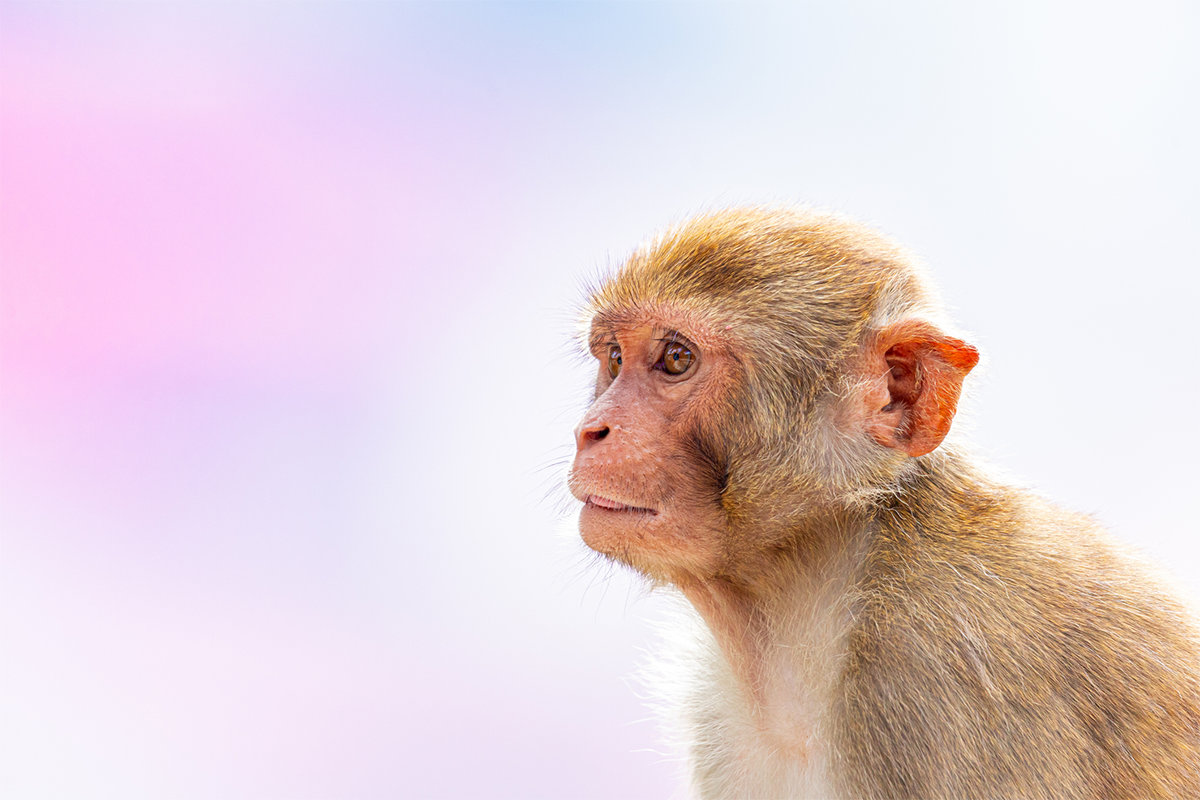
The board of directors at Oregon Health & Science University, which runs the primate center, voted unanimously in favor of the move.
Today the Oregon Health & Science University board of directors voted to begin negotiations with the U.S. National Institutes of Health to potentially transition the university’s primate research center to a sanctuary for the animals. The Oregon National Primate Research Center currently has more than $7.5 million in federally funded neuroscience research projects underway, according to a report from the university.
The decision does not “predetermine the future” of the primate center, board chair Susan King said at a public meeting today ahead of the vote. Instead, it allows the university to learn more about what transitioning into a sanctuary would entail and negotiate an agreement that aligns with its mission. At the same time, the center must stop breeding primates that are not required for ongoing research projects for the next six months.
Any agreement must include provisions to continue funding for existing research projects at the primate center, considerations to protect jobs at the center, and financial and management support for operating the animal sanctuary, according to the approved resolution.
The decision follows efforts to move away from animal testing at the U.S. Food and Drug Administration and end monkey research at the U.S. Centers for Disease Control and Prevention, as well as funding cuts to a major primate research center in the Netherlands. “The scientific community has faced coordinated and politically motivated attacks. This resolution appears to be a response to that pressure, not a decision grounding in evidence or long-term national need,” Rudolf Bohm, director of the Oregon National Primate Research Center, said during the public testimony portion of the board meeting.
Transitioning the center to a sanctuary could lead to a nonhuman primate shortage, which “endangers public health,” Vincent Costa, associate professor of psychiatry and behavioral sciences at Emory University—the site of another national primate research center—said during the public testimony portion of the board meeting. Nonanimal models such as “a clump of nerves in a petri dish cannot replicate a poor decision, an anxious thought or suicidal act,” which are best modeled in nonhuman primates, he added. “A sanctuary is not a strategy. It is a capitulation to fear and the political pressure that ignores scientific reality.”
Oregon Health & Science University declined to comment and instead referred to its public statement.
T
Jay Bhattacharya, director of the NIH, told POLITICO that the agency is “working to transition at least one” of the seven federally funded primate centers in the United States.
This move by the NIH is “unprecedented,” says Cory Miller, professor of psychology at the University of California, San Diego. “You’re putting money towards having less research, [money] that was earmarked by Congress for actual research. That has never happened before.”
The NIH has not approached the six other national primate centers—California, Emory, Southwest, Tulane, Washington or Wisconsin—with similar offers, spokespeople from those centers told The Transmitter. The NIH did not respond to a request for comment.
The offer to Oregon Health & Science University follows a year of outside pressure on the university to shutter the center. Last February, the advocacy group Physicians Committee for Responsible Medicine began a months-long ad campaign that called for the center’s closure. “You couldn’t get up in the morning without us reminding people about what the 5,000 monkeys were going through, and that was very effective,” says Neil Barnard, president of the Physicians Committee for Responsible Medicine. In March, Oregon Governor Tina Kotek called on the university to shut down the center.
In June, the Oregon state legislature requested that the university put together a report outlining potential scenarios and their associated costs for closing the center, in the event that the center lost more than 25 percent of its funding from the NIH.
Turning the center into a primate sanctuary would cost between $220 and $291 million over an eight-year period, according to the report.
The center’s infrastructure funding from the NIH—a $13.7 million grant slated to run through 30 April—may be available to fund the transition, the report points out: In September, the NIH announced that the cost of retiring and rehoming experimental animals can be charged to grants.
However, the grant “does not currently cover the full cost of operating the ONPRC and would not in the future,” the report states.
S
For example, Anita Disney, assistant professor of neurobiology at Duke University, collaborates with the center on a project examining how metabolic disease and menopause affect dementia progression. The primate center has a cohort of 20 macaques from 20 to 30 years old set aside for the project, Disney says, and has maintained extensive medical histories for each animal, including their diet, exercise, veterinary care, cognitive tests and genetic backgrounds. “This is a 30-year resource of deep, deep data.”
Disney and her collaborators have spent the past seven years developing a method that can catalog the metabolites and protein expression across the entire macaque cortex in high resolution, she says. She had intended to employ the method to compare the progression of Alzheimer’s disease pathology across different cortical regions.
That research can’t happen if the center is converted into a sanctuary, because the animals in the cohort are too old to be safely moved, Disney says. “Those animals that have been raised and studied for 30 years and represent this invaluable resource that would take another 30 years to rebuild, they will just be euthanized with no benefit to humans.”