Benjamin Philpot
Professor of neuroscience
University of North Carolina at Chapel Hill
From this contributor
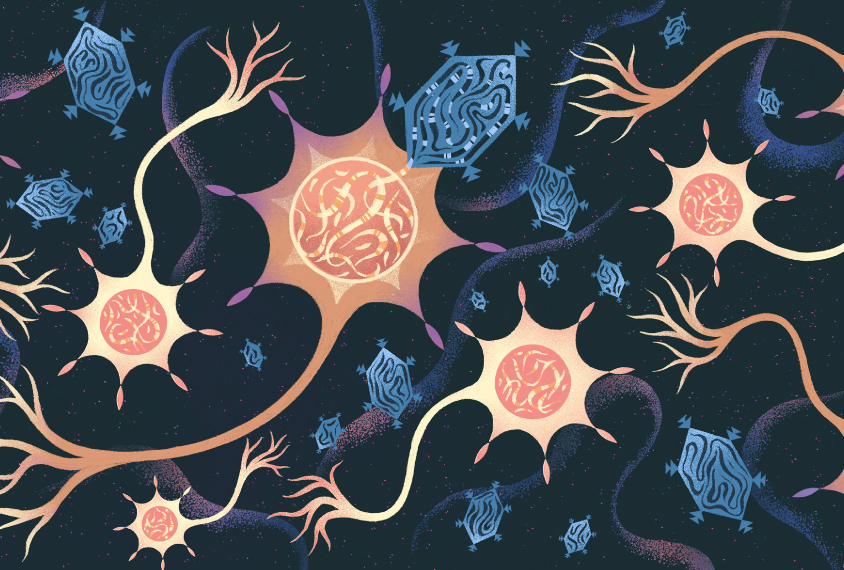
Angelman syndrome: Bellwether for genetic therapy in autism
It is not a matter of whether there will be clinical trials of genetic therapy for Angelman syndrome, but when.
Angelman syndrome: Bellwether for genetic therapy in autism

Insights for autism from Angelman syndrome
Deletions or duplications of the UBE3A gene lead to both Angelman syndrome and some cases of autism, respectively. Studying the effects of altered gene dosage in this region will provide insights into brain defects and suggest targets for therapies for both disorders, says expert Benjamin Philpot.
Insights for autism from Angelman syndrome
Explore more from The Transmitter
Head direction cells stably orient mice to outside world
The cells’ representations show little drift over time—unlike those of other navigation system neurons—and may provide a “rigid backbone” for more flexible sensory and cognitive responses.
Head direction cells stably orient mice to outside world
The cells’ representations show little drift over time—unlike those of other navigation system neurons—and may provide a “rigid backbone” for more flexible sensory and cognitive responses.
Juan Gallego discusses how manifolds are transforming our understanding of the coordination of neuronal population activity
A wealth of evidence supports the view that neural manifolds are real and useful, Gallego says, even if they may not completely solve the age-old mind-body problem.
Juan Gallego discusses how manifolds are transforming our understanding of the coordination of neuronal population activity
A wealth of evidence supports the view that neural manifolds are real and useful, Gallego says, even if they may not completely solve the age-old mind-body problem.
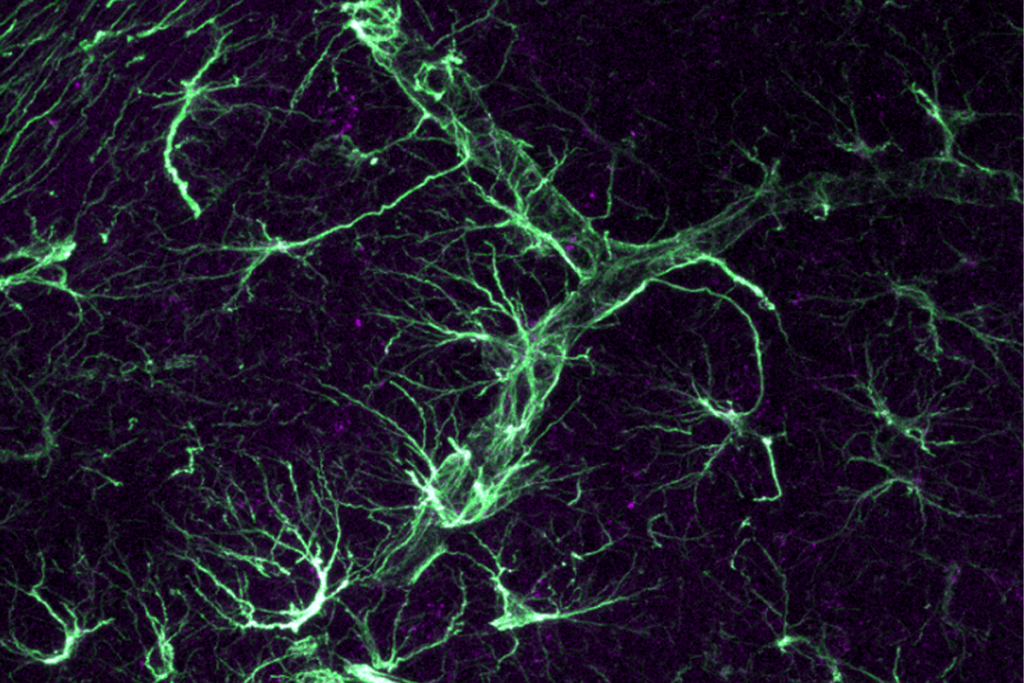
Astrocytes in mouse amygdala encode emotional state
The glial cells’ activity reliably tracks with freezing, hesitancy and other behaviors reminiscent of anxiety.
Astrocytes in mouse amygdala encode emotional state
The glial cells’ activity reliably tracks with freezing, hesitancy and other behaviors reminiscent of anxiety.