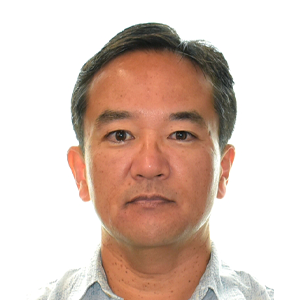
Headshot of Naoshige Uchida.

Naoshige Uchida

Professor of molecular and cellular biology
Harvard University

Naoshige Uchida is professor of molecular and cellular biology at Harvard University. He studies the neurobiological mechanisms underlying decision-making and reinforcement learning, using rodent models. He received his Ph.D. from Kyoto University, where he worked on the molecular mechanism of synaptic adhesions in Masatoshi Takeichi’s laboratory.

Uchida first began studying olfactory coding in Kensaku Mori’s laboratory at the RIKEN Center for Brain Science. He then joined Zachary F. Mainen’s laboratory at Cold Spring Harbor Laboratory, where he developed psychophysical olfactory decision tasks in rodents. He started his laboratory at Harvard University in 2006. His current interests include neural computation in the midbrain dopamine system, functions of the cortico-basal ganglia circuit, foraging decisions and motor learning. His research combines quantitative rodent behaviors with multi-neuronal recordings, optogenetics, viral neural circuit tracing, two-photon microscopy and computational modeling.


From this contributor

Explore more from The Transmitter

Novel assembloid illuminates serotonin changes linked to 22q11.2 deletion

The combination of a serotonin-producing organoid with an organoid based on the developing cerebral cortex offers a new way to investigate neuromodulation.

By Sarah DeWeerdt
30 April 2026 | 0 min watch
Conference attendees

Reporter’s notebook: Highlights from INSAR 2026

At the 25th annual meeting of the International Society for Autism Research, scientists, clinicians and self-advocates gathered to discuss topics such as autism genetics and the gap between clinical trials and real-world benefits.

By Diana Kwon
30 April 2026 | 6 min read
Illustration of hand with letter.

Scientists push back against stricter European Research Council grant application rules

In an open letter, scientists call the ERC’s suggestion to block grant reapplications for an additional year “at odds with scientific excellence.”

By Lauren Schenkman
29 April 2026 | 5 min read