
The Transmitter
From this contributor
Taking a closer look at astrocytes and autism
These glial cells are increasingly linked to neurodevelopmental conditions and the regulation of social behaviors and anxiety.

The Transmitter’s most-read neuroscience book excerpts of 2025
Books by Nachum Ulanovsky, Nicole Rust, and Andrew Iwaniuk and Georg Striedter made the list of some of the year's most engaging neuroscience titles.
The Transmitter’s most-read neuroscience book excerpts of 2025
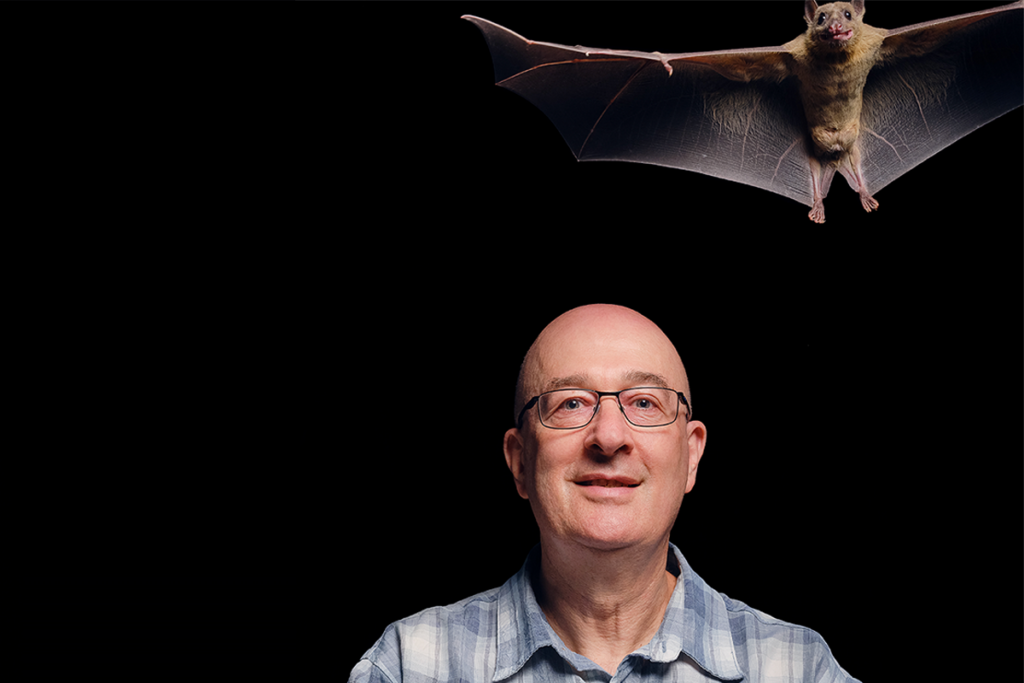
Neuroscience’s leaders, legacies and rising stars of 2025
Here are seven stories from the past year about some of the field’s most engaging figures.
Neuroscience’s leaders, legacies and rising stars of 2025

The Transmitter’s top news articles of 2025
Check out some of our most-read stories, covering neuroscience funding and policy changes in the United States, and methodological issues in high-profile neuroscience papers.
The Transmitter’s top news articles of 2025

Spectrum 2025: Year in review
Revisit some of the conversations and debates—on topics from leucovorin to the gut microbiome—that have shaped autism research in the past 12 months.
Explore more from The Transmitter
Error equation predicts brain’s ability to generalize
Four statistical measurements of neural network geometry capture how well brains and artificial networks use what they already know to solve new problems, a study suggests.
Error equation predicts brain’s ability to generalize
Four statistical measurements of neural network geometry capture how well brains and artificial networks use what they already know to solve new problems, a study suggests.

Embrace complexity to improve the translatability of basic neuroscience
Researchers must learn to view heterogeneity as an essential feature of the systems they study and a central consideration in experimental design, not a variable to control for or reduce.
Embrace complexity to improve the translatability of basic neuroscience
Researchers must learn to view heterogeneity as an essential feature of the systems they study and a central consideration in experimental design, not a variable to control for or reduce.
Romain Brette reveals fundamental flaws in commonly assumed neuroscience concepts
His new book, “The Brain, In Theory,” offers alternatives to many of the computer science frameworks currently driving theoretical neuroscience.
Romain Brette reveals fundamental flaws in commonly assumed neuroscience concepts
His new book, “The Brain, In Theory,” offers alternatives to many of the computer science frameworks currently driving theoretical neuroscience.