Last Saturday, President Donald Trump issued an executive order outlining regulatory tweaks intended to “accelerate” U.S. research on and increase access to psychedelic drugs for mental health treatments. The measures target clinical research, not basic studies on how the drugs work.
“This may not be the breakthrough the basic research community has been looking for,” says Shawn Lockery, professor of neuroscience at the University of Oregon.
The order directs the U.S. Food and Drug Administration (FDA) to speed up review of psychedelic drugs and allots “at least $50 million” from the Department of Health and Human Services for state governments’ own psychedelics research programs.
One section of the order, however, could eventually make it easier for basic researchers to access psychedelics for their work. The U.S. Drug Enforcement Agency (DEA) classifies most psychedelics—including psilocybin, MDMA and LSD—as Schedule I, meaning they have “no currently accepted medical use and a high potential for abuse.”
Trump’s order calls for the U.S. attorney general to review “any product containing a Schedule I substance that has successfully completed Phase 3 clinical trials for a serious mental health disorder” and consider it for rescheduling to the less restrictive Schedule III.
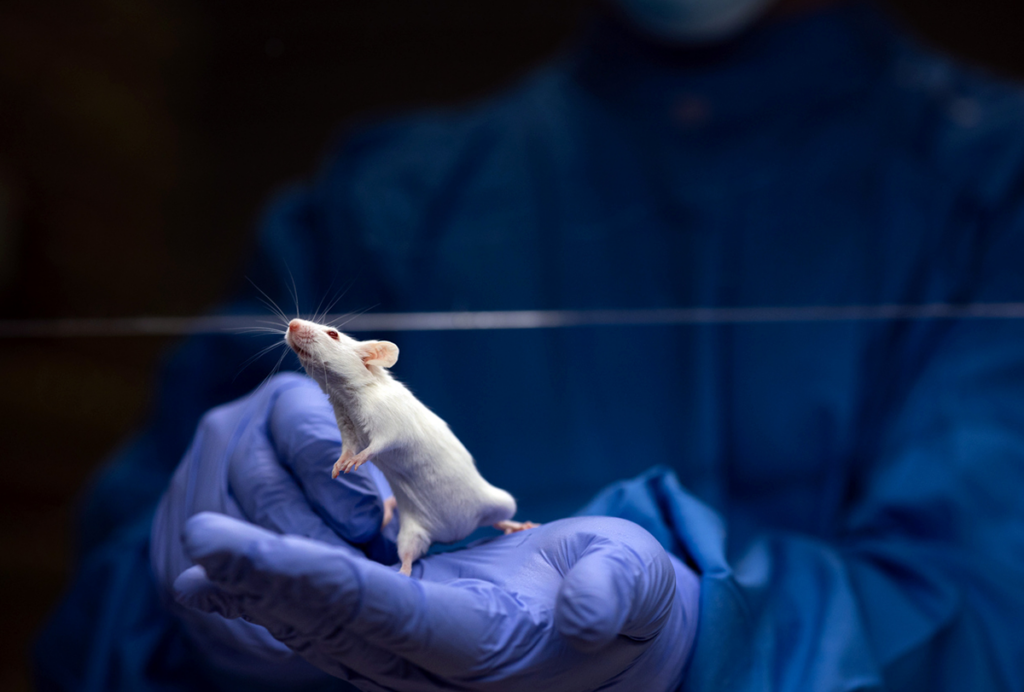
To study a Schedule I drug, researchers must apply for a license and, if approved, follow strict storage and security requirements. Approval can take up to a year, says Alex Kwan, professor of biomedical engineering at Cornell University, who studies psilocybin’s mechanism of action in the brain. “It’s a decent bar to get it. It’s not easy.”
Kwan and Lockery say they often hear from colleagues interested in studying psychedelics but who are intimidated by the Schedule I licensing process. Moving psychedelics to Schedule III would have a “dramatic effect,” Lockery says, and broaden the pool of researchers who study the drugs, Kwan says.
As of March, about 900 researchers have a license to work with Schedule I drugs, whereas nearly 8,700 have a license for Schedule II through V drugs, according to data from the DEA.
I
So far, only two Schedule I drugs have entered phase 3 clinical trials. Both Compass Pathways and the Usona Institute are studying psilocybin for depression. Lykos Therapeutics completed a phase 3 trial for MDMA in post-traumatic stress disorder, but the FDA rejected its new drug application; Lykos plans to run an additional phase 3 trial for the drug.
Even if those trials are deemed “successfully completed,” it’s unclear what the evaluation process for rescheduling would entail, Nicol says.
Yesterday, the attorney general moved some marijuana products from Schedule I to III, following a proposal to do so in 2024. The change only applies to forms of marijuana “in an FDA-approved drug product” or “subject to a state medical marijuana license,” but the Justice Department also announced plans for an “expedited administrative hearing process” to discuss rescheduling marijuana more broadly.
Trump’s most recent executive order comes after the DEA moved to add two psychedelics often used in basic research to Schedule I. Like classic psychedelics, the compounds, 2,5-dimethoxy-4-iodoamphetamine (DOI) and 2,5-dimethoxy-4-chloroamphetamine (DOC), activate serotonin receptors, and they have served as “a bit of a loophole” for researchers who want to study psychedelics without jumping over the regulatory hurdles, Kwan says.
Last June, a DEA judge ruled in favor of placing the compounds in Schedule I but acknowledged that doing so would “result in research harm.” The compounds have not been scheduled yet; the DEA did not respond to a request for comment on the status of the scheduling process.
Although it’s heartening to garner support from the government for psychedelics research, it’s disappointing that the support is not coming more directly from the National Institutes of Health (NIH), says Scott Thompson, professor of psychiatry at the University of Colorado Anschutz School of Medicine. The Department of Health and Human Services did not reply to a request for comment about the NIH’s plan to fund psychedelics research.
“The NIH has underfunded psychedelic research,” Thompson says. “They have been absent from the field, and I think that’s one of the reasons we are where we are.”