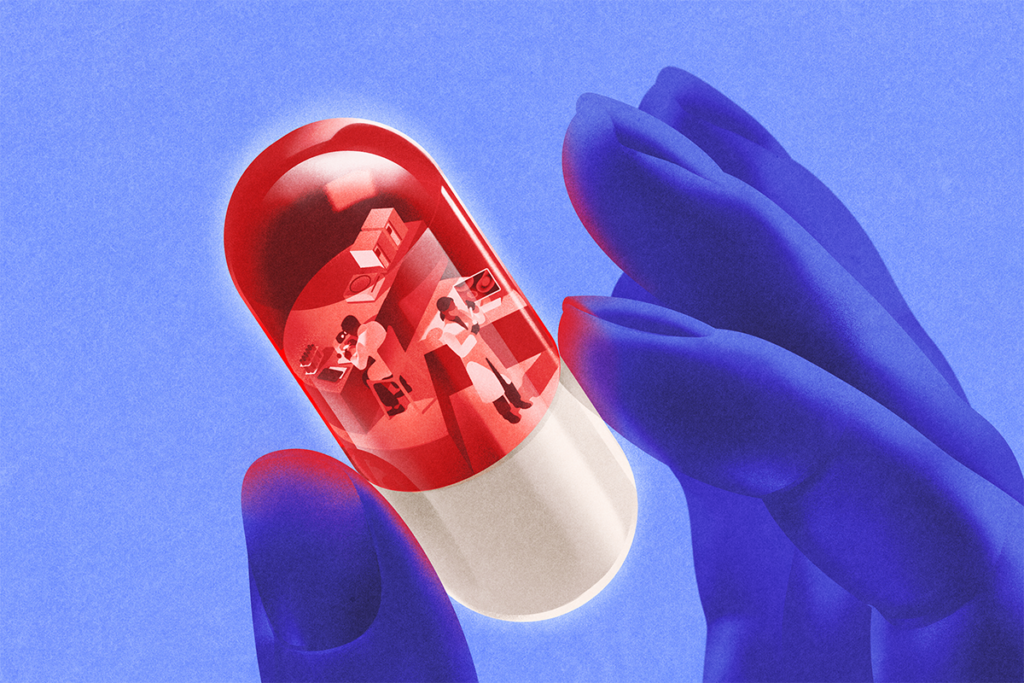
Basic neuroscience aims to understand complex processes in animal models with the hope that insights gained from these models will eventually “scale up” to clinical reality. But, as we know, our models are limited. Mouse models of autism or multiple sclerosis, for instance, capture only fragments of these conditions. People with these diagnoses have highly variable traits, trajectories, comorbidities and responses to interventions. Environmental and social factors interact in nonlinear, context-dependent ways, which makes these concepts even harder to study in the laboratory setting.
Understandably, basic researchers design controlled experiments in a manner that prioritizes internal validity and mechanistic clarity. But far too often, the complexity and variability of human conditions are not considered as defining features of the phenomena under study. Recognizing the scope and impact of heterogeneity in basic neuroscience is essential if we want to understand complex conditions and the brain in health and disease. This is not a failure of effort or expertise but of underlying assumptions about what constitutes good experimental design.
For example, when it comes to mouse colonies, we know that factors such as the cleanliness and temperature of their housing can have a large influence on the outcome of any experiments. It is standard practice for researchers to avoid using mice housed in different rooms or purchased from different vendors, as this might introduce noise into their results. But this noise might inform the potential generalizability and robustness of an experimental design. A study that incorporates variability in housing conditions or the animals’ microbiomes might be more informative than experimental designs that control these parameters.
Heterogeneity should not be seen as a variable to be controlled and reduced but as an essential feature of the system and a central consideration in experimental design. Embracing complexity and heterogeneity will ultimately improve the translatability of basic research. Drawing on insights from our fields of research—network neuroscience, history and philosophy of biomedicine, and functional single-cell immunology—we identify three steps to get started. We have also developed a program for early-career scientists to integrate these steps during training.
T
Second, heterogeneity should be measured and monitored rather than eliminated. We need to develop and employ methods that can better account for sensory environments, social contexts, developmental timing and the unpredictable trajectories that define many neurological conditions. Variability across individuals—whether genetic, developmental or contextual—is not merely noise but a critical source of information. In systems neuroscience, studies that examine distributions of neural and behavioral responses across conditions, rather than mean effects alone, have proved more informative for predicting which circuit-level interventions may be robust enough to translate into neuromodulation therapies.
Third, we need to interrogate neuronal mechanisms across scales and move beyond preconceived notions of cells and circuits. Findings that link molecular pathways to circuit dynamics and behavior are more likely to retain relevance in real-world contexts. Here, immunology offers a useful parallel: The field has started to reframe static cell-type classifications in favor of dynamic, context-sensitive immune states, an approach that has improved the translation of immunomodulatory therapies. A similar shift is increasingly necessary in neuroscience, where neural cell types and circuits are deeply shaped by context, development and their interaction with other bodily systems.
Across these examples, the common lesson is clear: Basic neuroscience that anticipates translational constraints—rather than retrofitting relevance later—produces insights that are more likely to generalize beyond the laboratory.
The TRANSCEND program we created helps to address these challenges. This new Marie Skłodowska-Curie doctoral network is designed to equip early-career neuroscientists with the conceptual and methodological tools they need to study complex brain-related conditions such as autism and multiple sclerosis. TRANSCEND encourages researchers to think across conceptual boundaries: Structured co-mentorship relationships span basic neuroscience, clinical research, computational modeling and philosophy of science and provide various translational viewpoints to each candidate.
The network also promotes cross-boundary research practices. Doctoral projects are designed to integrate multiple data modalities, such as molecular, circuit-level, behavioral and clinical data; and candidates receive formal training in experimental design strategies that address heterogeneity, reproducibility and external validity. Rotations and shared training modules expose students to complementary approaches, from immunology and epidemiology to qualitative research on patient experience. These activities are intended to enable doctoral researchers to successfully navigate the complex landscape of translational science, providing them with a structured framework to engage with diverse scientific and non-scientific perspectives.
TRANSCEND represents an attempt to put our perspective into practice. It is built on the idea that meaningful neuroscience requires more than better tools—it requires new ways of thinking. Translational progress will be made by those willing to design basic neuroscience with complexity in view, to challenge entrenched assumptions and to reconsider what “translation” should mean in the first place.