Snoozing dragons stir up ancient evidence of sleep’s dual nature
Deep-sleep cycling between brain waves of higher and lower amplitude dates far back on the evolutionary tree, according to a new comparative study of mammals and reptiles.
In pursuit of the brain’s secrets, neuroscientist Paul-Antoine Libourel has traveled to the ends of the earth. But during the COVID-19 lockdown in 2020, he worked closer to home—in his own darkened garage in Lyon, filming a sleeping chameleon.
Libourel, a researcher at the Center for Functional and Evolutionary Ecology in Montpelier, had heard that chameleons lose their ability to camouflage during sleep. But as the hours passed in his garage, he observed something extraordinary: The chameleon’s skin fluctuated from bright to dark to bright again every few minutes.
This strobing skin display, Libourel and his colleagues have since discovered, reflects an inner rhythm. The chameleon’s brain activity alternates between waves of higher and lower amplitude, synchronized with increased and decreased eye movements, plus changes in the animal’s heart rate and breathing rate. Six other species of lizard, including bearded dragons—along with rats, mice, pigeons and humans—show the same “infraslow fluctuations” in EEG activity during non-REM sleep, according to a study Libourel’s team published today in Nature Neuroscience.
Because reptiles and mammals diverged about 320 million years ago, the findings mean these cycles “are a central thing, maybe a core building block of sleep,” says study investigator Antoine Bergel, a researcher at the Centre National de la Recherche Scientifique. They also raise the question of why these rhythms are so conserved, Bergel and Libourel say, and hint at how sleep has evolved.
The sleep field, which tends to focus on mice and humans, needed this type of comparative study, says Philippe Mourrain, associate professor of psychiatry and behavioral sciences at Stanford University, who studies sleep in zebrafish but was not involved in the new work. “It’s a tour de force to do science on nonconventional species.”
Calm chameleon: A strobing skin display during sleep reflects an inner rhythm: The animal’s brain activity alternates between waves of higher and lower amplitude, synchronized with increased and decreased eye movements, plus changes in the animal’s heart rate and breathing rate.
The new results bolster the idea that sleep serves multiple purposes, says Anita Lüthi, professor of basic neuroscience at the University of Lausanne; Lüthi’s lab first identified infraslow fluctuations in mice in 2017 but was not involved in the new study. These fluctuations seem to allow animals to disconnect from the environment but remain alert to both bodily changes and external threats, she says. They are also tied to memory replay—a first step in memory consolidation—and waste removal by the glymphatic system.
“When we did this, we thought this was a very mouse-specific kind of research,” Lüthi says. To now extend it to all amniotes, the clade that contains both mammals and reptiles, “is really groundbreaking work.”
S
leep was long thought to be a passive state, until a seminal 1953 study reported periods of REM sleep that featured “jerky” eye movements and flurries of electrical activity like that of the awake brain. Years later, researchers took note of much slower delta waves of up to 4 hertz that characterize non-REM sleep in humans.
Since the discovery of REM, the field has been trying to determine what “sleep” means for different animals along the evolutionary tree. Despite decades of research, there is no solid scientific definition of rapid eye movement sleep, Mourrain says—“it’s a bloody mess.” And although birds and terrestrial mammals seem to experience REM, findings in dolphins, whales, turtles and crocodiles—birds’ closest cold-blooded relative—have been inconclusive.
“This is a bit weird,” because birds are more closely related to reptiles than they are to mammals, says Mark Shein-Idelson, professor of neurobiology at Tel Aviv University, who was not involved in the new work. His team showed in 2016 that delta waves in bearded dragons alternate with broadband EEG activity and eye movements about every 80 seconds. His team interpreted the broadband activity as segments of REM sleep.
But these reptilian alternations are homologous to the infraslow fluctuations seen during non-REM sleep in mammals, the new work suggests: In seven species—the tokay and leopard geckos, the Sudan plated lizard, Argentine tegu, Egyptian rock agama, bearded dragon and panther chameleon—the fluctuations in brain waves synchronized with those in heart rate, as they do in people and mice during non-REM sleep; they also synchronized with fluctuations in breathing rate and muscle tone in five of the seven species.
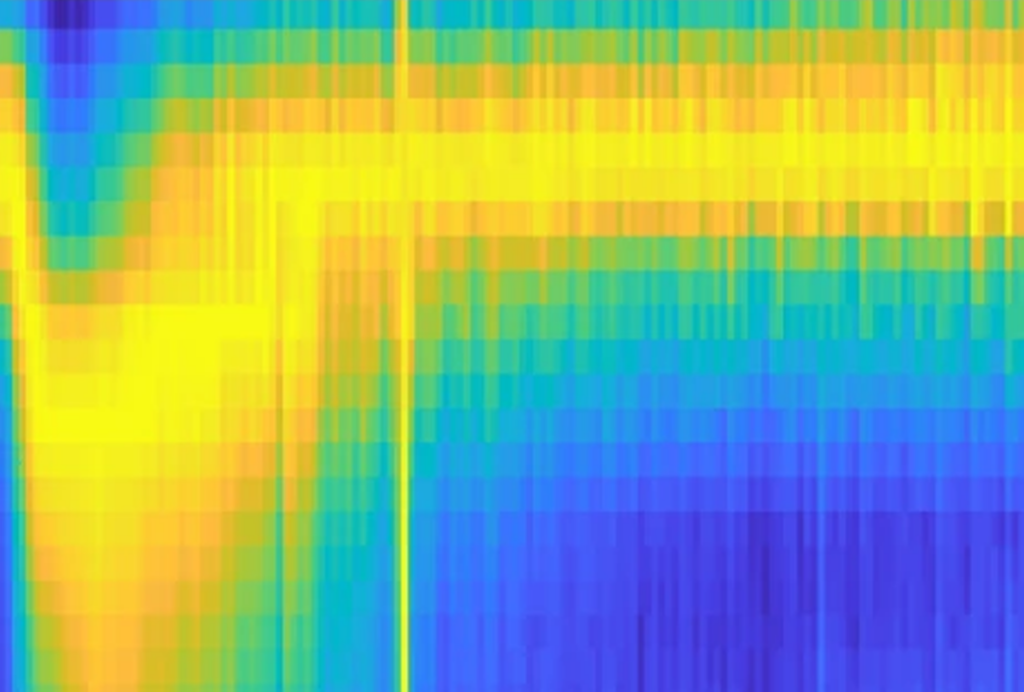
Functional ultrasound recordings ultimately convinced the team that the rhythms in the bearded dragons and mice were the same, Bergel says. Cerebral blood flow and brain waves fluctuate with the same rhythm in both species, with one lagging the other—a coupling that disappears during REM sleep in mice and during wakefulness in both species.
“If you look at the coupling between the physiology, the brain activity and the rest of the body, what we found in reptiles looks more like this infraslow activity” rather than REM, Bergel says.
Fluctuations had a periodicity of 84 to 134 seconds, depending on the lizard species. Shorter periods correlated with higher ambient temperatures, lining up with a 2022 study of Egyptian rock agamas. Mice, humans and birds, which generally have a higher body temperature than lizards, have shorter non-REM oscillations of about 50 seconds.
Eye movements occurred more often during one half of the cycle in some lizards, which could be a marker of vigilance, Libourel says; mice, for example, experience microarousals during non-REM sleep. Or it could be “an ancestral feature of REM sleep within an infraslow rhythm,” he says. The REM sleep characteristics that humans experience may have evolved at different rates, Libourel and his colleagues proposed in a 2020 review paper.
The presence of infraslow rhythms so far back along the evolutionary tree suggests that “there is this fundamental need, somehow, for sleep being a dual state,” Lüthi says. “Maybe that has taken time to become as clear-cut as the way we have it, or the way birds have it.”
Dragon’s blood: Cerebral blood flow fluctuates with the same rhythm as brain wave fluctuations in bearded dragons, paralleling results during non-REM sleep in mice.
“T
he jury is still out” on whether lizards experience REM sleep, Shein-Idelson says. “We need a lot more work to really determine what the ancestral state is,” such as identifying the brain circuits in reptiles that drive these rhythms and the functions that such patterns support.
The goal should be to understand the similarities and differences across species in terms of physiology, behavior and function, he adds, and to study the evolutionary pressures that lead to similar phenomena in such different brains, but “it’s very hard to say this is equal to that.”
Libourel says his team plans to explore the underlying circuits by tracking neuromodulators such as norepinephrine, which, when secreted by the locus coeruleus in mice, coordinates infraslow flucuations in non-REM sleep.
Based on the new results, he and Bergel say they want the field to consider that REM and non-REM sleep may not be a binary in all species. The term “REM sleep” needs a redefinition that reflects how different it might look in other kinds of brains, they say. For example, loss of thermal regulation is one of the defining characteristics of REM, which omits lizards completely.
“I think we are clearly, even as scientists, highly biased by the mammalian definition of sleep states,” Libourel says, “and by the fact that us as humans feel sleep, need sleep and love sleep.”