Artificial intelligence
Recent articles
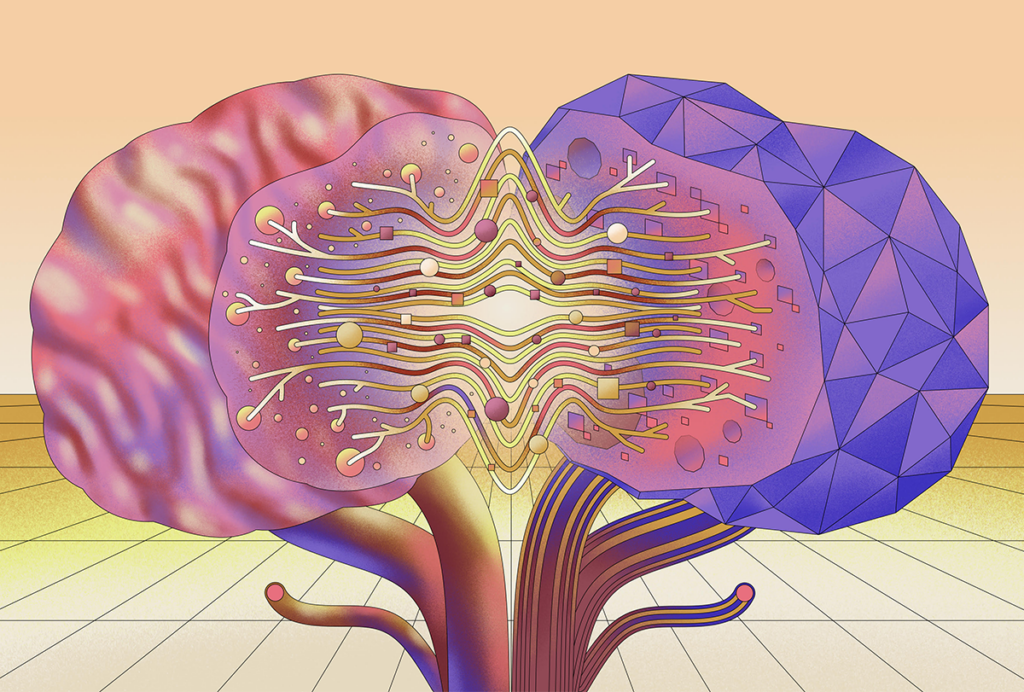
Trading places: What happens when neuroscience turns into machine learning, and machine learning turns into neuroscience?
Neuroscience has become increasingly concerned with prediction, and machine learning with causal explanation, with each field adopting methods from the other. I asked eight experts to weigh in on what we stand to learn from this exchange.
Trading places: What happens when neuroscience turns into machine learning, and machine learning turns into neuroscience?
Neuroscience has become increasingly concerned with prediction, and machine learning with causal explanation, with each field adopting methods from the other. I asked eight experts to weigh in on what we stand to learn from this exchange.
David Sussillo on persistence, luck and the bonds between life and work
In a Q&A about his new book, “Emergence,” Sussillo shares why he wrote it and how challenging circumstances shaped his journey into neuroscience.
David Sussillo on persistence, luck and the bonds between life and work
In a Q&A about his new book, “Emergence,” Sussillo shares why he wrote it and how challenging circumstances shaped his journey into neuroscience.
Large-scale neuroimaging datasets often lack information specific to women’s health, constraining AI’s analysis potential
Addressing this gap will require collecting widespread data on pregnancy, menopause and other life events women experience—and could bring us closer to the “holy grail” of linking brain and behavior.
Large-scale neuroimaging datasets often lack information specific to women’s health, constraining AI’s analysis potential
Addressing this gap will require collecting widespread data on pregnancy, menopause and other life events women experience—and could bring us closer to the “holy grail” of linking brain and behavior.
Modern AI is simply no match for the complexity likely required for harboring consciousness, says Jaan Aru
He argues that our brain’s computations are of a completely different nature than any artificial intelligence because they take place across many spatial and temporal scales and are inextricably entwined with biological materials.
Modern AI is simply no match for the complexity likely required for harboring consciousness, says Jaan Aru
He argues that our brain’s computations are of a completely different nature than any artificial intelligence because they take place across many spatial and temporal scales and are inextricably entwined with biological materials.
Betting blind on AI and the scientific mind
If the struggle to articulate an idea is part of how you come to understand it, then tools that bypass that struggle might degrade your capacity for the kind of thinking that matters most for actual discovery.
Betting blind on AI and the scientific mind
If the struggle to articulate an idea is part of how you come to understand it, then tools that bypass that struggle might degrade your capacity for the kind of thinking that matters most for actual discovery.

How to collaborate with AI
To make the best use of LLMs in research, turn your scientific question into a set of concrete, checkable proposals, wire up an automatic scoring loop, and let the AI iterate.
How to collaborate with AI
To make the best use of LLMs in research, turn your scientific question into a set of concrete, checkable proposals, wire up an automatic scoring loop, and let the AI iterate.
Tomaso Poggio on his quest for theories to explain the fundamental learning abilities of brains and machines
Thus far, engineering has outpaced theory in the science of intelligence. But Poggio is hopeful that theories can catch up.
Tomaso Poggio on his quest for theories to explain the fundamental learning abilities of brains and machines
Thus far, engineering has outpaced theory in the science of intelligence. But Poggio is hopeful that theories can catch up.
The Transmitter’s favorite essays of 2025
Throughout a tumultuous year in science, researchers opined on policy changes and funding uncertainty, as well as scientific trends and the impact of artificial-intelligence tools on the field.
The Transmitter’s favorite essays of 2025
Throughout a tumultuous year in science, researchers opined on policy changes and funding uncertainty, as well as scientific trends and the impact of artificial-intelligence tools on the field.
AI-assisted coding: 10 simple rules to maintain scientific rigor
These guidelines can help researchers ensure the integrity of their work while accelerating progress on important scientific questions.
AI-assisted coding: 10 simple rules to maintain scientific rigor
These guidelines can help researchers ensure the integrity of their work while accelerating progress on important scientific questions.

Seeing the world as animals do: How to leverage generative AI for ecological neuroscience
Generative artificial intelligence will offer a new way to see, simulate and hypothesize about how animals experience their worlds. In doing so, it could help bridge the long-standing gap between neural function and behavior.
Seeing the world as animals do: How to leverage generative AI for ecological neuroscience
Generative artificial intelligence will offer a new way to see, simulate and hypothesize about how animals experience their worlds. In doing so, it could help bridge the long-standing gap between neural function and behavior.
Explore more from The Transmitter
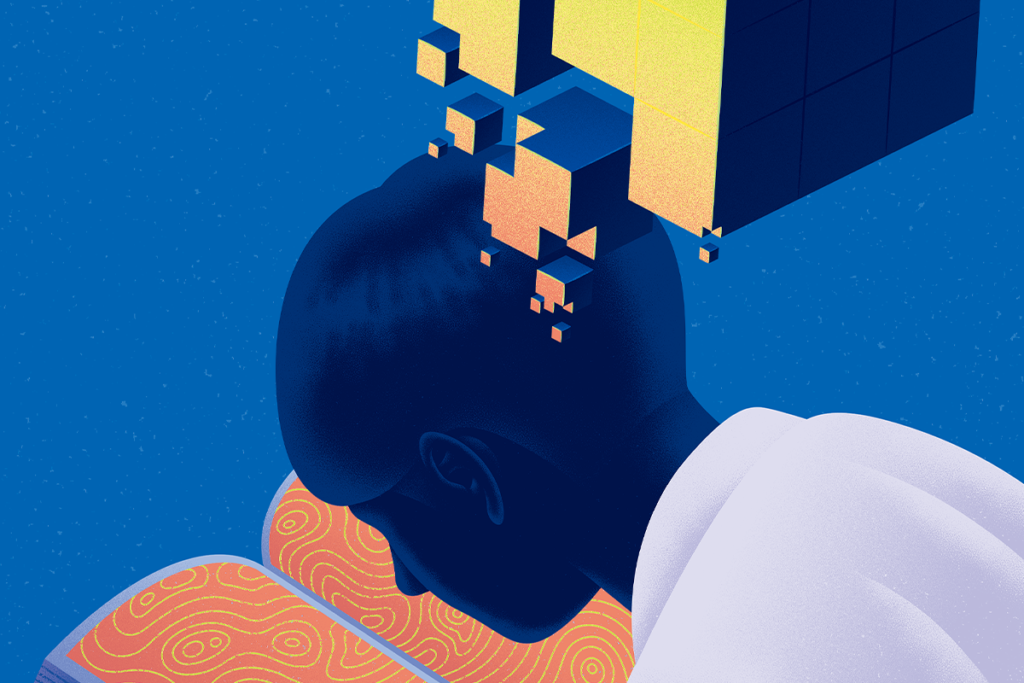
Error equation predicts brain’s ability to generalize
Four statistical measurements of neural network geometry capture how well brains and artificial networks use what they already know to solve new problems, a study suggests.
Error equation predicts brain’s ability to generalize
Four statistical measurements of neural network geometry capture how well brains and artificial networks use what they already know to solve new problems, a study suggests.

Embrace complexity to improve the translatability of basic neuroscience
Researchers must learn to view heterogeneity as an essential feature of the systems they study and a central consideration in experimental design, not a variable to control for or reduce.
Embrace complexity to improve the translatability of basic neuroscience
Researchers must learn to view heterogeneity as an essential feature of the systems they study and a central consideration in experimental design, not a variable to control for or reduce.
Romain Brette reveals fundamental flaws in commonly assumed neuroscience concepts
His new book, “The Brain, In Theory,” offers alternatives to many of the computer science frameworks currently driving theoretical neuroscience.
Romain Brette reveals fundamental flaws in commonly assumed neuroscience concepts
His new book, “The Brain, In Theory,” offers alternatives to many of the computer science frameworks currently driving theoretical neuroscience.