Melinda Wenner Moyer (@Lindy2350) is a science writer based in New York’s Hudson Valley. She is a visiting scholar at NYU’s Arthur L. Carter Journalism Institute and an Alicia Patterson fellow. Moyer writes a column for Slate and is a contributing editor at Scientific American. Her work has also appeared in the New York Times, Mother Jones, and a number of women’s magazines.
Melinda Wenner Moyer
From this contributor
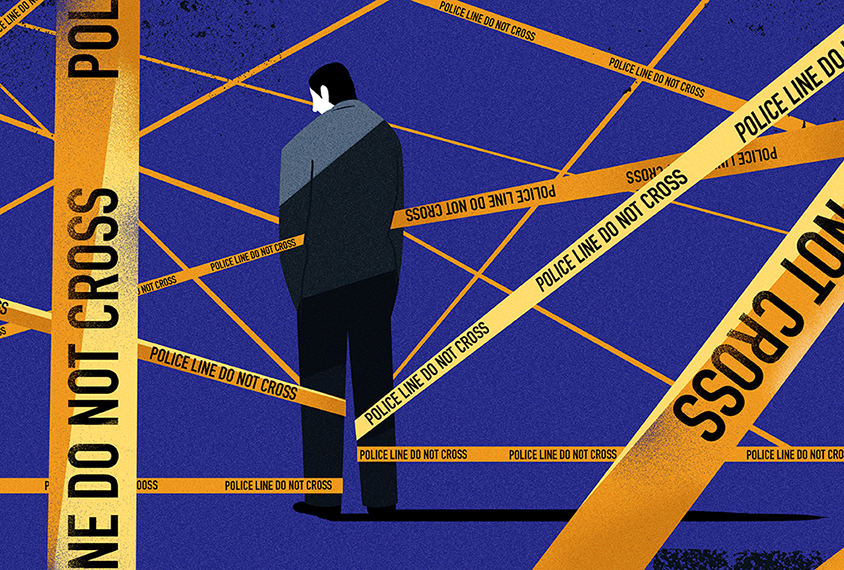
When autistic people commit sexual crimes
Many first-time sex offenders on the spectrum may not understand the laws they break. How should their crimes be treated?
When autistic people commit sexual crimes
By
Melinda Wenner Moyer
17 July 2019 | 19 min read

How pregnancy may shape a child’s autism
Autism is predominantly genetic in origin, but a growing list of prenatal exposures for mother and baby may sway the odds.
How pregnancy may shape a child’s autism
By
Melinda Wenner Moyer
5 December 2018 | 17 min read
Explore more from The Transmitter
How new technologies can bring primatologists and systems neuroscientists together
The two groups study the same behavioral phenomena yet rarely interact or read each other's work—a mutual blind spot that weakens both fields. New technologies offer a chance to bring them together.
How new technologies can bring primatologists and systems neuroscientists together
The two groups study the same behavioral phenomena yet rarely interact or read each other's work—a mutual blind spot that weakens both fields. New technologies offer a chance to bring them together.
By
Sjoerd Murris
15 October 2026 | 6 min read

Creating community through grant support
Fiona Sanderson, a senior program manager at the Brain Canada Foundation, shares how she got into grant administration and how she helps connect researchers with funding and one another.
Creating community through grant support
Fiona Sanderson, a senior program manager at the Brain Canada Foundation, shares how she got into grant administration and how she helps connect researchers with funding and one another.
By
Katie Moisse
14 October 2026 | 7 min read

This paper changed my life: A first glimpse into the ‘middle’ of brain processing
Work by Jeffrey Moran and Robert Desimone showed that monkeys could focus their attention on different stimuli in their visual field without shifting their gaze. Their work marked a key milestone in the emergence of cognitive neuroscience.
This paper changed my life: A first glimpse into the ‘middle’ of brain processing
Work by Jeffrey Moran and Robert Desimone showed that monkeys could focus their attention on different stimuli in their visual field without shifting their gaze. Their work marked a key milestone in the emergence of cognitive neuroscience.
By
Earl K. Miller
14 October 2026 | 3 min read