Listen to this story:
0:00
/
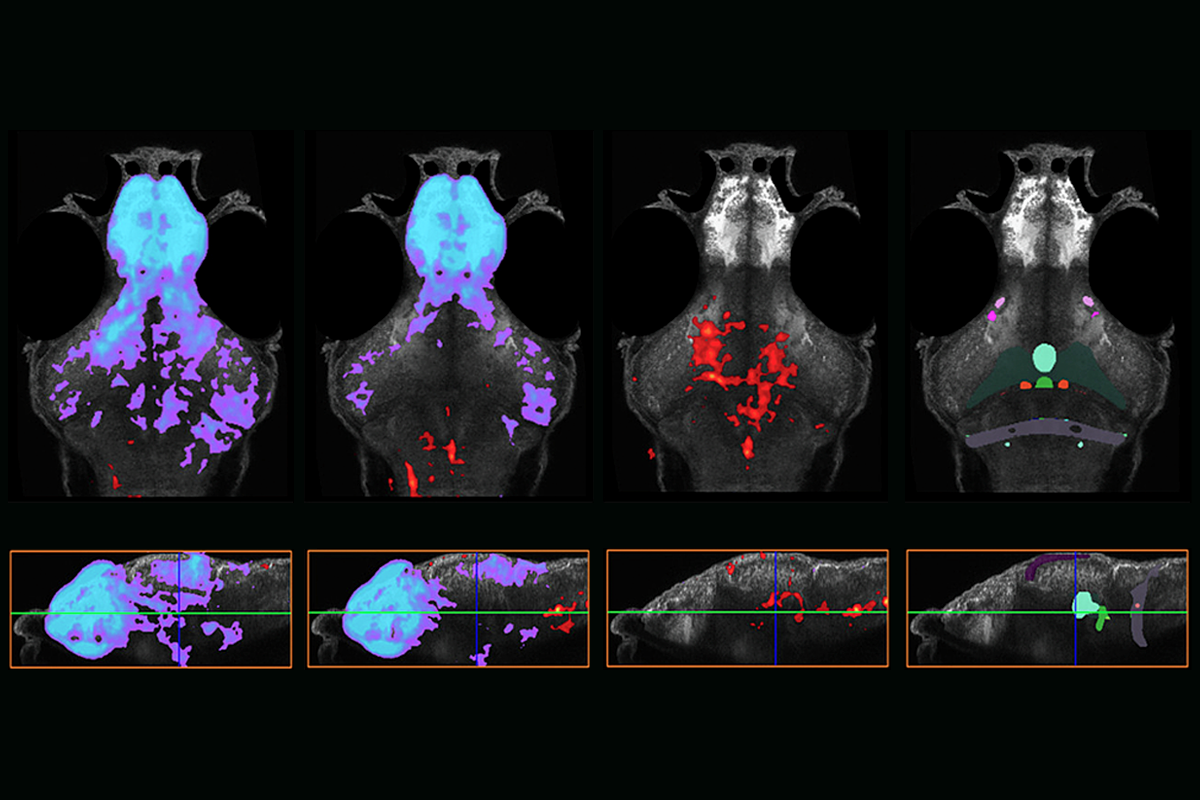
Estropipate, paclitaxel and levocarnitine altered behaviors tied to SCN2A and DYRK1A variants specifically, a new open-source platform revealed.
Hundreds of compounds counteract specific behavioral effects of autism-linked gene variants in zebrafish, according to a new study that, its authors say, could guide precision gene-based medicine for some forms of autism.
Many new drugs under investigation for the condition prove ineffective in clinical trials—in part because of its genetic and clinical heterogeneity. “A medication may be used to treat many different kinds of patients, when its use should be based on an individual’s specific genes or behaviors,” says study investigator Ellen Hoffman, associate professor of neuroscience at Yale University’s Child Study Center.
To address this heterogeneity, Hoffman and her colleagues developed a large-scale platform to test drugs on zebrafish with autism-linked variants and monitor their behavioral effects in an automated way. Zebrafish are commonly used in neuroscience to study autism and other conditions, in part because their young are transparent, making it possible to image the whole brain in real time.
In the new study, Hoffman and her colleagues screened 520 U.S. Food and Drug Administration-approved drugs, including antibiotics and immunosuppressants, on larval zebrafish with CRISPR-Cas-induced variants in nine genes significantly associated with autism. They developed an open-source, searchable database of the effects of these drugs on behaviors such as responses to light and darkness.
“Repurposing existing drugs really helps minimize the burden of clinical trials,” notes Summer Thyme, associate professor of biochemistry and molecular biotechnology at the University of Massachusetts Chan Medical School, who was not involved in this research.
Of the genes investigated, SCN2A and DYRK1A variants displayed the most robust behavioral effects in the fish. SCN2A variants led to nighttime hyperactivity and light hypersensitivity to lights turning on, whereas DYRK1A variants resulted in reduced sensitivity to lights turning off. Both variants also led to less activity during the day compared with wildtype fish.
O
The scientists detailed their findings last month in the Proceedings of the National Academy of Sciences.
Previously, “levocarnitine was tested in small trials for efficacy in people with autism but no genetic diagnosis and showed promise,” says Julia Dallman, associate professor of biology at the University of Miami, who was not involved in this study.
Levocarnitine also helps treat signaling problems in human pluripotent stem cell-derived glutamatergic neurons carrying variants in SCN2A or DYRK1A, the new study showed. “These findings provide evidence for the conservation of drug rescue effects in zebrafish and human cells,” Hoffman says.
Estropipate, paclitaxel and levocarnitine did not completely reverse the behavioral effects, Thyme cautions, which suggests these variants likely affect multiple pathways—something that calls for further investigation.
Beyond SCN2A and DYRK1A, the effort identified a notable pattern across all nine genes studied, which—a past investigation revealed—cluster into three groups with distinct behavioral profiles. Psychotropic medications, such as antidepressants and antipsychotics, that benefited one particular behavioral profile, Hoffman and her colleagues found, might worsen another. For instance, mTOR antagonists reduced behaviors in two of the groups but exacerbated the behavior profile in the third. Meanwhile, dopaminergic agonists seemed to intensify the behavioral patterns of those first two groups and eased them in the third. The result underscores the need to tailor potential autism therapy regimens to a person’s genetic profile, the investigators say.
“With further validation, therapeutic pathways identified as being effective in subtypes of autism could become a part of standard clinical care,” Dallman says.
All in all, the findings contribute to growing evidence that estrogens, microtubules, mitochondria and lipid metabolism may play central roles in some forms of autism, Hoffman says. “Our results lay the groundwork for investigating the extent to which these pathways might represent targets for individuals carrying mutations in these genes.”
Hoffman says she and her colleagues plan to expand the project to investigate more of the 100-plus known autism-linked genes. Beyond the roughly 500 drugs tested in the new study, Thyme adds, “there may be other promising leads in the larger set of the more than 3,000 FDA-approved [small-molecule] drugs.”