Jen Monnier is an intern at Spectrum. She is a journalist in New York City, covering medicine, technology and ecosystems. She’s also a graduate student at New York University’s Science, Health and Environmental Reporting program.

Jen Monnier
From this contributor
Early interventions, explained
The accepted wisdom in autism research holds that early intervention offers the best promise for an autistic child’s well-being. But how effective are these therapies?
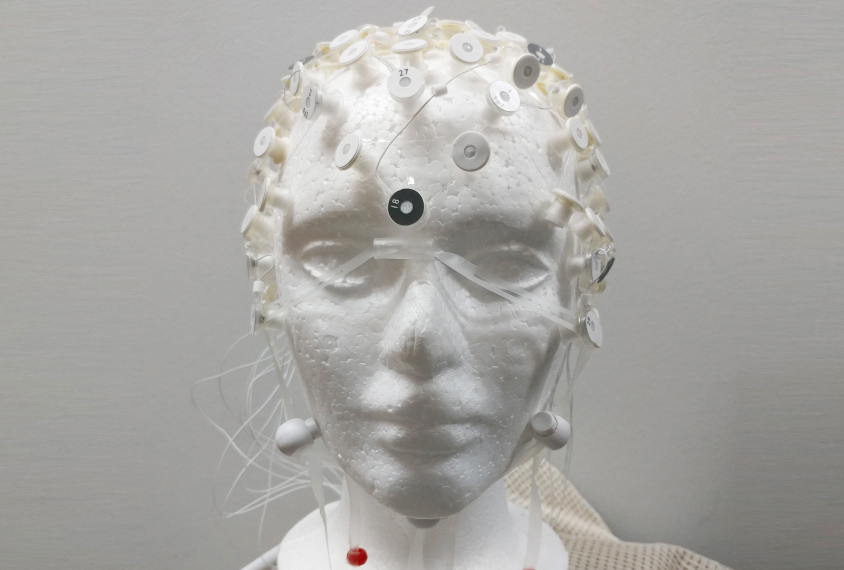
Multipart device monitors various senses in babies
A new assemblage of tools precisely gauges a baby’s biological response to sights, sounds and tactile stimuli all at once.
Multipart device monitors various senses in babies
By
Jen Monnier
17 August 2018 | 2 min read
New consortium may create projects, funding for autism research
A newly formed group of leaders from the U.S. National Institutes of Health (NIH) is poised to generate funding opportunities for child health research, including autism science.
New consortium may create projects, funding for autism research
By
Jen Monnier
2 August 2018 | 3 min read
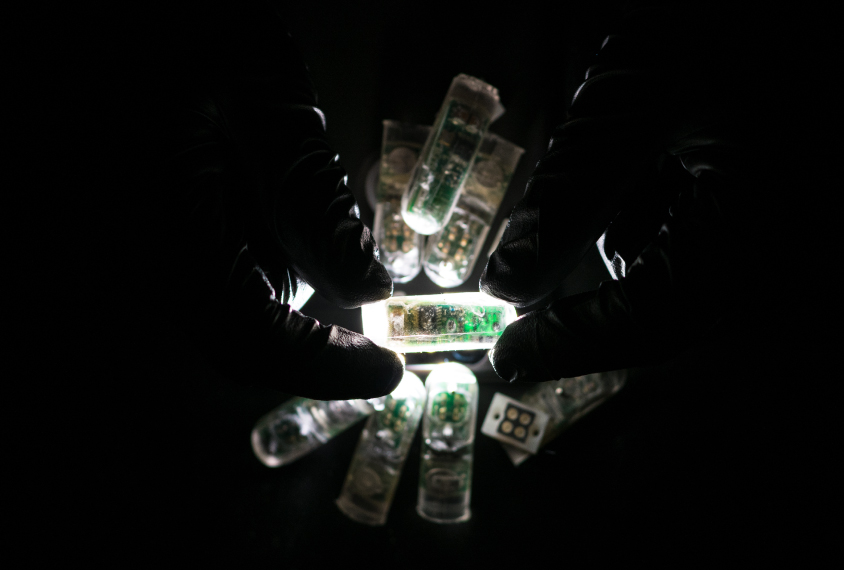
Glowing capsule illuminates problems in gut
An ingestible electronic capsule enables researchers to instantaneously detect molecules associated with gastrointestinal issues.
Explore more from The Transmitter
The genome offers a recipe, not a blueprint, for the brain
During brain development, genes set the rules and turn the knobs; self-organization does much of the rest.
The genome offers a recipe, not a blueprint, for the brain
During brain development, genes set the rules and turn the knobs; self-organization does much of the rest.
By
Ila Fiete
2 November 2026 | 8 min read
Autism research involving monkeys contends with uphill battle
Macaques and marmosets recapitulate the condition’s core traits better than mice can, but funding uncertainty and challenges at primate centers in the United States could make this work difficult to continue.
Autism research involving monkeys contends with uphill battle
Macaques and marmosets recapitulate the condition’s core traits better than mice can, but funding uncertainty and challenges at primate centers in the United States could make this work difficult to continue.
By
Diana Kwon
2 November 2026 | 8 min read
When is self-organization a mechanism in brain development?
Retinal waves offer a powerful example of a self-organizing system that can build structure without external guidance. The field would do well to embrace such phenomena more broadly as a type of mechanistic explanation.
When is self-organization a mechanism in brain development?
Retinal waves offer a powerful example of a self-organizing system that can build structure without external guidance. The field would do well to embrace such phenomena more broadly as a type of mechanistic explanation.
By
P. Robin Hiesinger
2 November 2026 | 6 min read