Theoretical Neuroscience podcast
Recent articles
The relationship between structure and function in cortical networks
Michael Reimann explains how the shape of neurons puts strong constraints on how they are wired in a network, and how this affects their structure-function relationships.
The relationship between structure and function in cortical networks
Michael Reimann explains how the shape of neurons puts strong constraints on how they are wired in a network, and how this affects their structure-function relationships.
How neuromorphic computing could improve AI
Mihai Petrovici explains what neuromorphic computing is and how it can speed up and reduce energy consumption in artificial intelligence and brain simulations.
How neuromorphic computing could improve AI
Mihai Petrovici explains what neuromorphic computing is and how it can speed up and reduce energy consumption in artificial intelligence and brain simulations.
How energy determines where proteins are produced in neurons
Tatjana Tchumatchenko explains how mathematical modeling elucidates whether ion-channel proteins are produced locally in the soma or in the dendrites.
How energy determines where proteins are produced in neurons
Tatjana Tchumatchenko explains how mathematical modeling elucidates whether ion-channel proteins are produced locally in the soma or in the dendrites.
Explore more from The Transmitter
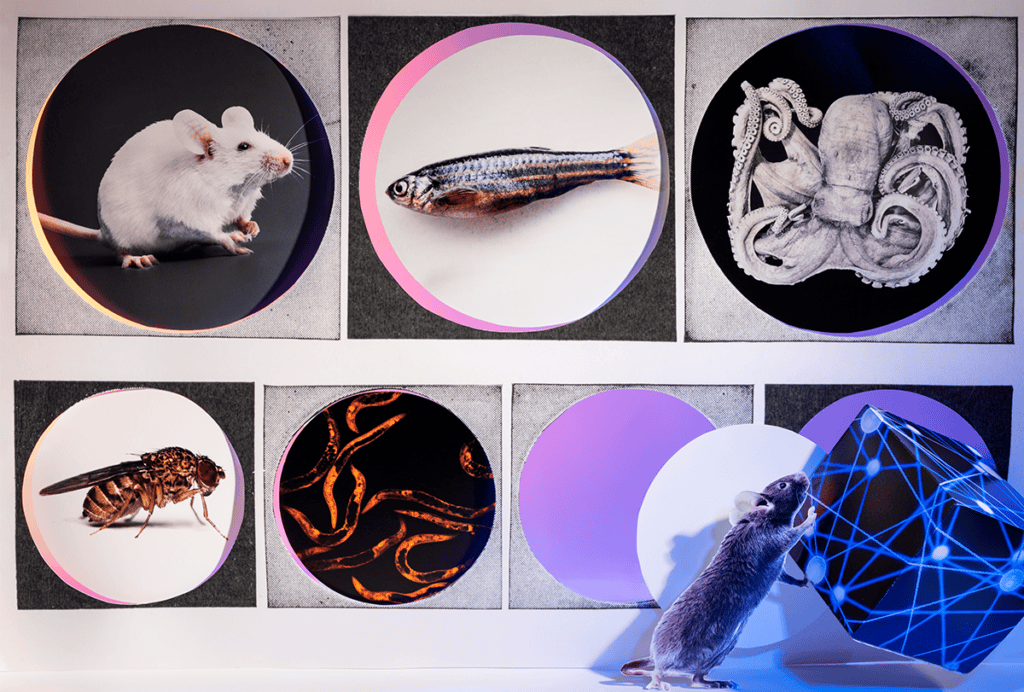
The term ‘model organism’ should be reserved for biological systems
By referring to artificial neural networks as model organisms, we run the risk of distorting funding priorities and disregard the explanatory power of a shared evolutionary history across biological organisms.
The term ‘model organism’ should be reserved for biological systems
By referring to artificial neural networks as model organisms, we run the risk of distorting funding priorities and disregard the explanatory power of a shared evolutionary history across biological organisms.
New phase of BRAIN Initiative spawns basal ganglia ‘parts list’
With a standardized cell naming system and infrastructure for data collection and analysis, the basal ganglia project sets the stage for a whole-brain primate atlas.
New phase of BRAIN Initiative spawns basal ganglia ‘parts list’
With a standardized cell naming system and infrastructure for data collection and analysis, the basal ganglia project sets the stage for a whole-brain primate atlas.
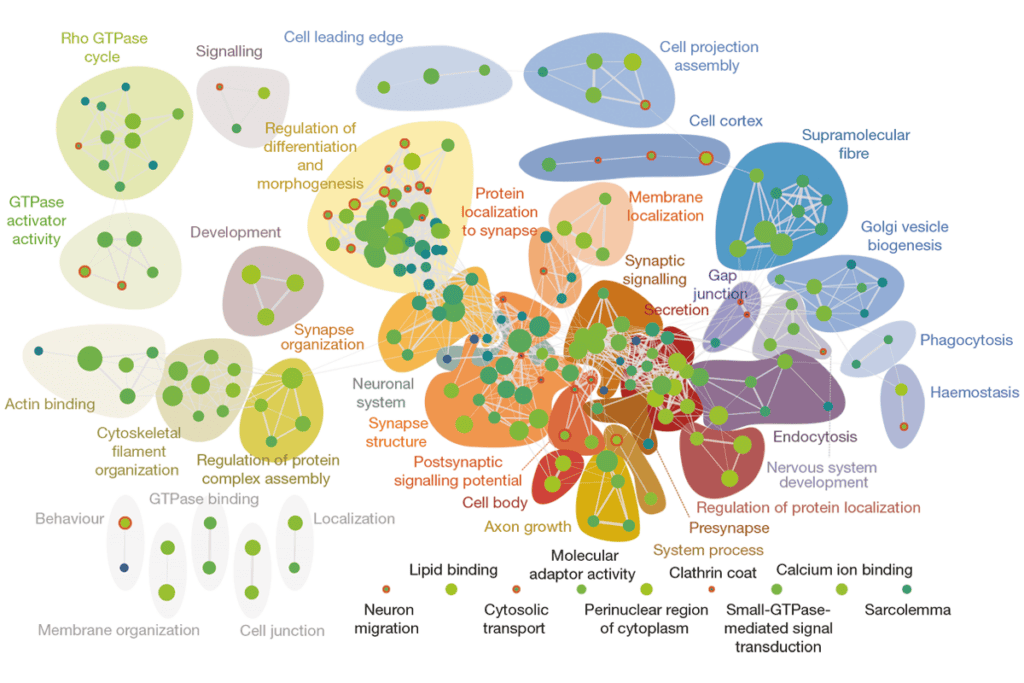
Machine-learning model spots autism-linked variants that scramble splicing
The model provides a way to investigate genetic variation in regions of the genome whose functions have been difficult to interpret.
Machine-learning model spots autism-linked variants that scramble splicing
The model provides a way to investigate genetic variation in regions of the genome whose functions have been difficult to interpret.