Vaccines
Recent articles
Autism scientists push back on CDC’s inaccurate vaccine claims
The CDC website now falsely suggests that autism-vaccine research is still an open question, prompting distrust among researchers—some of whom anticipate “more unreliable statements coming from the junta that took over” the agency.
Autism scientists push back on CDC’s inaccurate vaccine claims
The CDC website now falsely suggests that autism-vaccine research is still an open question, prompting distrust among researchers—some of whom anticipate “more unreliable statements coming from the junta that took over” the agency.
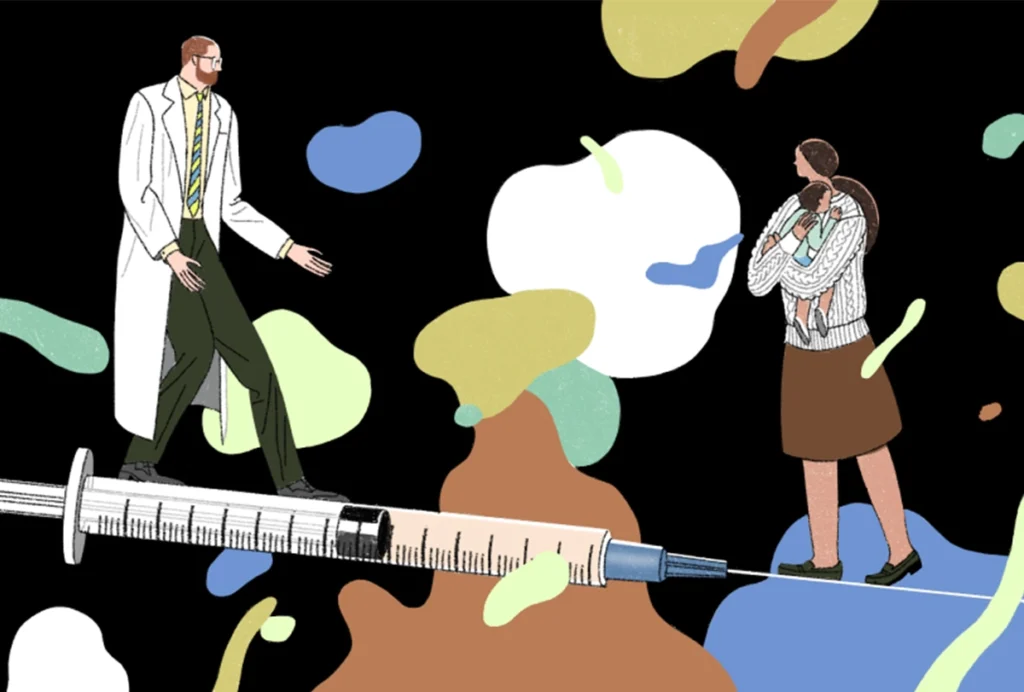
Roundup: The false association between vaccines and autism
In light of Robert F. Kennedy Jr.’s U.S. Senate confirmation hearings this week, The Transmitter has rounded up our past coverage of the false association between vaccines and autism.
Roundup: The false association between vaccines and autism
In light of Robert F. Kennedy Jr.’s U.S. Senate confirmation hearings this week, The Transmitter has rounded up our past coverage of the false association between vaccines and autism.
Explore more from The Transmitter

Highly cited autism paper earns expression of concern over data duplications
The notice, published in Nature last week, also addressed an image duplication identified by a prominent research-integrity sleuth.
Highly cited autism paper earns expression of concern over data duplications
The notice, published in Nature last week, also addressed an image duplication identified by a prominent research-integrity sleuth.

Govern neurodata by how it’s used, not where it’s from
New neurodata laws will shape how researchers gather, share and reuse brain data. A use-based governance protects basic researchers and those whose data are being used, without freezing science.
Govern neurodata by how it’s used, not where it’s from
New neurodata laws will shape how researchers gather, share and reuse brain data. A use-based governance protects basic researchers and those whose data are being used, without freezing science.
How new technologies can bring primatologists and systems neuroscientists together
The two groups study the same behavioral phenomena yet rarely interact or read each other's work—a mutual blind spot that weakens both fields. New technologies offer a chance to bring them together.
How new technologies can bring primatologists and systems neuroscientists together
The two groups study the same behavioral phenomena yet rarely interact or read each other's work—a mutual blind spot that weakens both fields. New technologies offer a chance to bring them together.