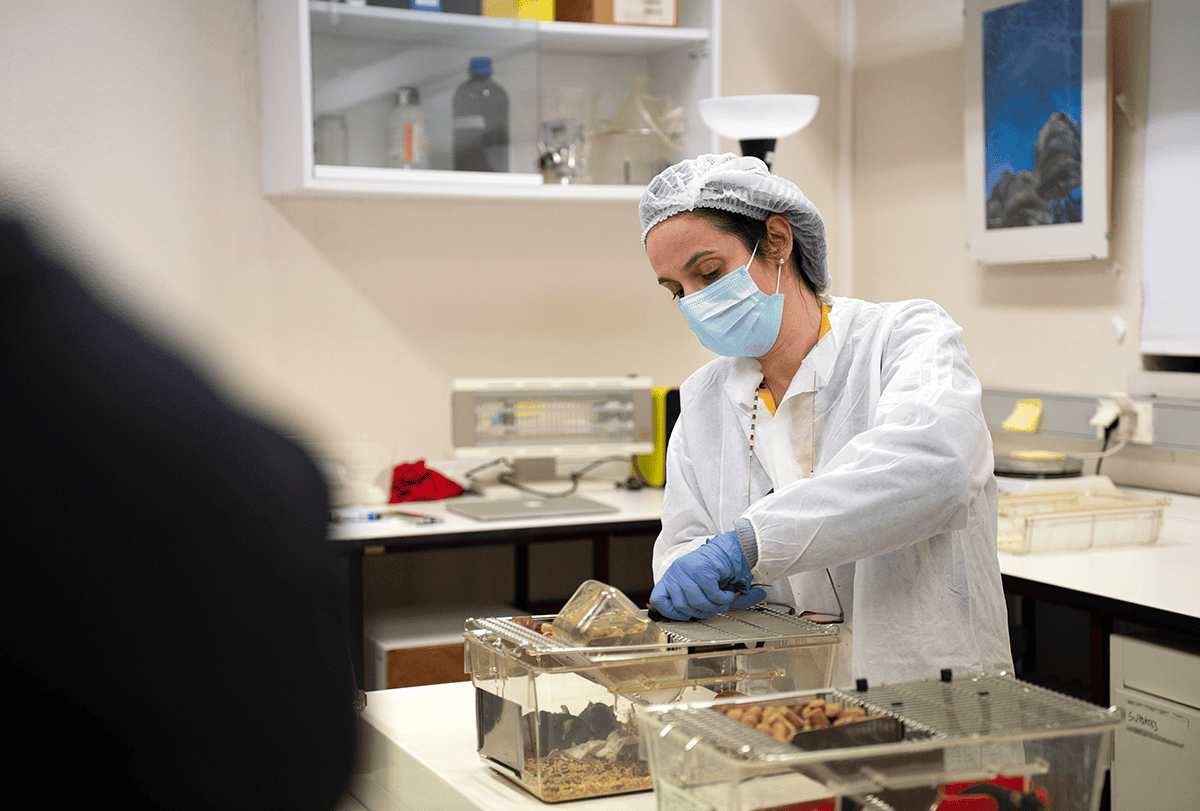
Diabetes researcher from NOVA Medical School, Portugal, shows how mice used to study blood glucose regulation, memory changes and metabolic processes associated with diabetes are kept in laboratory.
Face time: During each visit, participants hear short talks from researchers, walk through the animal facilities, watch experiments and ask questions about the work.
Courtesy EARA / João Balsa / NOVA Medical School
Add us as a Preferred Source on Google

Public engagement can help cultivate support for animal research

The European Animal Research Association’s Patient Discovery Project connects researchers with people who have the conditions they study. The learning goes both ways.

By Kirk Leech
6 November 2026 | 7 min read

Monique Bosman came to see the monkeys, she says. She lives with Parkinson’s disease, and on a recent visit to the Biomedical Primate Research Centre in the Netherlands, she stood by the outdoor enclosures, watching more than 1,000 monkeys whose brains help researchers study conditions like hers. 

Nonhuman primate (NHP) research accounts for a fraction of 1 percent of all animal research procedures in Europe. Yet no other type of research draws as much scrutiny. For instance, in 2025, both houses of Parliament in the Netherlands backed a plan to end public funding by 2030 for the very center Bosman visited—a measure the Dutch government thankfully later reversed. In Germany, the national research funder, the research ministry and the main political parties have all had to defend animal research against advocates who have called on the federal parliament for a European-Union-wide end to primate studies—a ban that would drive research abroad, scientists warn.

Openness and transparency around NHP research has never been more urgent. Activist groups have organized their efforts to end animal research through campaigns, such as the European Citizens’ Initiative, that have gathered more than a million signatures in support of their cause. Left unopposed, these groups drive a narrative that the majority of the public supports banning animal research. 

As executive director of European Animal Research Association (EARA), a nonprofit organization dedicated to communicating the need and benefits of animal studies, I have worked with my colleagues to counter these politically inspired phase-out efforts. 

Bosman’s visit was part of one of our initiatives, EARA’s Patient Discovery Project, in which we organize meetings between people living with a disease and the researchers studying it. During each visit, which we call a Discovery Day, participants hear short talks from researchers, walk through the animal facilities and watch experiments in action, such as behavioral tests and live imaging. Participants also have the opportunity to sit down with the scientists and ask whatever they want. We have run this program at research institutions in the Netherlands, Portugal, Belgium and Spain, involving participants with a wide range of conditions, including Parkinson’s and other neurodegenerative diseases, diabetes and long COVID-19.
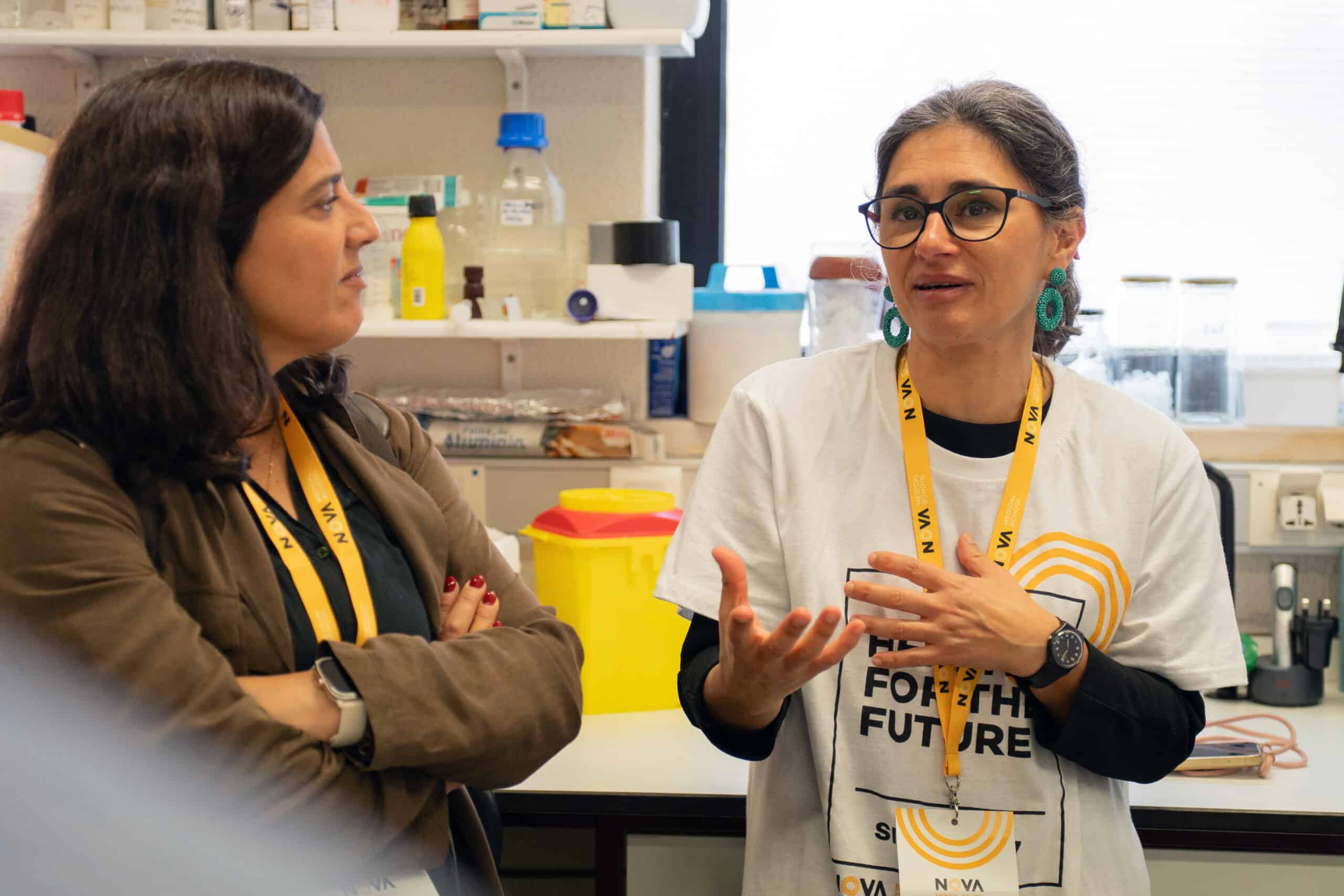
Diabetes researcher explains her work to participants.
Give and take: During Patient Discovery Days, participants come to understand why animals are used in research and researchers hear what matters most to those they are trying to help.
Courtesy EARA / João Balsa / NOVA Medical School

Bosman had arrived at the facility genuinely unsure of her feelings toward NHP research; what stayed with her after the visit was seemingly mundane, but it challenges head-on the narrative of activist groups opposed to animal use. “I was very surprised to see the really good living conditions, that the monkeys live in groups, and they actually have a better space and surroundings than in many zoos,” she told us. 

Enabling this perspective is why openness initiatives such as the Patient Discovery Project are essential. In our experience, participants leave informed and keen to be involved in wider public engagement on the use of animals in research. The case for animal research will not be won unless people beyond the laboratory are willing to help make it.

F

or a long time, I was reluctant to ask people living with disease to be those ambassadors. As EARA’s executive director, I did not think it was right to ask them to be nonspecialist supporters of animal research and to make the scientific and moral case for it while research organizations themselves stayed silent. It seemed wrong and cowardly to put those living with disease at the front of a debate that scientists and institutions would not enter themselves.

For years, many research institutions were wary of discussing their use of animals at all, fearing protests, harassment and damaging headlines. Their fear was not baseless; it drew on real episodes of activist extremism. But over the past decade, in Europe and other parts of the world, it has become a bit easier for institutions to be open about animal research.

In 2014, for example, U.K. research organizations signed the Concordat on Openness on Animal Research in the UK—a public promise to be clear about how and why they use animals. Spain followed in 2016 with what is now the world’s largest such agreement, and 10 more countries have since adopted similar measures, including Portugal, Germany, Australia, Canada and the United States. More than 600 institutions worldwide have signed agreements committing to speak openly about their animal research to inform the public and the media about how it is done. 

Because of this progress, three years ago my colleagues and I at EARA judged it to be the right moment to bring people living with disease into the debate. When they visit labs, something shifts on both sides. Participants come to understand why animals are used in research and how researchers ethically safeguard their welfare. Researchers, in turn, hear what matters most to those they are trying to help. Openness makes for better research, and it works only if institutions and scientists play their part. Bringing people living with disease into labs has proved its worth. The results are hard to ignore. 

For example, in a survey after a visit to the National Centre for Biotechnology (CNB-CSIC), organized in collaboration with the Madrid Long Covid Association (AMACOP), 90 percent of Patient Discovery Project participants said their views on animal research had changed, 100 percent recognized its medical impact and 90 percent said they would not support slowing medical progress to reduce animal use. One of them, Beatriz del Barrio, had arrived with what she called “a very negative opinion about animal research,” but after a day spent with scientists, she said that seeing the humane treatment of the animals had left her with “a completely different perspective.” At KU Leuven, where representatives from neurological associations across Europe saw how researchers worked with fruit flies, mice and macaques at different stages of brain disease research, three quarters said their views had changed, and all of them backed institutional transparency. 

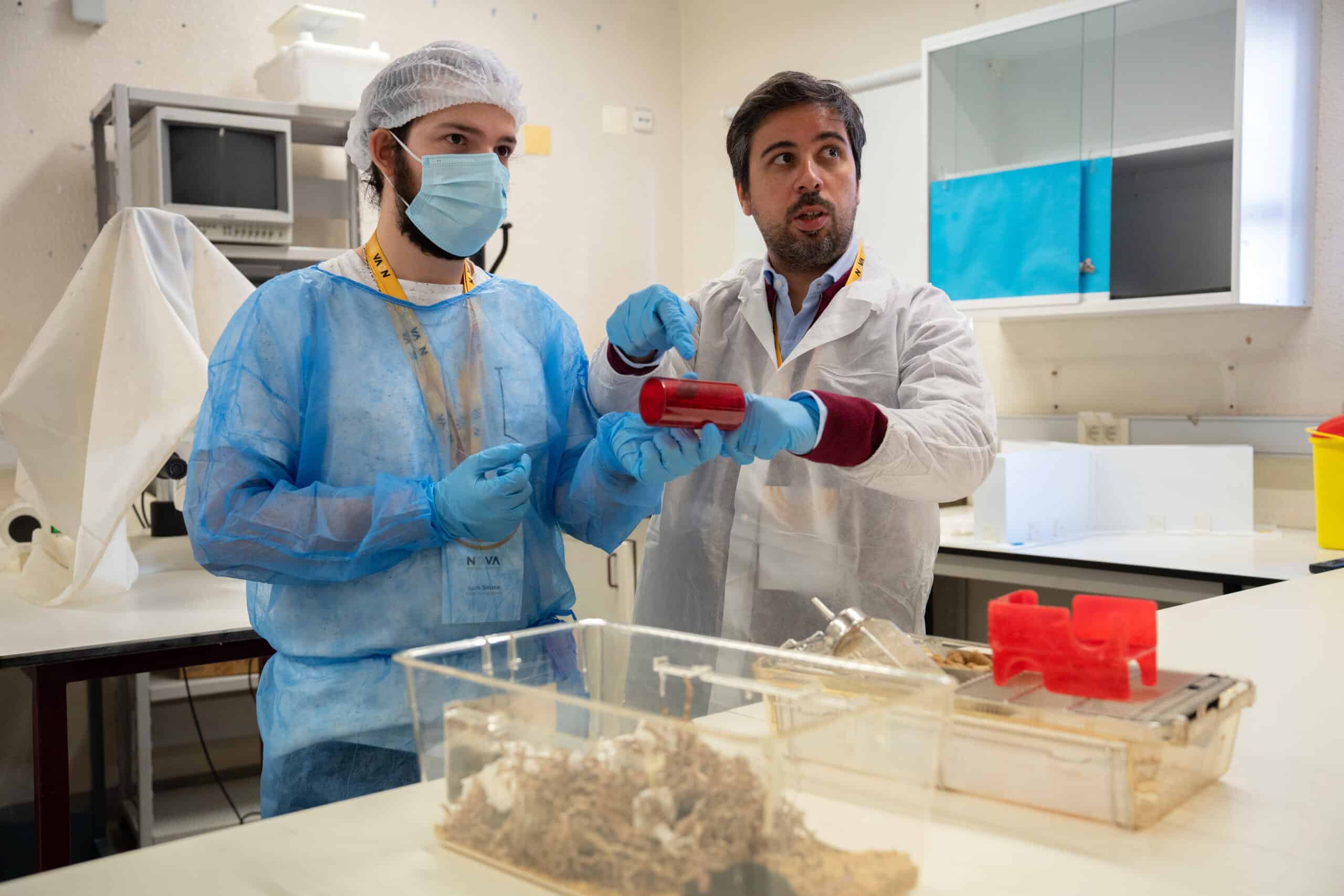
Diabetes researchers from NOVA Medical School, Portugal, explain how they use a plastic tube to move mice from a place to another.
Anywhere and everywhere: EARA has run the program at institutions in the Netherlands, Portugal, Belgium and Spain.
Courtesy EARA / João Balsa / NOVA Medical School

These are small, self-selected groups, but the impact is consistent: People who start out uneasy, or opposed, tend to leave informed and supportive of the use of animals in research. And the researchers are affected too. Sílvia Conde, who studies diabetes at Portugal’s NOVA Medical School, described opening her lab to people living with the disease as “an amazing opportunity to listen and learn from their experiences and to see if our research is aligned with real [patient] needs.” For Isabel Sola, who co-leads the coronavirus group at the National Centre for Biotechnology, that alignment became concrete: Studies describe hundreds of long COVID symptoms, she said, but people living with the condition “help us understand which ones are truly dominant in real life. That allows us to prioritize the right questions and reconsider what we analyze in our animal models.” Openness does not just soften public perception of research; it also feeds back into study design, sharpening questions.

Our next step is to make this kind of engagement continuous rather than occasional. EARA is building a Patient Network to turn one-off visits into sustained dialogues that shape how researchers design studies and what politicians and the public hear, not only from scientists researching a disease but from people living with it.

That is why we need you, neuroscientists, to take this opportunity to open your facility, explain your research and let those who live with the diseases you study see your work. Martine Pinheiro, who lives with early-onset Parkinson’s disease and who visited the Champalimaud Foundation in Lisbon, said her experiences that day did not solve her medical circumstances, “but it changed how we face the future, giving us greater hope.” A field that depends on public trust should offer more experiences like hers.

AI use disclosure:

The author used Claude (Anthropic) to compile the participant statistics and quotations from EARA's published project pages into part of the first draft and to tighten sentence structure for accessibility. All figures and quotes were checked against EARA's own records, and the author stands by the accuracy of the piece.

Sign up for our weekly newsletter.

Catch up on what you missed from our recent coverage, and get breaking news alerts.