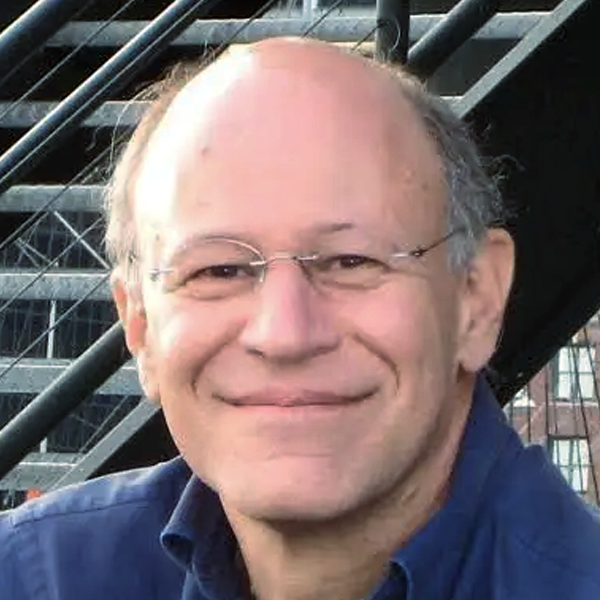
Larry Abbott is William Bloor Professor of Theoretical Neuroscience and Professor of Physiology and Cellular Biophysics (in Biological Sciences) at Columbia University and principal investigator at the Zuckerman Institute. He is also co-director of the Kavli Institute for Brain Science.
Abbott is a physicist-turned-neuroscientist who uses mathematical modeling to study neural circuits responsible for sensation, action and behavior. In addition to doing theoretical work on neural network and synaptic dynamics, he has collaborated with numerous experimental colleagues on a variety of topics and systems, including vision, olfaction, electrosensing, motor control, memory and navigation. His current work includes connectome-based circuit modeling of neural circuits in Drosophila.
In collaboration with Eve Marder, he developed the dynamic clamp, a tool of experimental electrophysiology, and he is the co-author with Peter Dayan of a widely used textbook on theoretical neuroscience.
Abbott completed his Ph.D. in physics at Brandeis University, and his postdoctoral work at the Stanford Linear Accelerator Center (now the SLAC National Accelerator Laboratory) was in theoretical particle physics. He was professor of physics at Brandeis when, in 1989, he transitioned to neuroscience research, joining the biology department in 1993. He moved to Columbia University in 2005.