LISTEN TO THIS STORY:
0:00
/
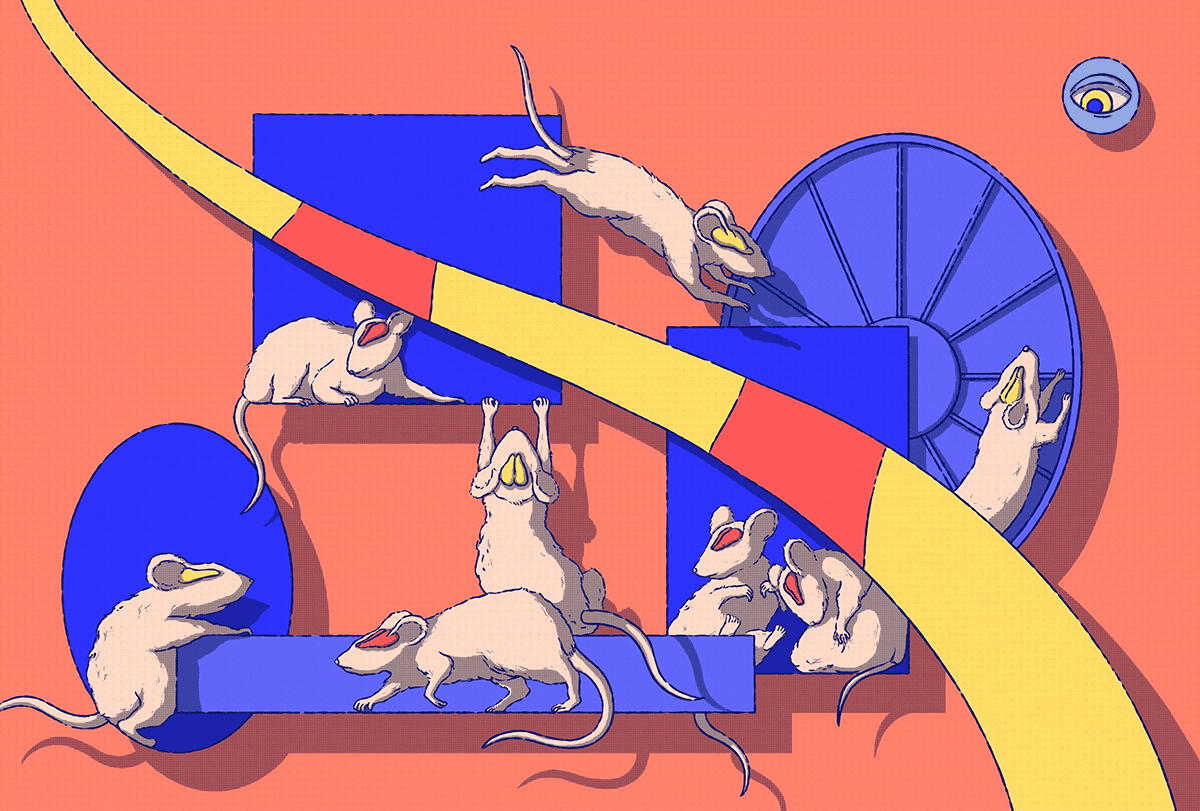
In a 2007 Science paper, Mark Mayford and his colleagues found that some neurons activated during learning are also recruited during memory retrieval. Noelia Weisstaub shares how this study and others drove an era of great progress in tool development.
Leia este artigo em português.
Answers have been edited for length and clarity.
What paper changed your life?
Localization of a stable neural correlate of associative memory. Reijmers L.G., Perkins B.L., Matsuo N. and Mayford M. Science (2007)
This paper addressed a key question that the field had been trying to address since the late 20th century: Are neurons that are active during learning the same ones that get activated during memory retrieval? Mark Mayford’s group found that a subset of basolateral and lateral amygdala neurons that were active when mice underwent fear conditioning were also active when animals recalled that fear memory.
Although this finding was important, I think the paper’s most significant impact was in tool development. The authors developed the TetTag mouse, a transgenic mouse line that made it possible to tag neurons that are active during a specific time window. Neurons are tagged when the mice are fed doxycycline. The researchers conducted the fear-learning experiments during this feeding period, labeling active neurons, and then they performed memory retrieval experiments after they stopped feeding the mice doxycycline. They could then evaluate if the same neurons were active again during retrieval.
It might seem like a common tool now, but before we had these models, the field could only study this question in very indirect ways, such as by pharmacologically blocking entire neuronal populations during memory retrieval. This paper was the first evidence for me that we had the tools to track neurons involved in memory consolidation and retrieval in a way that was cell-specific.
When did you first encounter this paper? What were you working on at the time?
When this paper came out, I was finishing my Ph.D. in René Hen’s and Jay Gingrich’s labs at Columbia University. I was studying the role of serotonin 2A receptors in mood regulation and the mechanism of action of psychedelic drugs in the prefrontal cortex. I was not working in memory at that time, but I was still following the area—not only because it is always an interesting topic, but also because I was thinking about the role of serotonin modulation in memory as a potential area of interest to pursue after my Ph.D.
Why is this paper meaningful to you?
This paper served as a type of bridge to take me from studying the role of serotonin modulation in the context of emotion to studying it in memory.
I had always thought that if the prefrontal cortex had so much serotonergic innervation, its modulation must be playing a role in cognitive functions, such as memory. After completing a postdoc in Gingrich’s lab, I returned to Argentina and joined the lab of Jorge Medina at the Universidad de Buenos Aires to pursue that line of work. At the time, Medina’s lab was working on memory consolidation and disambiguation. The transition to this type of research came naturally for me, and it was sparked—in part—by me reading this paper.
How did this research change how you think about neuroscience and influence your scientific trajectory?
I think that this and other great tool-development papers at the time opened an era of significant progress within neuroscience. Many labs were working on developing tools to manipulate and visualize brain regions in ways that were not possible before.
For instance, Karl Deisseroth and his group developed optogenetics around the same time, which works in a similar manner by using selective genetic promoters to drive and manipulate neuronal activity. The genetic tools being developed in different labs shows that this type of thinking was in the air. The whole field knew that to make the next big leaps in neuroscience, we needed these tools, and everyone was working toward this.
The tools developed in this era of neuroscience made it possible for us to get at big, challenging questions: Where are memories stored? How many neurons do you need? How big is that memory network? How many neurons do you need to actually trigger a memory?
Is there an underappreciated aspect of this paper you think other neuroscientists should know about?
The paper made a huge impact on the community when it came out. I think that the beauty of this work was that they brought together a lot of other genetic tools and knowledge that already existed to create something new.
Their findings allowed the field to speak with more certainty about this idea that memories recruit neurons that are active during learning—even though you don’t need to activate all of the same neurons. This is one of those findings that validated something that a lot of other labs had found indirect evidence of, but nobody at the time had been able to fully solve. It’s a paper that’s kind of a gold standard because it made a bold finding and provided tools for researchers to ask similar questions in other lines of research.