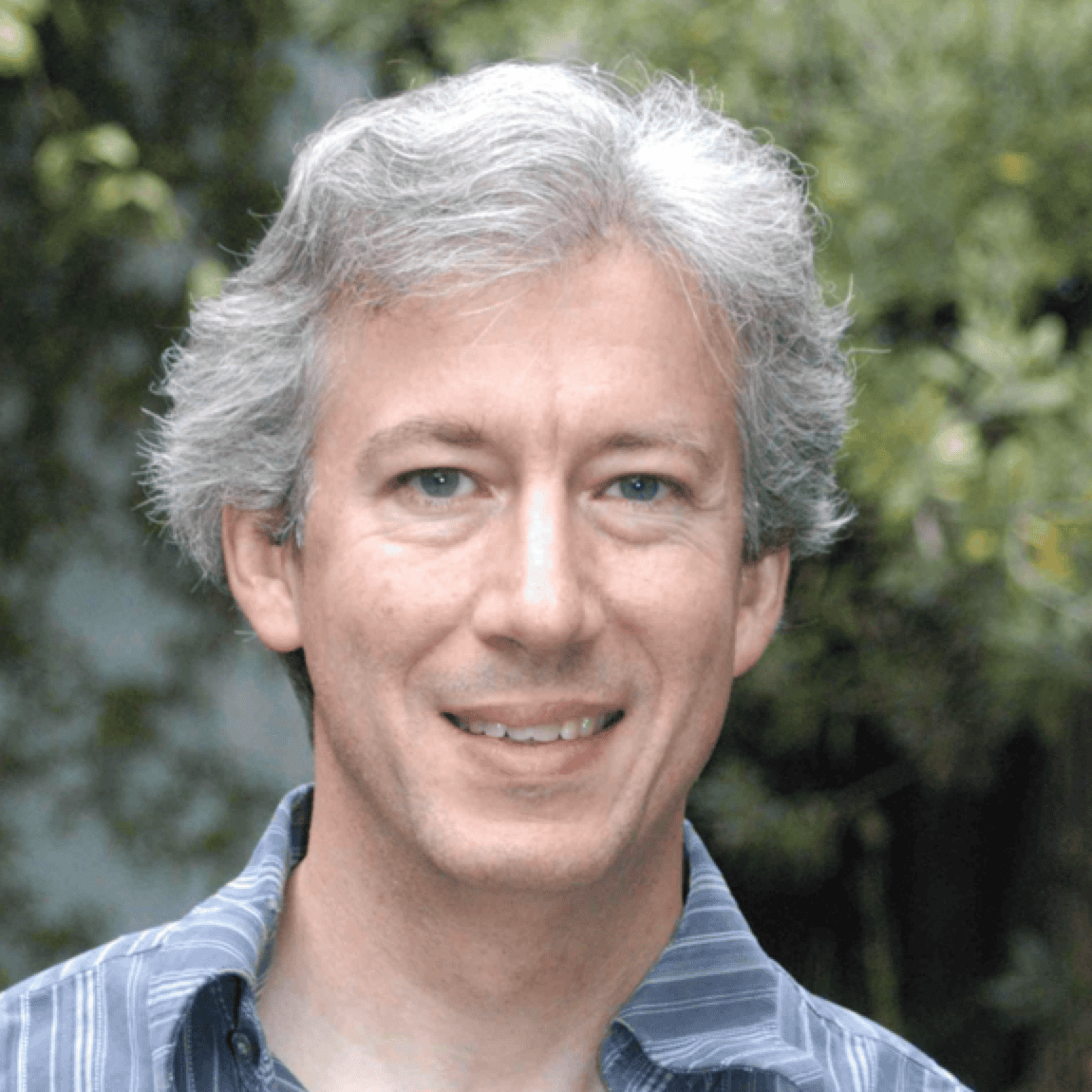
Stephen Baccus is professor and chair of neurobiology at the Stanford University School of Medicine. He studies visual processing in the retina and primary visual cortex, with the goal of explaining visual computation and adaptation under natural viewing conditions in terms of the combined actions of diverse neurons and circuits. He uses experimental methods, including electrophysiology and optimal imaging to record populations of neurons in the mouse, as well as a wide range of computational and theoretical methods, including dynamical systems, neural networks and normative approaches. His laboratory also develops methods of interpretable machine learning to understand how models of the visual system and artificial neural networks perform tasks.
Baccus earned a B.S. in computer science in 1983 and a J.D. in 1986 at the University of Miami, followed by an M.S. in computer science at New York University’s Courant Institute of Mathematical Sciences iin 1987. He practiced law in Miami from 1987 to 1994 and then earned a Ph.D. in neuroscience at the University of Miami in 1998, studying properties of electrical propagation and synaptic transmission in the leech nervous system. He spent six years as a postdoctoral researcher at Harvard University studying visual processing in the retina, and in 2004 he joined the faculty of the Department of Neurobiology at the Stanford University School of Medicine. He co-directed the “Methods in Computational Neuroscience” course at the Marine Biological Laboratory in Woods Hole, Massachusetts, from 2018 to 2023.