In 2014, Dheeraj Roy, then a graduate student in Susumu Tonegawa’s lab, induced retrograde amnesia in mice by blocking protein synthesis, which is essential for memory formation. But when Roy and his colleagues reactivated the neurons thought to hold the animals’ memory, the amnesic mice remembered just fine.
“Essentially, every amnesic mouse that we reactivated the engrams in would display normal recall, no different from a control animal,” recalls Roy, who is now assistant professor of physiology and biophysics at the University at Buffalo. “Susumu loved this; he loved anything that goes against what people think.”
In a series of papers in the 2010s, Tonegawa and his team showed that simply activating a subset of cells via optogenetics could reactivate a memory, change its valence and even create a false memory. This work launched the field of engram neuroscience, says Steve Ramirez, associate professor of psychological and brain sciences at Boston University, who did his Ph.D. with Tonegawa.
Through experiments such as these, Tonegawa pushed the field of learning and memory, says Sheena Josselyn, senior scientist at the Hospital for Sick Children, who co-directed courses and wrote a review with Tonegawa. “He did these really bold experiments, really bold ideas that sometimes it took the field a while to catch up with.”
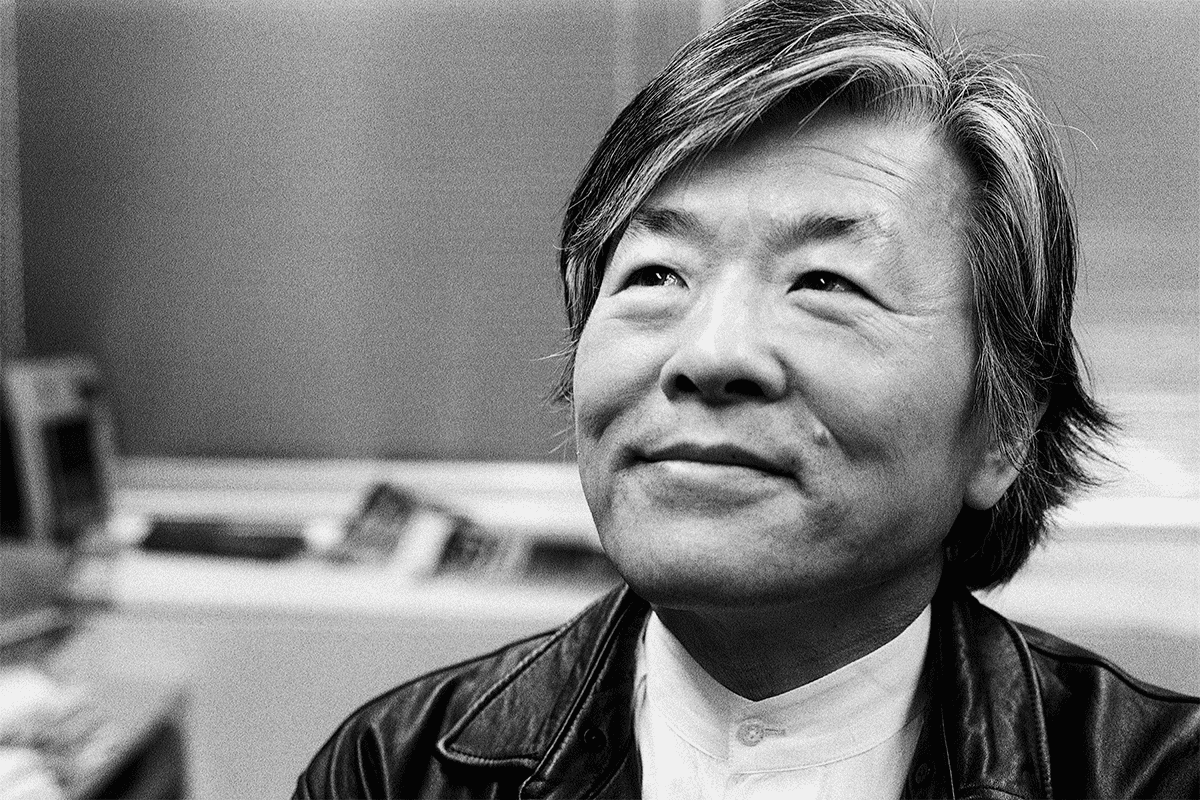
Tonegawa, who passed away on 11 July at the age of 86, won the 1987 Nobel Prize in Medicine or Physiology for his work on antibody diversity. He also pioneered work in transgenic mice, creating CAMKII knockouts, for example, that gave the field the ability to manipulate genes in cell-type and brain-region-specific ways, Ramirez says. He was “combining neuroscience and genetics in a way that truly had not been done before.”
Tonegawa also founded the Center for Learning and Memory (now called the Picower Institute for Learning and Memory) at the Massachusetts Institute of Technology (MIT) and was director of the RIKEN-MIT Center for Neural Circuit Genetics and director of the RIKEN Brain Science Institute.
As a scientist, he was “an intellectual giant” and a fierce competitor, but also “a lovely human being,” Josselyn says. “He was shy in aspects of life, but never shy in science,” she says. “Neuroscience in general is really going to miss that sort of bold thinking that he has.”
T
After reading the foundational papers of operon theory, the model for prokaryotic gene regulation, Tonegawa decided to study molecular biology instead. He completed his Ph.D. in 1968 at the University of California, San Diego, where he focused on transcriptional control of lambda phage, and he conducted postdoctoral work at the Salk Institute.
His foray into immunology began after he took a position at the Basel Institute for Immunology, where he encountered a debate that became central to his Nobel Prize-winning work—namely, how antibodies are generated. In 1981, he moved back to the United States and continued that work at MIT’s Center for Cancer Research.
After winning the Nobel, though, Tonegawa wanted to solve another puzzle, which pushed him into the field of neuroscience. “I thought I’d like to continue studying equally mysterious scientific problems that remained unsolved,” he told the Lasker Foundation in a Q&A. He chose memory because it “seems to be at the center of a variety of other mind phenomena like decision, thought, emotion, consciousness.”
Early in 1996, Hongkui Zeng, then a recent Ph.D. graduate, interviewed with Tonegawa for a position in his lab. “He said, ‘I’m going to show you something that’s going to change neuroscience forever,’” she recalls. Using genetic engineering from his molecular biology background, Tonegawa had created a CAMKII-Cre transgenic mouse, which provided “amazing genetic control,” says Zeng, who decided to take the position and is now director of the Allen Institute. He went on to knock out neural genes such as NMDA receptors in specific cell types to show their essential role in memory formation.
But Tonegawa wanted to go beyond genes and molecules, Zeng says. “He was looking for evidence of really synaptic-level changes, this kind of cellular ensemble that stores memory. So then he embarked on that question.”
Tonegawa and his team ultimately found “what we think is the physical correlate of memory in the brain,” Ramirez says, which heralded in a new renaissance of artificially controlling memories.
Tonegawa found that engrams go beyond discrete brain regions of learning and memory. For example, the cortex has engram-like changes, and engrams appear throughout the brain, including in regions such as the thalamus, two studies showed. “That’s been his dream all along. When I met him in 2012, he said we need to explain memory at the whole-brain level,” Roy says. “He was getting so bored of the hippocampus.”
O
Tonegawa’s other love was baseball, and while he was at MIT he often took lab members to see the Red Sox, Ramirez says. “The two things that he could talk about endlessly, and kind of the only two things he could really talk about, were science or the Red Sox.” He also took his lab on outings to go skiing, and every winter he invited them to a black-tie party at his house, where Broadway actors performed.
Tonegawa ran his lab at MIT until his death, although in 2006 he had to step down as director of the Picower Institute after a university investigation found that he had discouraged a young researcher from accepting a faculty position because their work overlapped.
Deep down, he was an ambitious and competitive scientist and could be blunt in the way he worked with people, Zeng says. “He had high expectations, and he expected independence,” she adds. “He was really kind of unapologetic.”