Hunger pangs build with activity in Agouti-related protein (AgRP) neurons, and when we eat, these cells fall silent, signaling to the body that it’s full. Until recently, researchers thought these neurons responded to calorie intake alone, but a new study shows fructose quiets them less effectively than glucose does, even though both simple monomeric sugars carry the same number of calories.
“We were really surprised when we tested these different sugars and found that fructose looks much different than glucose,” says study investigator Amber Alhadeff, a member of the Monell Chemical Senses Center and adjunct assistant professor of neuroscience at the University of Pennsylvania.
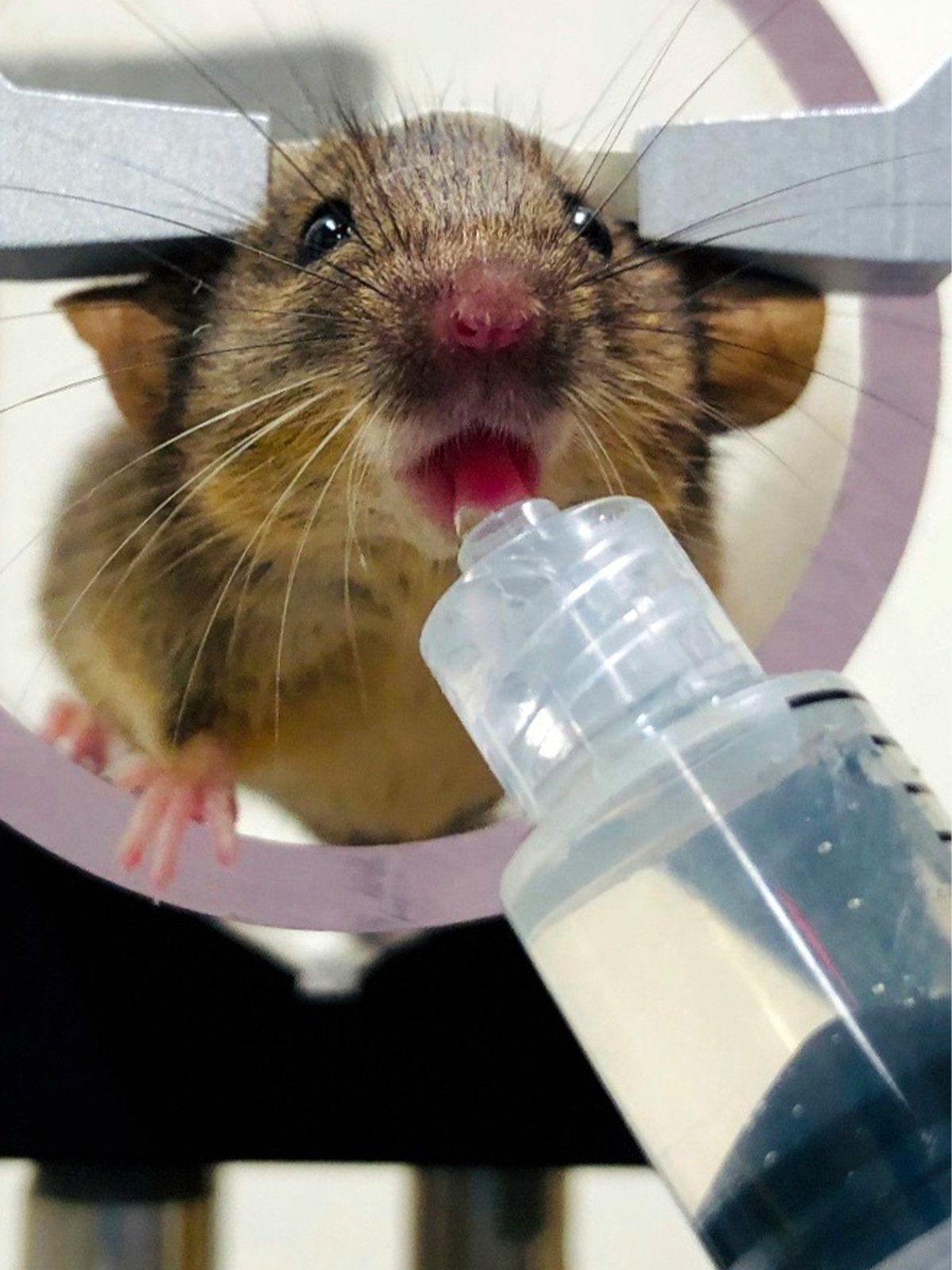
Fiber photometry recordings of individual AgRP neurons in mice consuming fructose or glucose solutions first tipped the lab off to the fact that fructose is the weaker inhibitor. The same difference surfaced when the team infused the solutions directly into the animals’ guts, controlling for the fact that the mice tended to take more licks of the glucose than fructose. Glucose does not require the vagus nerve to inhibit AgRP neurons, according to previous work from Alhadeff’s group, but fructose does, the new study demonstrates.
This study is the first to show “that the brain is responding to these things in different ways, and with a real mechanistic underpinning,” says Martin Myers, professor of diabetes research at the University of Michigan Medical School, who was not involved in the research. “This is an absolutely fabulous lab that is doing things that few, if any, other people in the world can do.”
O
nce the team discovered that fructose acts through the vagus nerve, Alhadeff’s graduate student Aaron McKnight hit the mechanistic ground running. He worked for five years, according to Alhadeff, to show that fructose activates the vagus nerve, releasing a hormone called PYY that signals Y2 receptor-expressing vagal afferent neurons and then inhibits AgRP neurons. Glucose does not lead to increased PYY levels, acting through gut-spinal afferent signaling—a separate peripheral pathway.The differences in how powerfully the two sugars inhibit AgRP neurons and their mechanistic pathways may help to explain why the mice preferred glucose to fructose, the study argues, even though neither sugar satiates the mouse more; glucose better quells the cells’ activity.
“It’s not the functional effect you might have predicted, which is the amount of food consumed, but rather the preference,” says Zachary Knight, professor of physiology at the University of California, San Francisco and an investigator at the Harvard Medical Institute, who was not involved in the work.
Alhadeff and her colleagues also tested the mice’s preference for high fructose corn syrup—a blend of fructose and glucose. The mice preferred it as much as glucose, and at high levels its inhibition of AgRP looked identical to glucose as well. But price, not preference, likely explains the abundance of high fructose corn syrup in Western diets, Myers says. “I think our diets are so fructose-rich just because fructose is so cheap.”
A lot of people treat calories as calories, Alhadeff adds, but “there’s a growing appreciation that that’s not true. This study takes it a step further and shows that even within simple sugars, a calorie is not a calorie, and that these simple sugars are influencing gut-brain physiology quite differently.”