Parkinson’s disease
Recent articles
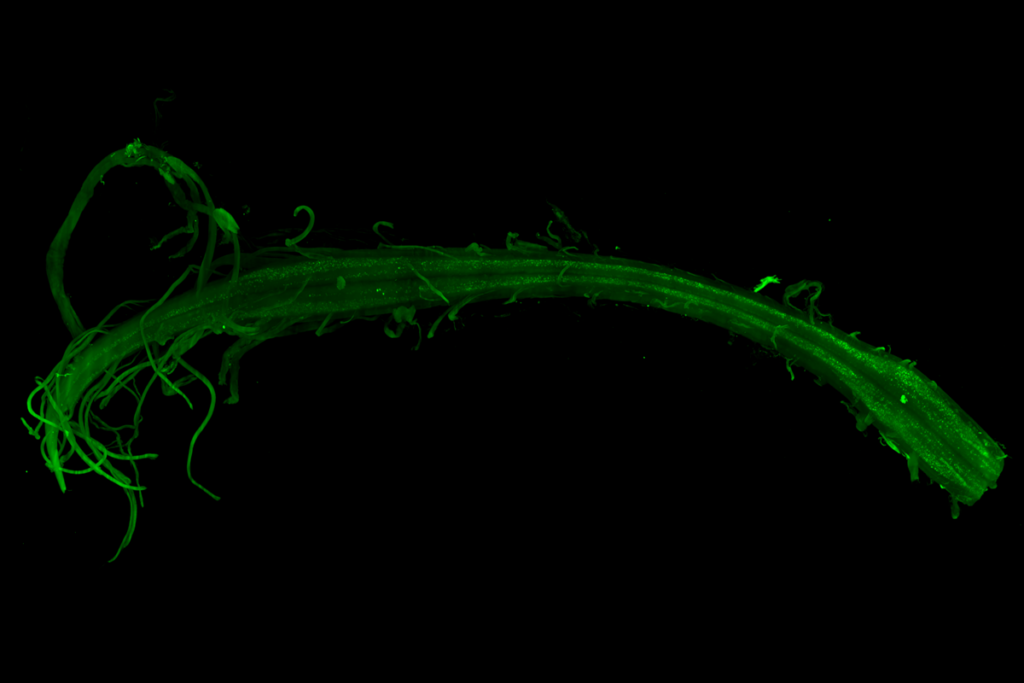
Allen Institute sets sights on treatments for five brain diseases
The Brain Health Accelerator program aims to harness single-cell transcriptomics and cell-type-specific genetic tools to develop treatments for Alzheimer’s, Huntington’s and Parkinson’s diseases, Lewy body dementia and ALS.
Allen Institute sets sights on treatments for five brain diseases
The Brain Health Accelerator program aims to harness single-cell transcriptomics and cell-type-specific genetic tools to develop treatments for Alzheimer’s, Huntington’s and Parkinson’s diseases, Lewy body dementia and ALS.
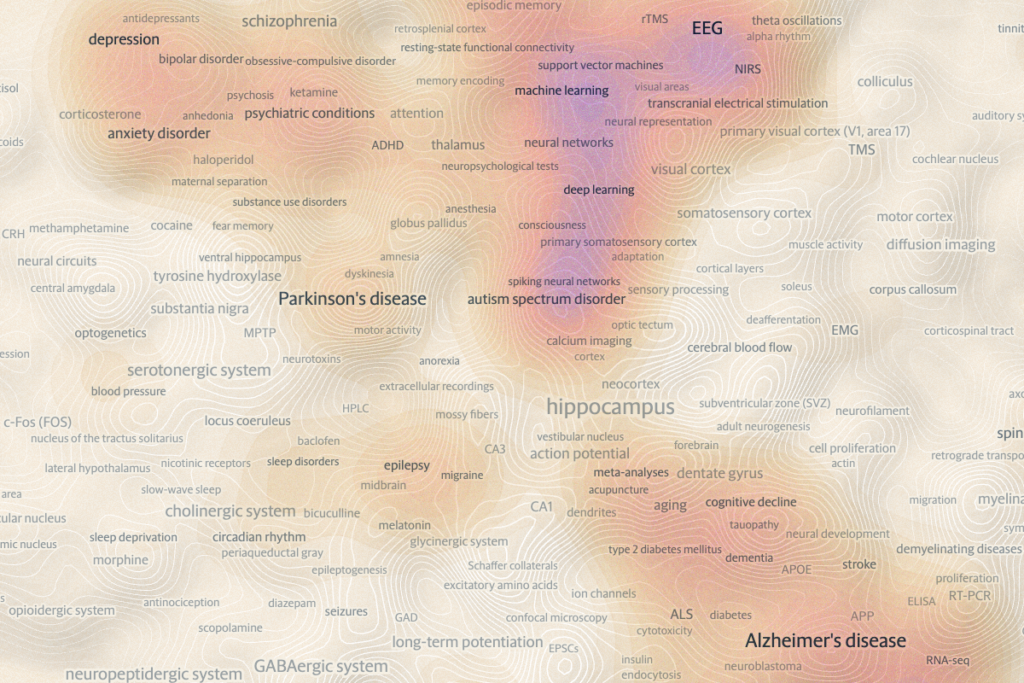
Putting 50 years of neuroscience on the map
Navigate the rise and fall of research topics over five decades using our interactive map, which is based on a semantic analysis of nearly 350,000 abstracts in leading neuroscience journals.
Putting 50 years of neuroscience on the map
Navigate the rise and fall of research topics over five decades using our interactive map, which is based on a semantic analysis of nearly 350,000 abstracts in leading neuroscience journals.
‘Elusive Cures: Why Neuroscience Hasn’t Solved Brain Disorders—and How We Can Change That,’ an excerpt
In her new book, published today, neuroscientist Nicole Rust takes us on her personal quest to spell out the brain research community’s “Grand Plan.”
‘Elusive Cures: Why Neuroscience Hasn’t Solved Brain Disorders—and How We Can Change That,’ an excerpt
In her new book, published today, neuroscientist Nicole Rust takes us on her personal quest to spell out the brain research community’s “Grand Plan.”
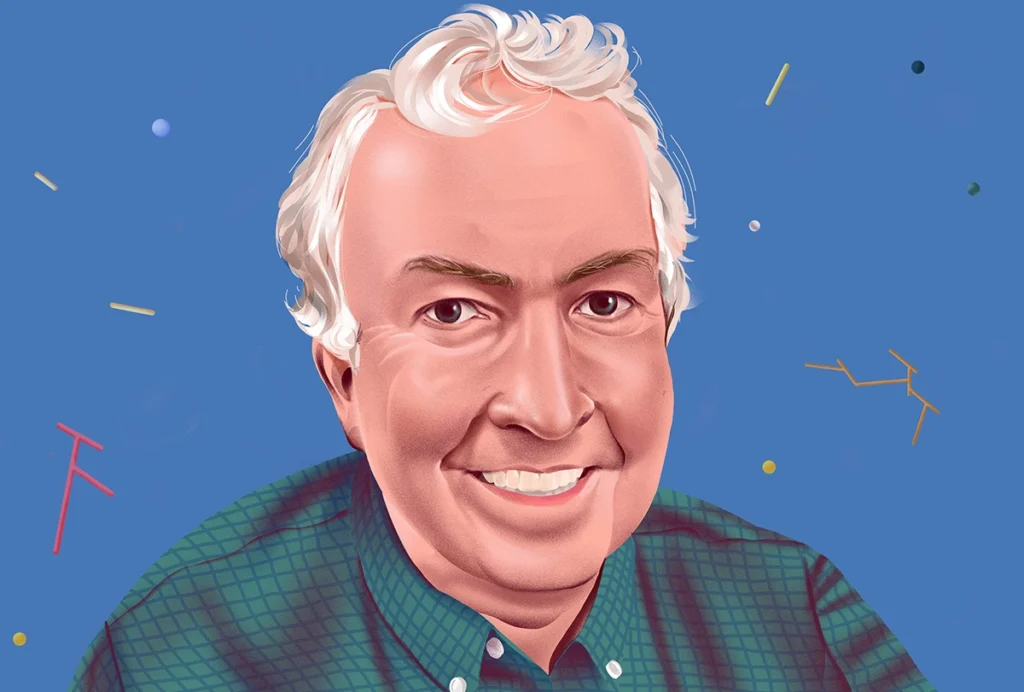
Timothy Ryan on his pivotal switch from studying particle physics to decoding synaptic transmission
Dissuaded from pursuing theoretical physics and deterred by the “long feedback loop” in experimental physics, the National Academy of Sciences member took inspiration from “polymath” Watt Webb and “visionary” Stephen Smith—and learned to work “completely outside his comfort zone.”
Timothy Ryan on his pivotal switch from studying particle physics to decoding synaptic transmission
Dissuaded from pursuing theoretical physics and deterred by the “long feedback loop” in experimental physics, the National Academy of Sciences member took inspiration from “polymath” Watt Webb and “visionary” Stephen Smith—and learned to work “completely outside his comfort zone.”
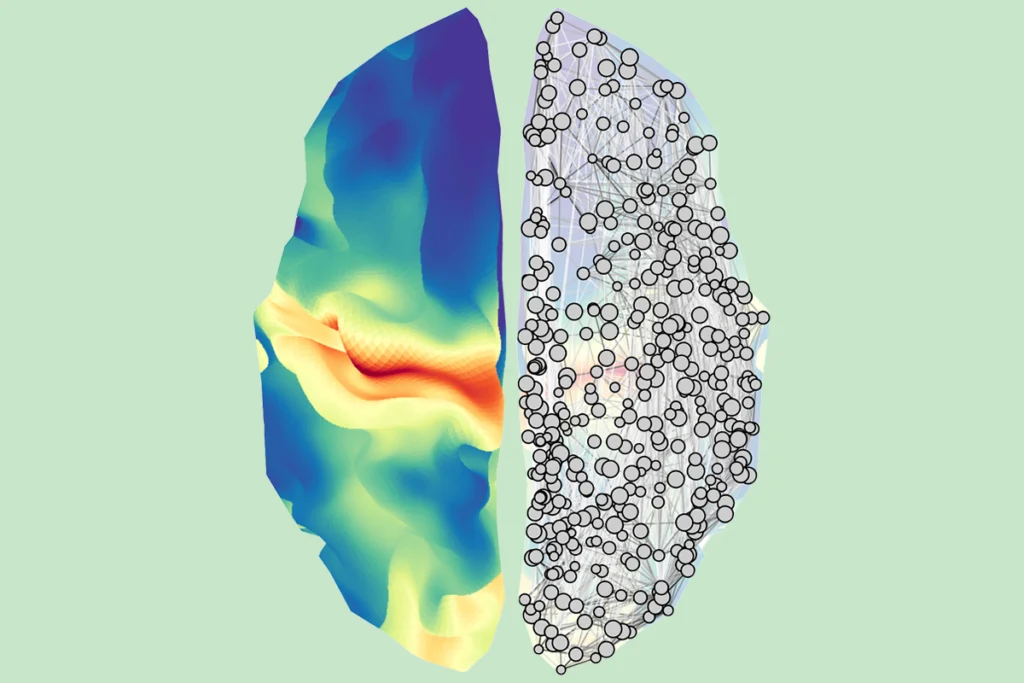
How can we fold cellular-level details into whole-brain neuroimaging networks?
I got answers from Bratislav Misic, who is inventing practical ways to connect the brain’s microscopic features with its macroscopic organization.
How can we fold cellular-level details into whole-brain neuroimaging networks?
I got answers from Bratislav Misic, who is inventing practical ways to connect the brain’s microscopic features with its macroscopic organization.
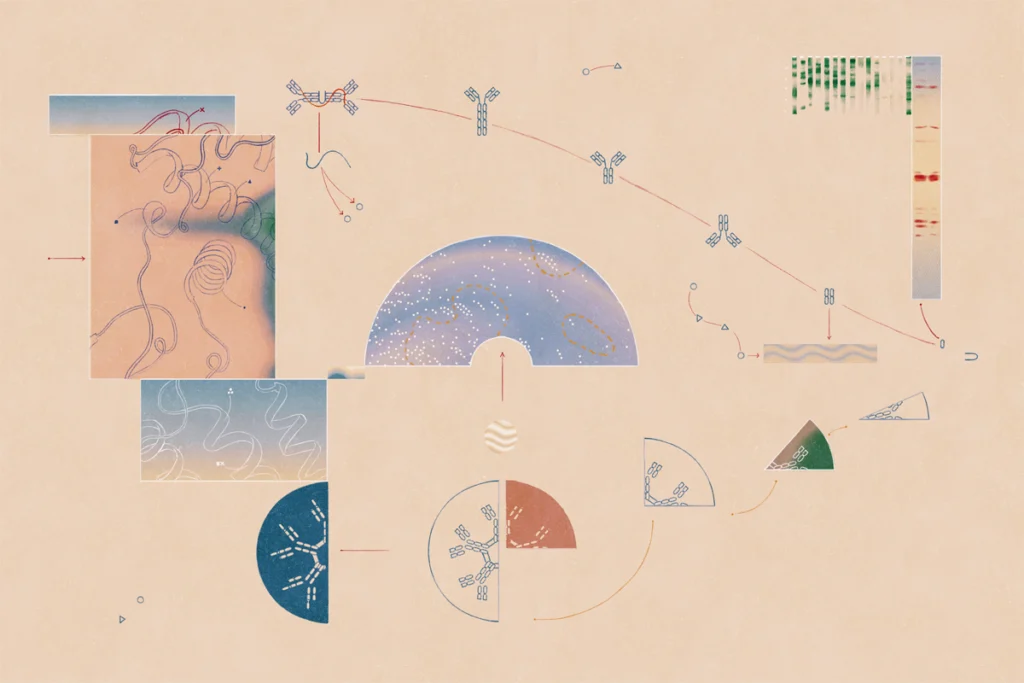
We found a major flaw in a scientific reagent used in thousands of neuroscience experiments — and we’re trying to fix it.
As part of that ambition, we launched a public-private partnership to systematically evaluate antibodies used to study neurological disease, and we plan to make all the data freely available.
We found a major flaw in a scientific reagent used in thousands of neuroscience experiments — and we’re trying to fix it.
As part of that ambition, we launched a public-private partnership to systematically evaluate antibodies used to study neurological disease, and we plan to make all the data freely available.
Explore more from The Transmitter
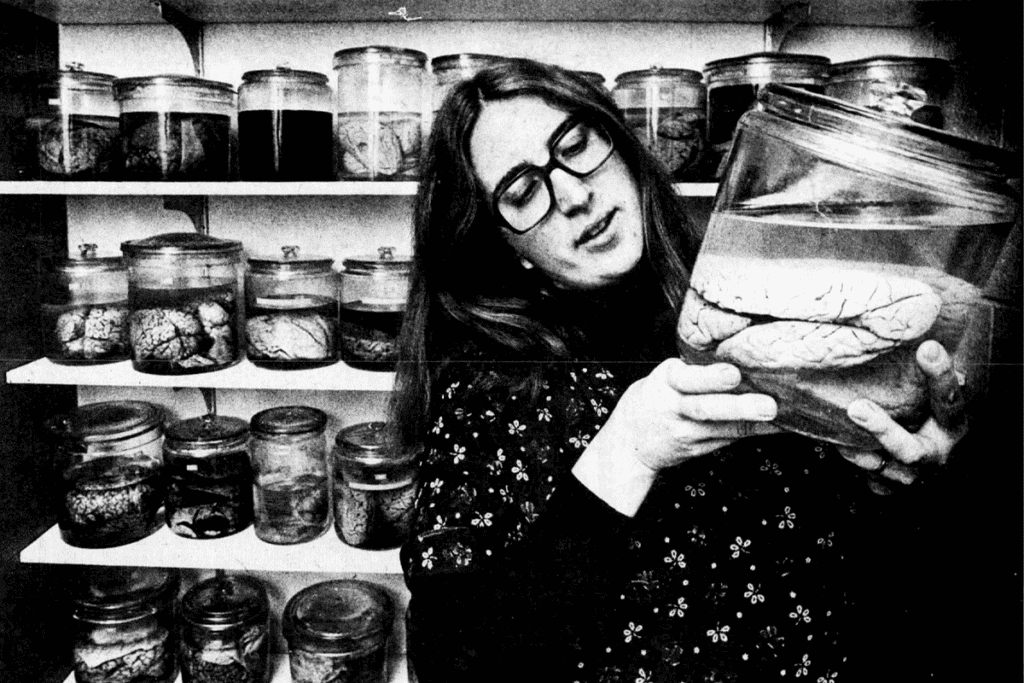
Remembering Barbara Finlay, ‘maverick’ of evolutionary neuroscience
Finlay, who died on 12 September, championed the idea that developmental constraints dictate how evolution sculpts brains, a concept she used to model the timing of hundreds of events and align them across mammalian species.
Remembering Barbara Finlay, ‘maverick’ of evolutionary neuroscience
Finlay, who died on 12 September, championed the idea that developmental constraints dictate how evolution sculpts brains, a concept she used to model the timing of hundreds of events and align them across mammalian species.
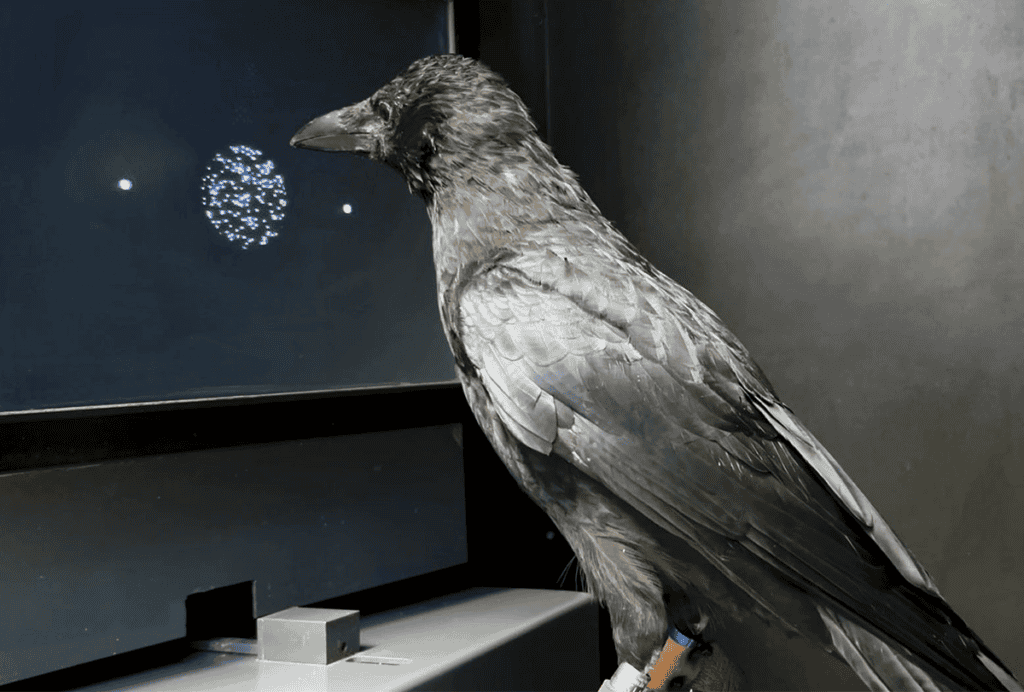
Crows have brains ‘in the fast lane’
The birds accurately complete decision-making tasks twice as fast as primates, although their endbrains look considerably different.
Crows have brains ‘in the fast lane’
The birds accurately complete decision-making tasks twice as fast as primates, although their endbrains look considerably different.

Prevalence of profound autism declines with new definition
The updated, more precise definition used in a CDC study includes adaptive scores.
Prevalence of profound autism declines with new definition
The updated, more precise definition used in a CDC study includes adaptive scores.