LISTEN TO THIS STORY:
0:00
/
Yale University claims its STEP platform might be able to deliver gene-editing tools into the brain via multiple routes. Researchers are eager to see more.
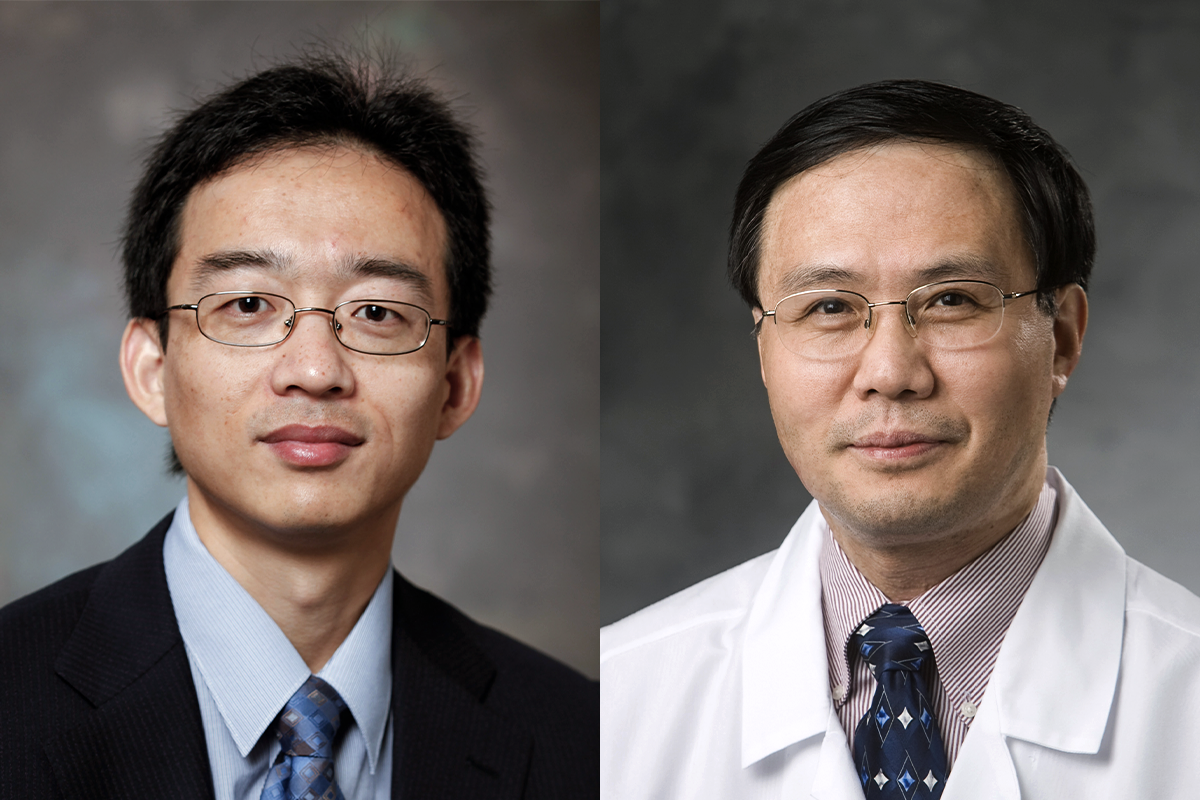
When Yong-Hui Jiang and Jiangbing Zhou, two Yale University neuroscientists, received a $40 million commitment from the U.S. National Institutes of Health (NIH) in 2023 to develop a technology to deliver gene editors deep into the brain, Yale announced that the technology could “revolutionize genome-editing therapy” and possibly treat up to thousands of genetic diseases of the brain.
In the three years since, Jiang and Zhou have partnered on two projects with the Rett Syndrome Research Trust, and in February Zhou received a $75,000 grant from the nonprofit Cure SMA to work on a treatment for spinal muscular atrophy. But the researchers have yet to share details of their delivery vehicle in a peer-reviewed publication, and it isn’t clear to even the researchers exactly how their technology works.
Gene editing in the brain would require getting large molecules through, or around, the blood-brain barrier, and that has stymied researchers for decades. “I’d say delivery is the No. 1 thing holding us back,” says Niren Murthy, professor of bioengineering at the University of California, Berkeley.
Winning the NIH grant requires Yale to publicly share details of the technology, but not until 2028. In the interim, the community of researchers working on delivering gene-editing tools into the brain are waiting. “If it works, then other labs are going to want to pick up on it and try it in their hands,” says Mark Zylka, professor of cell biology and physiology at University of North Carolina at Chapel Hill.
T
he brain’s dense 400-mile maze of blood vessels would seem like the best way to deliver gene-editing tools to brain tissue, as most neurons are located within 15 micrometers of a capillary. But the blood-brain barrier’s tightly packed endothelial cells, pericytes and astrocytes act as a sieve and are designed to keep pathogens, such as viruses, out.Adeno-associated viruses (AAVs) have so far shown the best ability to get through the blood-brain barrier, Murthy says. In a May 2024 Science paper, Ben Deverman and his team showcased an engineered AAV that could cross the blood-brain barrier by binding to a human transporter protein, making the technology potentially translatable to humans.
But using AAVs raises issues: The viral capsid is immunogenic, and patients develop antibodies against it, rendering a second dose useless. The AAV’s cargo load is barely large enough for some CRISPR-Cas9 molecules and their guide RNAs, never mind the next-generation CRISPR tools, such as base editors, which are safer and larger.
One way around the blood-brain barrier is to inject larger molecules directly into the cerebrospinal fluid. That technique has worked with other technologies: Nusinersen (marketed as Spinraza), for instance, an antisense oligonucleotide therapy approved for spinal muscular atrophy, is able to reach some deep brain regions when delivered into fluid surrounding the spinal cord. Researchers have also tried encasing gene editors in nanoparticles and delivering them into the cerebrospinal fluid, but these methods have so far been able to deliver CRISPR intracranially to only a small percentage of total brain cells in adult mice, Murthy says.
Jiang and Zhou developed their technology, called Stimuli-responsive Traceless Engineering Platform, or STEP, with all this in mind. Their main innovation with STEP-engineered Cas9 ribonucleoprotein (RNP), Zhou says, is that it is 10 nanometers—roughly half the size of an AAV, making it compact enough to move throughout the interstitial space in the brain. The STEP technology is composed of a STEP molecule, a linker and a payload. The current payload, the researchers say, is an RNP (a preassembled Cas9 nuclease and a guide RNA).
The STEP molecule “is similar to cholesterol” as described in the patent application, Murthy says, and it’s unclear how exactly it enters the cell. Once inside, the linker is cleaved and releases the gene-editing machinery. The RNP molecule migrates into the nucleus and starts snipping DNA, according to the patent.
How all this happens isn’t exactly clear. “We don’t know [the mechanism] right now,” Jiang says. Regardless, this carrier, he and Zhou say, can deliver gene-editing machinery throughout the mouse brain when given through intrathecal or intracerebroventricular administration. It may be able to cross the blood-brain barrier and could theoretically minimize or avoid some of the limitations seen with AAV delivery, they say, such as off-target effects and limitations on payload size. Jiang and Zhou have also begun testing the technology in nonhuman primates.
T
he Somatic Cell Genome Editing (SCGE) program is part of the Common Fund, which preexisted the SCGE and was formed by Congress in 2004 to support risky but potentially high-impact science. The goal, says Timothy LaVaute, co-coordinator of the program, is to fund ambitious projects that could have “global reach across the NIH.”In 2023, the year Yale received its grant, the SCGE gave out $225 million to 16 projects—none of which, then or now, received more funding than Yale. The grant first supplied $25 million to support studies in rodents and monkeys, and $15 million is slated for early-stage clinical work, after Jiang and Zhou file an Investigational New Drug application with the Food and Drug Administration. Elizabeth Berry-Kravis, professor of pediatrics and neurological science at Rush University and a physician, is also a co-leader on the grant and will help steer the project through the early clinical stages.
The Transmitter obtained the Yale researchers’ SCGE application through a public records request. Though the document was heavily redacted around Yale’s proprietary technology, the application shows that Jiang and Zhou proposed targeting neurons in Angelman syndrome and H1-4 syndrome model mice. These conditions are caused by loss of function of the maternal copy of the UBE3A gene and a gain-of-function variant in the H1-4 gene, respectively. The researchers plan to deliver their technology into mouse models of these conditions via intrathecal or intracerebroventricular injection. A monogenic condition such as Angelman is a good target for gene editors, and a way to show proof of concept, Zylka says.
Indeed, in a preprint published in November 2025, the researchers showed evidence that STEP-RNPs can deliver gene-editing machinery throughout the brain at “neonatal (P1) and weaning or adult ages (P21/P42)” in mouse models of Angelman syndrome. The paper showed that the mice had improved learning and motor function and reduced seizure activity after receiving the STEP-RNP therapy at any of these life stages. Additionally, the gene expression remained stable for months afterward. “Clearly they’re making stuff that works,” Murthy says.
Zylka says that if the Yale shuttle works in a clinical trial, it could likely also shepherd other drugs into cells, broadening the potential applications of the technology. But it’s not known whether the technology is more effective than an AAV. “They didn’t do a side-by-side comparison,” with the same person doing the experiments, which “would be ideal … I mean, I’d be interested in trying it,” Zylka says.
Zhou says that they are not planning to compare STEP with AAVs. STEP, in its current iteration, is not intended to replace AAVs entirely, he says. STEP-RNPs make permanent changes to the target cell, and they are quickly degraded, he says. AAVs can persist in host cells and continue expressing their genetic cargo for up to ten years.
There are still side effects to consider. With STEP-RNPs—at least as they’re formulated with Cas9 in Jiang and Zhou’s preprint—causes “a lot of damage to the genome as far as chromosome rearrangements and inversions and large deletions,” Zylka says. That would make active Cas9 “not a viable therapeutic option” for delivery via STEP, he says.
Perhaps the biggest issue is a problem of scale. Many AAV-based delivery strategies that looked promising in mice have failed in nonhuman primates because of the sheer differences in brain volume, Zylka says. “I’ve looked at the [AAV] data for NHPs, and it’s not great,” Zylka says. The papers suggest that an AAV “transduces the brain, but really it’s, like, a few neurons.”
Those issues are all associated with intrathecal delivery. In preliminary experiments, some STEP-based chemicals showed “the potential” to deliver cargo across the blood-brain barrier, Jiang says, but the researchers say they are not focused on proving that yet.
Still, the claim itself has raised eyebrows. “If they have a particle that can go through the blood-brain barrier, they’re golden,” says Xinyu Zhao, professor of neuroscience at the University of Wisconsin-Madison, who is not involved in Jiang and Zhou’s work. But she noted that the preprint has no data showing STEP can achieve that goal.
Diffusion in large brains is difficult, Zhao says. And crossing the blood-brain barrier is probably what would be required to noninvasively achieve brain-wide delivery in larger animals such as nonhuman primates, and humans themselves, she says.
T
he SCGE program has stricter transparency requirements than typical NIH grants. For the Yale researchers, that includes publishing their Investigational New Drug application, along with all regulatory interactions with the Food and Drug Administration, in the SCGE Translational Coordination and Dissemination Center, providing others seeking to do similar work an opportunity to translate it, LaVaute says. The details will include potentially proprietary—and so possibly redacted—information on the technology, its synthesis and the experiments supporting its efficacy; more than what a peer-reviewed publication would provide, he says.Yale filed for a patent on the STEP technology in December 2022, and that year the researchers launched a company called Couragene, which licensed the patent from Yale. Amy Liao, who had previously co-founded the genome-sequencing service GENEWIZ, was installed as CEO. The company has raised $1 million in seed funding so far, according to PitchBook. Jiang declined to comment on Couragene’s funding. (Couragene and the Foundation for Angelman Syndrome Therapeutics also launched a joint venture called CourageAS Biotherapeutics last year.)
The work being conducted under the $40 million commitment from the NIH likely will allow the Yale researchers to de-risk the technology, says Eric Green, a serial entrepreneur and CEO and founder at Trace Neuroscience. And that should make the proposition more appealing for investors interested in growing Couragene.
This scenario, however, sets up a “potentially high-stakes conflict of interest,” says Matthew McCoy, assistant professor of medical ethics and health policy at the University of Pennsylvania. The way to handle the conflict, he says, is for the university to establish a management plan that includes disclosures and other provisions.
Yale’s conflict-of-interest statement to the NIH, obtained from Yale through an information request by The Transmitter, notes that Jiang has a significant financial interest in Couragene and CourageAS Biotherapeutics via an equity stake in both entities. Jiang declined to comment on his stake in Couragene. The companies are private, and the value of that interest is unknown, according to the conflict-of-interest statement.
Yale’s management plans for the conflict of interest, however, are not shared externally, says Ken Greenquist, associate director of research at Yale’s Conflict of Interest Office. Yale did not comment as to why it does not publicly share conflict-of-interest management plans, but sometimes these plans can contain sensitive financial information, says Kristin West, director of research ethics and compliance at the Council on Governmental Relations.
In some ways, the SCGE award for the STEP program at Yale, though large, is not unique, McCoy notes. “A lot of biotechnology projects are funded with federal dollars,” he says, and there is potentially the risk that financial incentives can influence the judgment of researchers, regardless of grant size. But, he adds, the “NIH has decided to fund this work. They’ve decided that it’s worth the risk.”
Meanwhile the community studying ways to traverse the blood-brain barrier is waiting on more information. Jiang and Zhou are required to deposit their data on STEP into the SCGE Translational Coordination and Dissemination Center when their funding ends, which right now is set to be 2028. The researchers say a manuscript explaining the technology is under review at an academic journal, but as of yet there is no publication date.
Still, even those results will be partial. A more complete answer on the STEP technology, with its yet-unexplained method of action, will come from the trial itself.
“Unfortunately, there is no way to know if it’s going to work in humans unless you do it in humans,” Murthy says.