SFN 2009
Recent articles

Mounting evidence links language pathway to autism
A pathway involved in language development is increasingly proving to be important in autism, suggest a series of new studies on cellular and behavioral aspects of the disorder.
Mounting evidence links language pathway to autism
A pathway involved in language development is increasingly proving to be important in autism, suggest a series of new studies on cellular and behavioral aspects of the disorder.
Enriched environment improves symptoms of Rett
Giving mouse models of Rett syndrome access to toys, wheels and contact with other mice rescues motor skill and other deficits characteristic of the disorder, according to results presented in a poster session Wednesday at the Society for Neuroscience meeting in Chicago.
Enriched environment improves symptoms of Rett
Giving mouse models of Rett syndrome access to toys, wheels and contact with other mice rescues motor skill and other deficits characteristic of the disorder, according to results presented in a poster session Wednesday at the Society for Neuroscience meeting in Chicago.
Gene on chromosome 22 leads to autism mouse model
Mice lacking a gene located in the chromosomal region 22q13 — which has been linked to autism — have motor learning and social deficits reminiscent of the disorder, according to unpublished findings presented in a poster session yesterday at the Society for Neuroscience meeting in Chicago.
Gene on chromosome 22 leads to autism mouse model
Mice lacking a gene located in the chromosomal region 22q13 — which has been linked to autism — have motor learning and social deficits reminiscent of the disorder, according to unpublished findings presented in a poster session yesterday at the Society for Neuroscience meeting in Chicago.
Antibodies to fetal proteins trigger autism features
Antibodies directed against the fetal brain are present in some mothers of children with autism, confirming previous findings and suggesting that the antibodies could be used as a marker for the disorder, according to unpublished research presented yesterday at the Society for Neuroscience meeting in Chicago.
Antibodies to fetal proteins trigger autism features
Antibodies directed against the fetal brain are present in some mothers of children with autism, confirming previous findings and suggesting that the antibodies could be used as a marker for the disorder, according to unpublished research presented yesterday at the Society for Neuroscience meeting in Chicago.
Fragile X mice marked by immature synapses
Young mice that mimic fragile X syndrome have immature and unstable dendritic spines, the neuronal branches that receive signals from other cells, according to unpublished research presented Tuesday at the Society for Neuroscience meeting in Chicago.
Fragile X mice marked by immature synapses
Young mice that mimic fragile X syndrome have immature and unstable dendritic spines, the neuronal branches that receive signals from other cells, according to unpublished research presented Tuesday at the Society for Neuroscience meeting in Chicago.
Postmortem study hints at two types of autism
The brains of people with autism show high levels of inflammation compared with controls, suggests a study of postmortem brain tissue from 11 individuals with autism, presented at a poster session Monday at the Society for Neuroscience meeting in Chicago.
Postmortem study hints at two types of autism
The brains of people with autism show high levels of inflammation compared with controls, suggests a study of postmortem brain tissue from 11 individuals with autism, presented at a poster session Monday at the Society for Neuroscience meeting in Chicago.
MeCP2 loss ups inhibitory signaling
Selectively disrupting an autism-related gene in cultured human neurons causes a dramatic imbalance of excitation and inhibition in cell signaling, according to unpublished results presented today at the Society for Neuroscience meeting in Chicago.
MeCP2 loss ups inhibitory signaling
Selectively disrupting an autism-related gene in cultured human neurons causes a dramatic imbalance of excitation and inhibition in cell signaling, according to unpublished results presented today at the Society for Neuroscience meeting in Chicago.
Neuroligin mutation triggers oxidative stress
Deleting a neuronal protein associated with autism causes oxidative stress — characterized by an excess of free radicals — which has been linked to diseases such as diabetes and Alzheimer’s, according to new research in worms. The results were presented yesterday at a poster session at the Society for Neuroscience meeting in Chicago.
Neuroligin mutation triggers oxidative stress
Deleting a neuronal protein associated with autism causes oxidative stress — characterized by an excess of free radicals — which has been linked to diseases such as diabetes and Alzheimer’s, according to new research in worms. The results were presented yesterday at a poster session at the Society for Neuroscience meeting in Chicago.
Lack of corpus callosum linked to autistic features
People born without the large bundle of nerve fibers that bridges the brain's hemispheres have trouble identifying fearful faces, and don't look preferentially at others' eyes to perform this task, according to research presented Sunday at the Society for Neuroscience meeting in Chicago.
Lack of corpus callosum linked to autistic features
People born without the large bundle of nerve fibers that bridges the brain's hemispheres have trouble identifying fearful faces, and don't look preferentially at others' eyes to perform this task, according to research presented Sunday at the Society for Neuroscience meeting in Chicago.
Video: NIH director bemoans ‘lack of trust’ in autism field
On Saturday, a top government official resigned from the Interagency Autism Coordination Committee, the body of scientists and advocates that's responsible for guiding all autism research funded by the U.S. National Institutes of Health. Institute director Francis Collins responds.
Video: NIH director bemoans ‘lack of trust’ in autism field
On Saturday, a top government official resigned from the Interagency Autism Coordination Committee, the body of scientists and advocates that's responsible for guiding all autism research funded by the U.S. National Institutes of Health. Institute director Francis Collins responds.
Explore more from The Transmitter
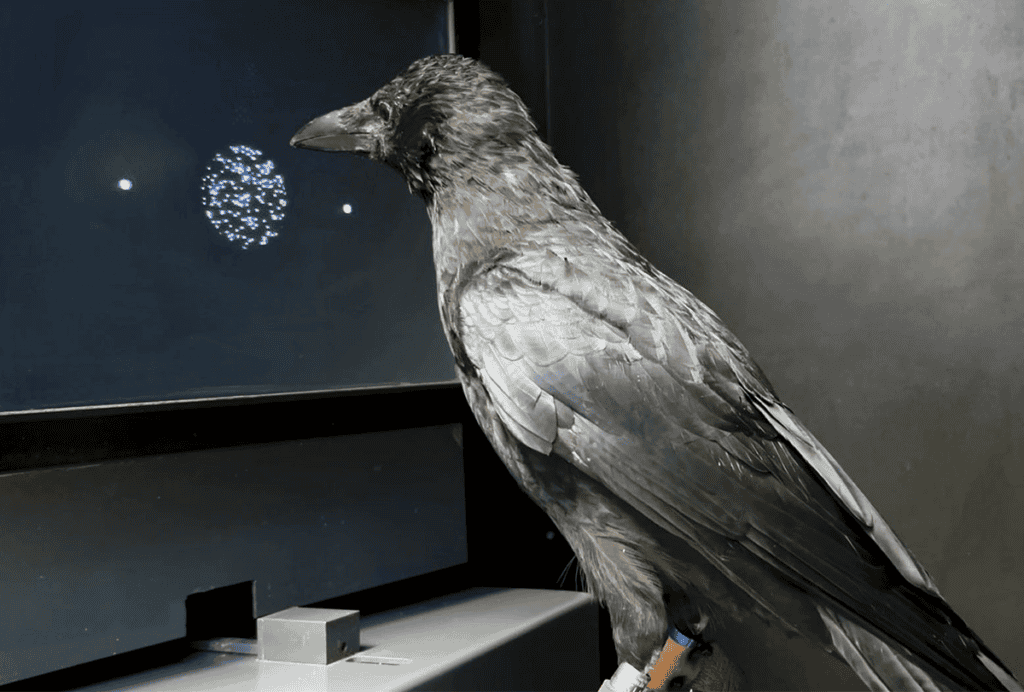
Crows have brains ‘in the fast lane’
The birds accurately complete decision-making tasks twice as fast as primates, although their endbrains look considerably different.
Crows have brains ‘in the fast lane’
The birds accurately complete decision-making tasks twice as fast as primates, although their endbrains look considerably different.

Prevalence of profound autism declines with new definition
The updated, more precise definition used in a CDC study includes adaptive scores.
Prevalence of profound autism declines with new definition
The updated, more precise definition used in a CDC study includes adaptive scores.
Is it time for neuroscience to shift its focus from a computational mind to a navigating mind?
Andrea Hiott explains her navigational approach to the mind, and why now is the time to embrace seemingly paradoxical findings in neuroscience.
Is it time for neuroscience to shift its focus from a computational mind to a navigating mind?
Andrea Hiott explains her navigational approach to the mind, and why now is the time to embrace seemingly paradoxical findings in neuroscience.