Simon E. Fisher is director of the Max Planck Institute for Psycholinguistics and Professor of Language and Genetics at the Donders Institute for Brain, Cognition and Behaviour in Nijmegen, the Netherlands. He is also an honorary research fellow at the Wellcome Trust Centre for Human Genetics (WTCHG) in Oxford, UK. Simon obtained his Natural Sciences degree at Trinity Hall, Cambridge University, followed by a DPhil at the Genetics Unit of the Biochemistry Department, Oxford University. For his postdoctoral research he joined Prof. Anthony Monaco’s group at the WTCHG in Oxford, and worked on identifying genetic factors that contribute to developmental disorders such as dyslexia and speech and language impairments. During this time he and his colleagues identified FOXP2, the first case of a gene mutated in speech and language impairment. In 2002, Simon was awarded with a Royal Society Research Fellowship and became head of his own laboratory at the WTCHG, where he used state-of-the-art methods to uncover how language-related genes influence the brain. From 2007-10 Simon was also the Isobel Laing Fellow in Biomedical Sciences at Oriel College, Oxford, where he taught Biochemistry and Medical Genetics. In 2010 he was appointed director of a new department specifically devoted to “Language and Genetics” at the Max Planck Institute in Nijmegen. Simon is author of over 75 journal articles, including peer-reviewed research in Nature, Nature Genetics, New England Journal of Medicine, Cell, Current Biology and American Journal of Human Genetics, and review articles in Nature Reviews Genetics, Nature Reviews Neuroscience, Annual Review of Neuroscience, Trends in Genetics and Trends in Cognitive Sciences. He has an h-index of 41. Simon is frequently invited to talk at leading international conferences across a diverse range of fields, and has also spoken to school, student and public audiences on a number of occasions. His research has a strong interdisciplinary remit, integrating data from genetics and genomics, psychology, neuroscience, developmental biology and evolutionary anthropology. Simon is an elected fellow of the Society of Biology, and his awards include the Francis Crick Prize Lecture in 2008, and the inaugural Eric Kandel Young Neuroscientists Prize in 2009.
Simon Fisher
Director
Max Planck Institute for Psycholinguistics
Explore more from The Transmitter

Remembering Barbara Finlay, ‘maverick’ of evolutionary neuroscience
Finlay, who died on 12 September, championed the idea that developmental constraints dictate how evolution sculpts brains, a concept she used to model the timing of hundreds of events and align them across mammalian species.
Remembering Barbara Finlay, ‘maverick’ of evolutionary neuroscience
Finlay, who died on 12 September, championed the idea that developmental constraints dictate how evolution sculpts brains, a concept she used to model the timing of hundreds of events and align them across mammalian species.
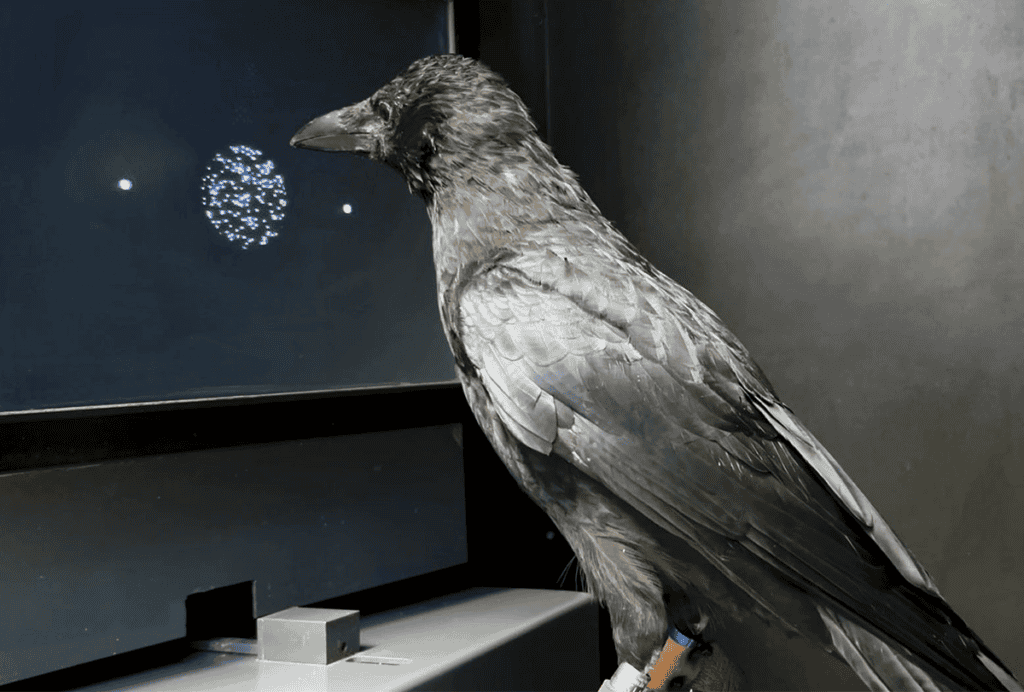
Crows have brains ‘in the fast lane’
The birds accurately complete decision-making tasks twice as fast as primates, although their endbrains look considerably different.
Crows have brains ‘in the fast lane’
The birds accurately complete decision-making tasks twice as fast as primates, although their endbrains look considerably different.

Prevalence of profound autism declines with new definition
The updated, more precise definition used in a CDC study includes adaptive scores.
Prevalence of profound autism declines with new definition
The updated, more precise definition used in a CDC study includes adaptive scores.