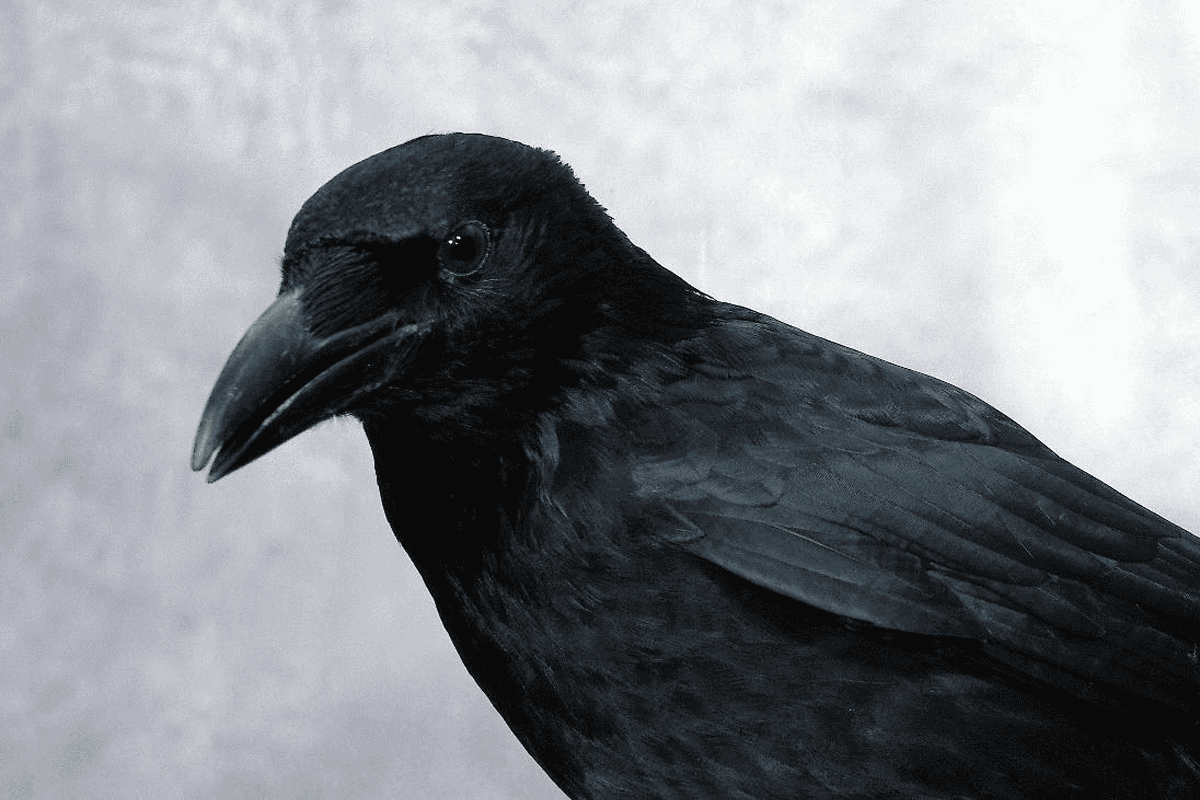
Think fast! Crows accurately perform perceptual decision-making tasks—responding to visual stimuli, for example—twice as fast as primates, including humans, according to a study published today in Science.
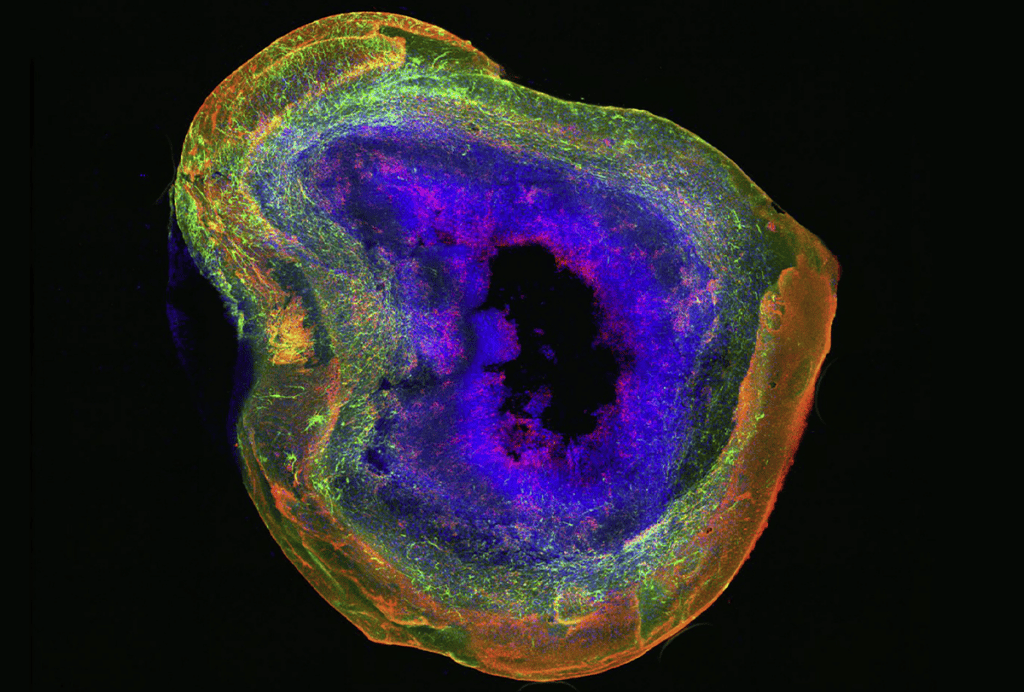
Crows, a member of the corvid family, last shared a common ancestor with mammals more than 300 million years ago and exhibit distinct neural structures. They lack the mammalian layered neocortex and instead have a nuclear pallium. The birds show various signs of intelligence; they can count via number-associated neurons, recognize geometric shapes and use tools, to name a few.
This new work establishes that their brains are also “in the fast lane,” says lead investigator Andreas Nieder, professor of animal physiology at the University of Tübingen.
He and his colleagues investigated the capacity of carrion crows (Corvus corone) to make choices based on visual cues, not decision-making in the pondering sense, Nieder says. They did not investigate other types of decisions, such as economic decisions based on weighing values, he adds.
That said, Marc Schmidt, professor of biology at the University of Pennsylvania, who was not involved in the study, says that when he read how quickly the crows performed the perceptual decision-making task compared with primates, he thought “Holy cow!” The study shows “the power of the comparative approach, and how much we can learn and how much we can be surprised by,” he says, because crows and primates are processing the same information but in different ways and at different speeds.
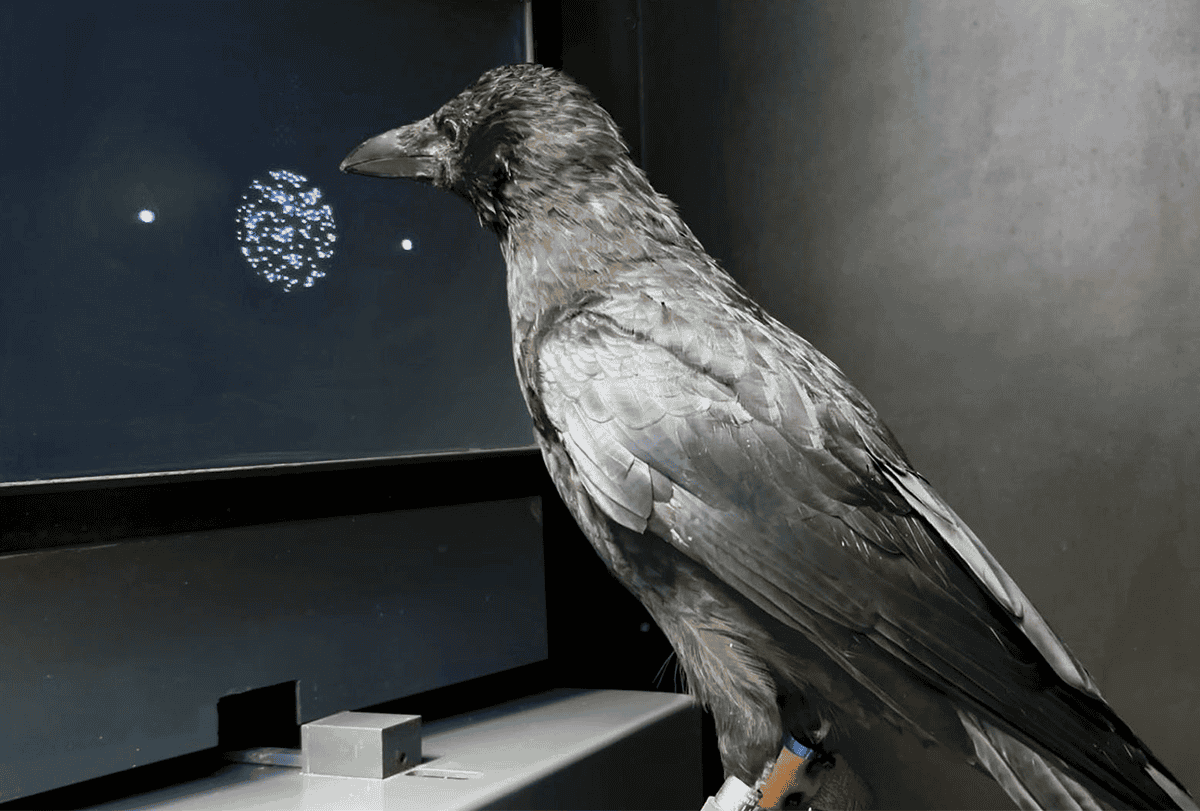
T
wo crows, named Iggy and Lemmy in the lab, learned to complete a standard perceptual decision-making task that has been used for three decades in nonhuman primates, Nieder says. The crows were shown a cloud of white dots that would move in different directions on a screen—a portion would move left or right together, while the others moved randomly. The crows had to decide which way the coalesced dots were moving and peck on that side of the screen to receive a mealworm reward.After thousands of task trials, the crows pecked on the correct side of the screen in, on average, 235 milliseconds—which is twice as fast as primates faced with the same task in previous studies—and with a comparable average of accuracy of 74 percent.
“It was nice to see that with a small-N study like this, they were able to get consistency between the two birds,” says Aaron Blaisdell, chair of behavioral neuroscience at the University of California, Los Angeles, who was not involved in the work. The consistency in their speed and accuracy could reflect intrinsic biological capacity, the investigators wrote in their paper.
F
urther analysis showed that as soon as 70 milliseconds after the crows saw the visual stimulus, the activity of hundreds of neurons in the nidopallium caudolaterale, which is analogous to the primate prefrontal cortex and supports executive functions such as decision-making, predicted how the crows would respond.