Alex Williams.

Alex Williams

Assistant professor of neural science, New York University
Associate research scientist, Flatiron Institute Center for Computational Neuroscience

Alex Williams is assistant professor of neural science at New York University and an associate research scientist at the Flatiron Institute’s Center for Computational Neuroscience. His group develops statistical methods and open-source software for making sense of large-scale neural recordings, with contributions spanning tensor decompositions, time-warping models, and metric-space approaches to representational geometry. A recurring theme in his work is that the tools neuroscientists reach for—similarity measures, regression models, model-comparison metrics—embed assumptions that shape the conclusions drawn from data, and that these choices deserve more scrutiny than they typically receive. 

Williams holds a Ph.D. in neuroscience from Stanford University and a B.A. from Bowdoin College. His research is supported by the National Institutes of Health, the McKnight Foundation and the Simons Foundation.

Explore more from The Transmitter

A boy manipulates blocks at a table while sitting across from a woman taking notes.

Prevalence of profound autism declines with new definition

The updated, more precise definition used in a CDC study includes adaptive scores.

By Brianna Abbott
22 October 2026 | 5 min read

Is it time for neuroscience to shift its focus from a computational mind to a navigating mind?

Andrea Hiott explains her navigational approach to the mind, and why now is the time to embrace seemingly paradoxical findings in neuroscience.

By Paul Middlebrooks
21 October 2026 | 1 min read
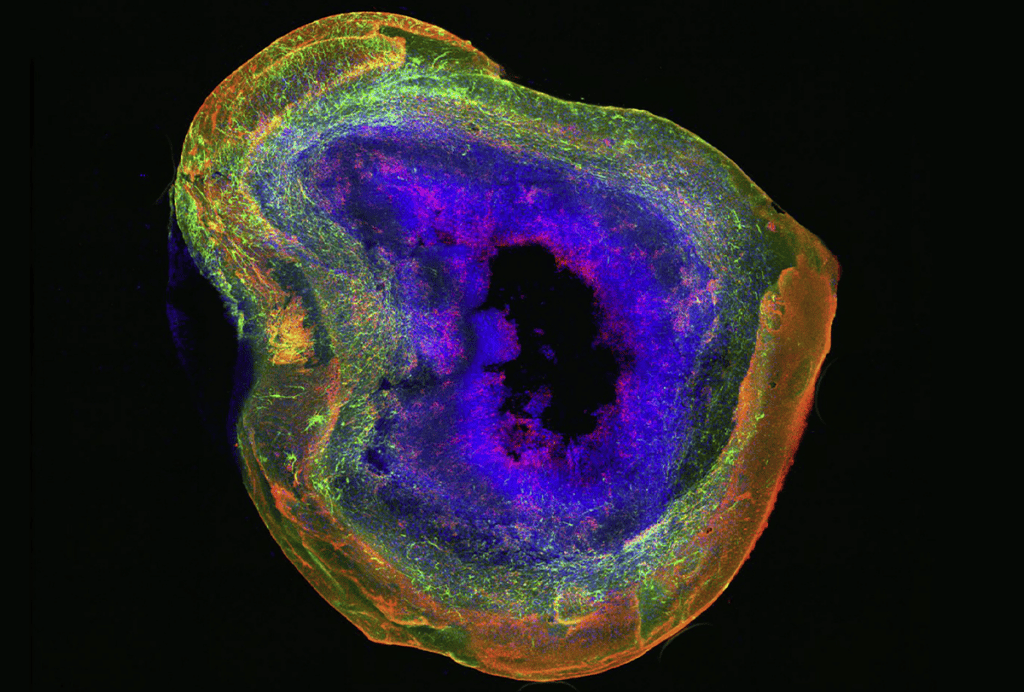
Research image of an organoid with a necrotic core.

Human brain organoids come of age—but still have room to grow

The U.S. government has touted organoids as an alternative to animals for studying the brain. The model has improved since its debut in 2013, but scientists are still working to overcome key limitations: immaturity, consistency and the lack of vascularization.

By Claudia López Lloreda
21 October 2026 | 9 min read