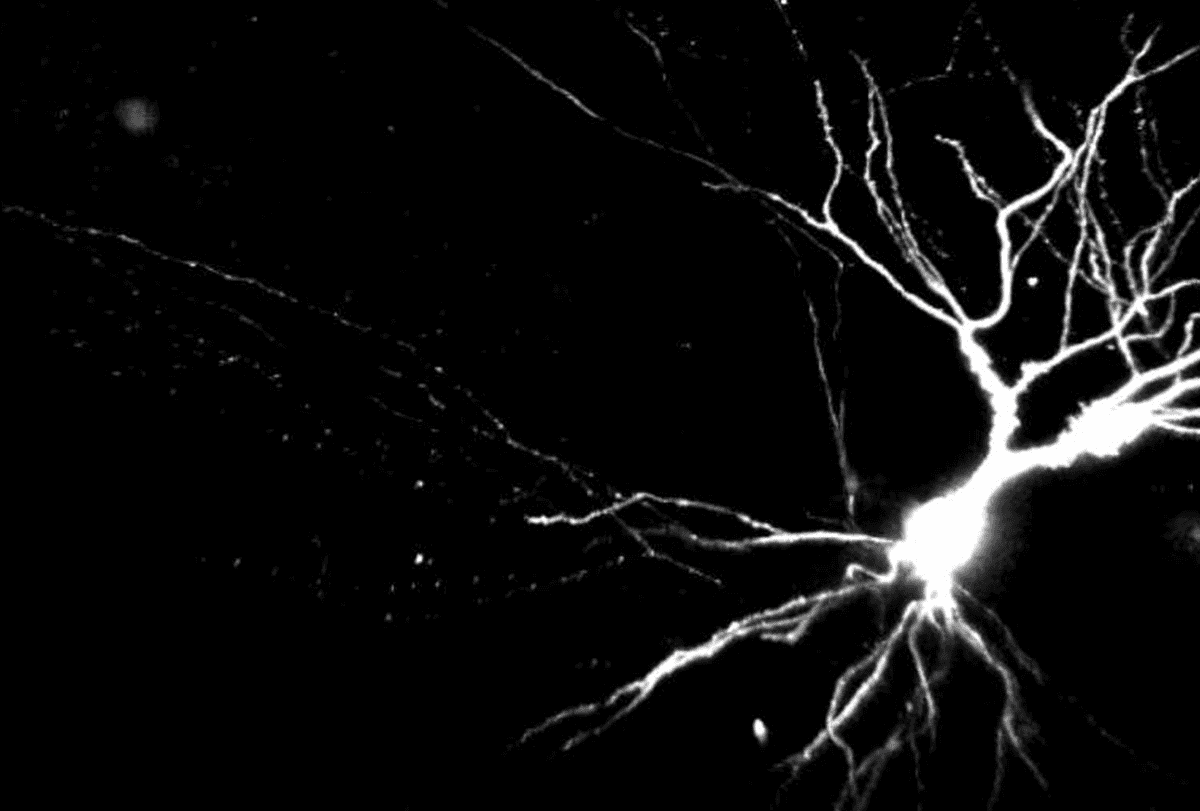
Theoretical models of the brain often treat neurons as single, homogenous units. But dendrites can store information about the past and make predictions about the future independently of the cell body, according to a new study.
“In the artificial-intelligence community, dendrites are underappreciated,” says Eilif Muller, associate professor of neurosciences at the University of Montreal, who was not involved in the study. “In this paper, and as we study dendrites more, we’re getting a glimpse into mechanisms that allow us to learn rapidly but stably.”
Dendritic activity can dissociate from cell body activity, depending on an animal’s goal, the new work shows. The findings are the first in-vivo evidence of the long-standing theoretical prediction that a neuron’s dendrites play a separate role from cell bodies in neural computations. The study was published in Science earlier this month.
“There’s been decades of studies on how dendrites function: Are they passive, or do they play a more active role in cognitive processes?” says study investigator Attila Losonczy, professor of neuroscience at the University of Texas Southwestern Medical Center. Action potentials generated at the soma can backpropagate into the dendrites, making the two compartments’ activity hard to tease apart.
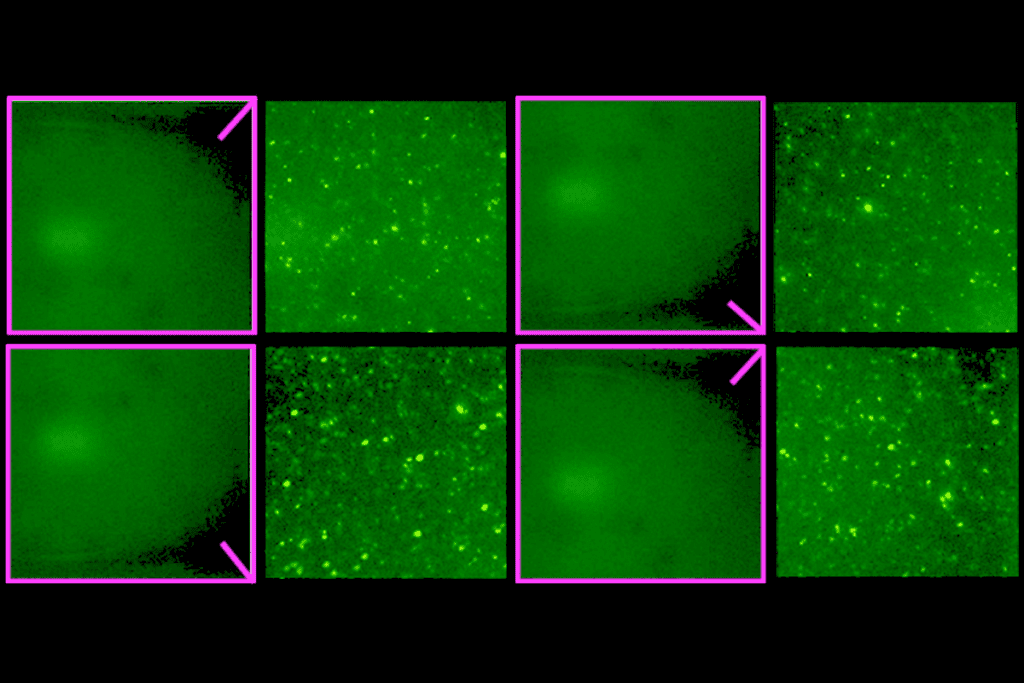
Losonczy and his colleagues used ultrafast voltage imaging to record electrical activity in the dendrites of pyramidal place cells in the CA3 region of the hippocampus of mice as the animals moved around in a virtual environment and received a sip of water in certain locations; the place cells fire when a mouse is in a specific location in space. When the reward locations changed, dendrites retained information about the original sites. But when the entire virtual environment changed, dendrites were the first to encode new locations of rewards—the cell body caught up later.
“It’s the first study that shows, using voltage imaging, how the dynamics of dendrites can influence spatial navigation,” says Yiota Poirazi, research director at the Institute of Molecular Biology and Biotechnology, who was not involved in the study. “It’s really cool.”
It is also among the first to deploy single-cell voltage imaging over long periods of time in awake animals, making it a huge technological advance, says Gabrielle Girardeau, researcher at Inserm and principal investigator at the Centre de Neuroscience de Sorbonne Université.
W
hen the reward location changed, dendrites located closer to the cell body, whose activity coupled tightly to somatic activity, remapped faster than those farther away. But when a mouse encountered a totally new environment, distal dendrites learned the new spatial code first, and the cell body and proximal dendrites adopted this code later on. That decoupling may help cells rapidly adapt to new environments without losing prior spatial learning, Poirazi says.The mechanism may involve differences in the way that synapses in distal and proximal dendrites store information, according to unpublished modeling work by Muller and his team presented at the Annual Computational Neuroscience Meeting in Halifax, Nova Scotia, earlier this month. In simulations of a rat cortical microcircuit, synapses near the soma needed dozens of precisely timed pairings with action potentials to strengthen, whereas distal synapses achieved long-term potentiation without an action potential if enough of them became active at the same time.
That pattern lines up with the new paper’s finding that dendritic events precede somatic change in new environments, says Dhuruva Priyan Gowri Mariyappan, a graduate student in Muller’s lab, who presented the findings. “These are the things we think are happening in our simulations,” he says.
The new results provide evidence that learning in the dendrites starts out unsupervised, Muller says. “We really have the chance here to get fundamentally at what the learning rules in neurons are.”
Although the two studies looked at pyramidal cells in different brain regions, it’s entirely possible that the findings apply to “any pyramidal neuron” in other regions of the brain, Poirazi says.
During rest, dendrites that had been co-active during navigation stayed coordinated with each other during sharp-wave ripples—synchronized bursts that occur during sleep or rest—suggesting that dendritic dynamics extend into sleep-like states, the new study shows.
But “there’s still a debate about what awake ripples do versus sleep ripples,” Girardeau says.
She adds that the most striking result in the paper is that the dendritic changes precede the emergence of a new place field altogether. But the mechanism behind this split remains unclear, she says, because CA3 is so densely recurrent that some of what looks like independent dendritic computation in a single neuron could actually be inherited from the surrounding network.
Losonczy says he and his colleagues are trying to decipher the mechanism. “You need some sort of flexible gating mechanism that can couple and uncouple local clusters of synapses to the soma.”