Madeline Shaw is a science journalist and The Transmitter’s news reporting intern for fall 2026. She earned her B.A. in history and philosophy at the University of Virginia and is currently a graduate student in New York University’s Science, Health and Environmental Reporting Program. Her work has appeared in The New York Times, Inside Climate News, Live Science and elsewhere.

Madeline Shaw
News reporting intern
The Transmitter
From this contributor

Highly cited autism paper earns expression of concern over data duplications
The notice, published in Nature last week, also addressed an image duplication identified by a prominent research-integrity sleuth.
Highly cited autism paper earns expression of concern over data duplications
By
Madeline Shaw
16 October 2026 | 4 min read
Private initiative makes ‘historic’ investment in autism research
Aligning Research to Impact Autism has committed more than $450 million to build a new multidisciplinary research network to uncover the roots of profound autism and develop treatments.
Private initiative makes ‘historic’ investment in autism research
By
Madeline Shaw
13 October 2026 | 4 min read
By
Claudia López Lloreda, Calli McMurray, Natalia Mesa, Madeline Shaw
5 October 2026
11 min read

How Nobel Prize-winning optogenetics has revolutionized neuroscience
The technique has enabled neuroscientists to target brain circuits and cells with unprecedented specificity, transforming the study of memory, interoception, brain disorders and reward, among other domains.
How Nobel Prize-winning optogenetics has revolutionized neuroscience
By
Claudia López Lloreda, Calli McMurray, Natalia Mesa, Madeline Shaw
5 October 2026 | 11 min read
New projectome captures ‘complex beast’ of serotonin system in mice
The whole-brain map—the first of its kind in a vertebrate—identifies five distinct neuron groups.
New projectome captures ‘complex beast’ of serotonin system in mice
By
Madeline Shaw
2 October 2026 | 0 min watch
Explore more from The Transmitter
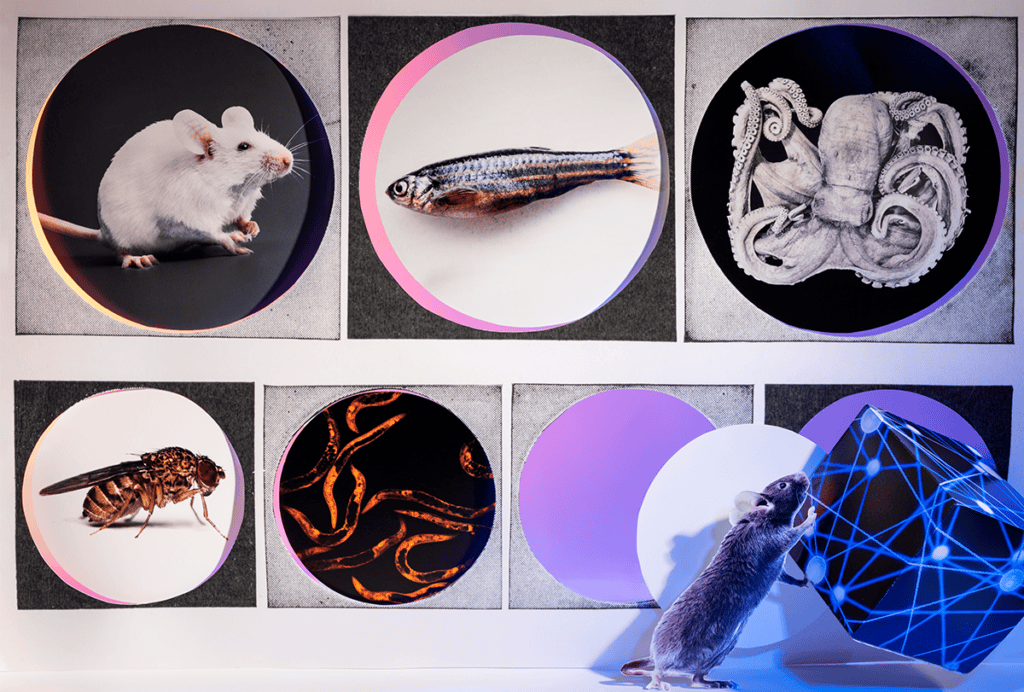
The term ‘model organism’ should be reserved for biological systems
By referring to artificial neural networks as model organisms, we run the risk of distorting funding priorities and disregard the explanatory power of a shared evolutionary history across biological organisms.
The term ‘model organism’ should be reserved for biological systems
By referring to artificial neural networks as model organisms, we run the risk of distorting funding priorities and disregard the explanatory power of a shared evolutionary history across biological organisms.
By
Marc Coutanche
13 November 2026 | 6 min read
New phase of BRAIN Initiative spawns basal ganglia ‘parts list’
With a standardized cell naming system and infrastructure for data collection and analysis, the basal ganglia project sets the stage for a whole-brain primate atlas.
New phase of BRAIN Initiative spawns basal ganglia ‘parts list’
With a standardized cell naming system and infrastructure for data collection and analysis, the basal ganglia project sets the stage for a whole-brain primate atlas.
By
Claudia López Lloreda
12 November 2026 | 1 min watch
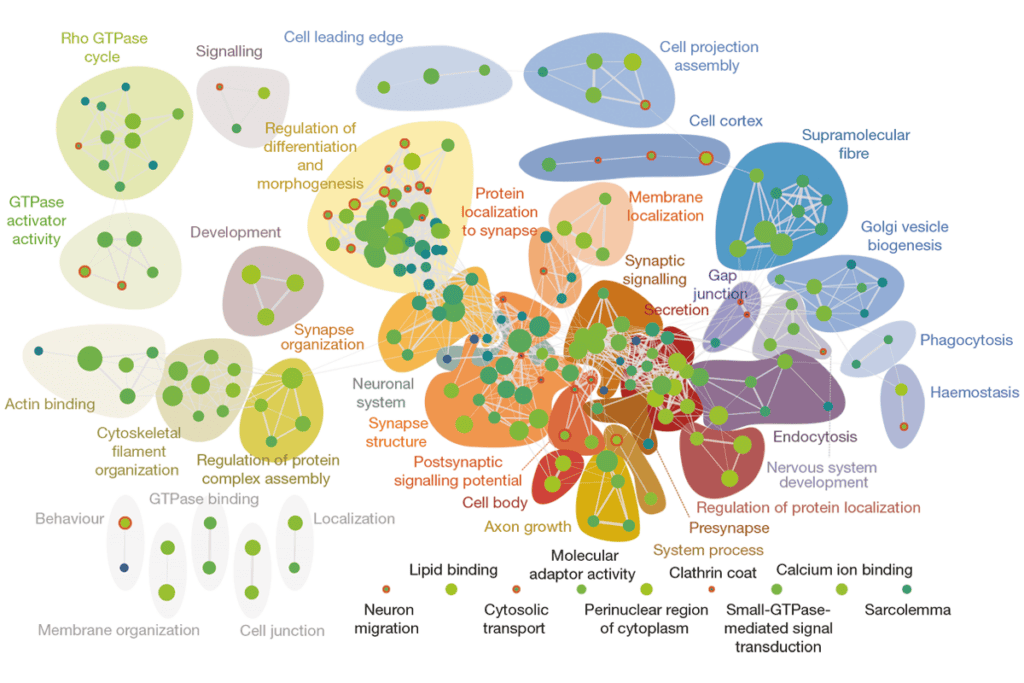
Machine-learning model spots autism-linked variants that scramble splicing
The model provides a way to investigate genetic variation in regions of the genome whose functions have been difficult to interpret.
Machine-learning model spots autism-linked variants that scramble splicing
The model provides a way to investigate genetic variation in regions of the genome whose functions have been difficult to interpret.
By
Giorgia Guglielmi
12 November 2026 | 4 min read