Editor’s note:
We have updated this story on 22 November with new developments and a response from the Department of Homeland Security.
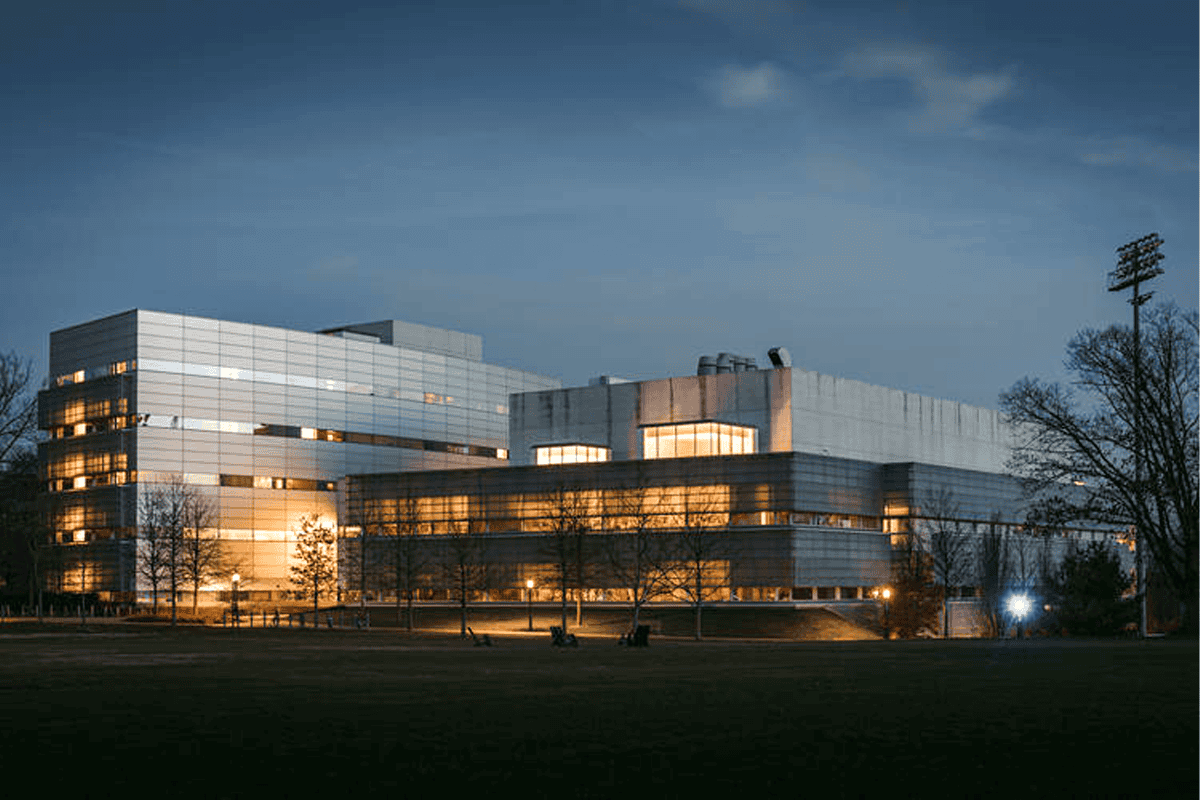
Eva Yi Xie, a third-year graduate student in Carlos Brody’s lab at Princeton University, was detained yesterday at an airport in Washington, D.C., while traveling from the Society for Neuroscience meeting.
Eva Yi Xie, a Princeton University neuroscience graduate student who was detained yesterday by U.S. immigration officials, is “brilliant and incredibly talented,” according to her mentor, Carlos Brody, professor of neuroscience at the Princeton Neuroscience Institute. The detention “grinds her science to a screeching halt,” he says.
“My first reaction was shock and pain, and horror and disbelief that this could be happening. Eva is a gentle, kind, caring person who is contributing enormously to the United States,” Brody says. “She belongs back home in Princeton doing the science that she loves.”
Xie, a third-year Ph.D. student in Brody’s lab, was traveling yesterday from the Society for Neuroscience annual meeting in Washington, D.C., to Philadelphia when she was stopped by U.S. Immigration and Customs Enforcement (ICE) at Ronald Reagan Washington National Airport, near Washington, D.C., Brody says. “It was an absolute shock.”
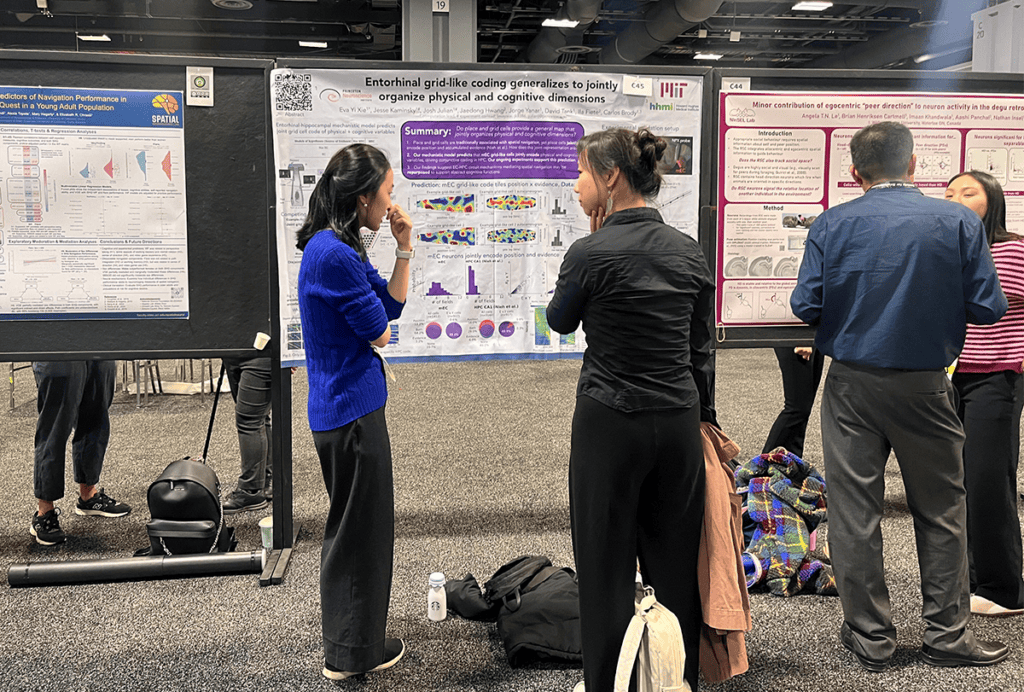
Xie presented a poster on the cognitive functions of the entorhinal cortex on Wednesday at the Society for Neuroscience meeting. Her research focuses on the science of decision-making, in which she combines theoretical, computational and experimental neuroscience. As an undergraduate student in Ila Fiete’s lab at the Massachusetts Institute of Technology, she developed a model of how the hippocampus and entorhinal cortex make decisions, which suggested these regions have a joint representation of cognitive evidence and physical space. Experimental work in Brody’s lab showed that “that model ended up being correct,” Brody says. Someday, Brody says, Xie hopes to continue doing basic research at an academic institution. “She is absolutely fearless in taking on new things.”
Xie is a caring mentor for undergraduates, as well as being a “brilliant Ph.D. student with unstoppable energy and enthusiasm,” Brody says. She is “driven simply by having a good problem to solve, and genuinely cares about giving back to her community.”
Xie was admitted to the United States on a temporary basis on 16 March, 2016, but was required to depart by 15 September, 2016, a spokesperson for the Department of Homeland Security (DHS) wrote to The Transmitter on Friday, 20 November. Her asylum application allowed her to remain in the country legally, Xie’s lawyers told The New York Times. Her lawyers have challenged the legality of her detention, court records show.
“Xie will receive due process and remain in ICE custody pending her removal proceedings,” the DHS spokesperson wrote. “Xie has NEVER held valid authorization to study in the United States. To be clear, a pending application does not confer legal status in the United States.”
X
Jorge Yanar, a graduate student in Brody’s lab, says that he was “blindsided” by Xie’s detention. Like many international students at Princeton, Xie had expressed concerns about traveling internationally but not domestically, Yanar says.
“I honestly couldn’t say anything negative about working with Eva,” Yanar says. “She’s brilliant. She came already knowing how to hit the ground running with projects, so I’ve just been really amazed to be able to witness and contribute in some small part to her studies.”
Princeton University has arranged legal representation for Xie, Princeton University spokesperson Michael Hotchkiss wrote in a statement to The Daily Princetonian. Princeton University did not respond to The Transmitter’s request for comment.
“We are in close contact with Princeton University and stand ready to provide any support that may be needed,” the Society for Neuroscience wrote in a statement on 20 November. “Our thoughts are with Eva, her family, and her colleagues.”
“She’s incredibly broad and ambitious,” says Nathaniel Daw, professor of computational and theoretical neuroscience at the Princeton Neuroscience Institute and Xie’s co-adviser. Xie studies perceptual discrimination in rodents, and combines both theoretical and experimental techniques, Daw says. “It’s incredibly disruptive,” to her work, he says of her detention. “I’m sure she would have been at work on Monday or Tuesday.”
“She is one of us. She is one of the best of us. And this shouldn’t be happening to any of us” in the neuroscience community, Brody says.