Add us as a Preferred Source on Google

A new subtyping model for autism phenotypes late in development, and more

Here is a roundup of autism-related news and research spotted around the web for the week of 29 June.

By Sarah Thau
30 June 2026 | 2 min read

Subtype sharpening: Measures of language, intellectual and adaptive functioning in late childhood and adulthood point to two phenotypically distinct autism subtypes, according to a new study. This subtype model was drawn from analysis of data from the National Institute of Mental Health Data Archive. Mapping these subtypes onto functional MRI connectivity data of the brain’s sensorimotor-association (S-A) axis showed that people with autism who have low language, intellectual and adaptive functioning differ in S-A connectivity more than those with autism and high functioning in those domains when compared with data from neurotypical people. These results call back to The Transmitter’s reporting last year that highlighted the search for more expansive, exhaustive subtyping in autism research. 

Autism research spotted this week

  • “Cortical development dynamics across autism spectrum disorder mouse models” Nature
  • “Multimodal predictors of spoken vocabulary development in autism: The role of early childhood brain and behavior” Translational Psychiatry 
  • “Brain structural and genetic correlates of motor coordination and learning behaviours: Modelling developmental coordination disorder” bioRxiv
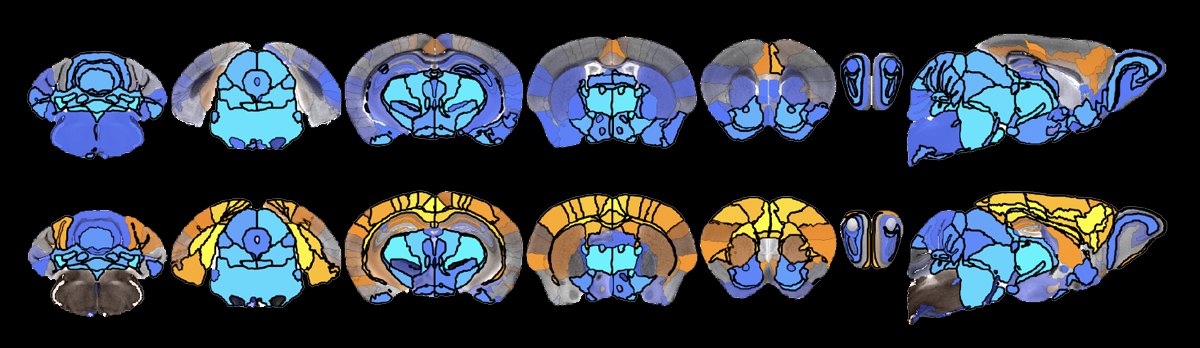
Research image of mice brains, showing larger cerebral cortices and smaller subcortical volumes.
Volume control: Mice with traits resembling developmental coordination disorder have larger (orange) cerebral cortices and smaller (blue) subcortical volumes than do control strains. This difference is more pronounced when normalizing for total brain volume (bottom row).
  • “ARID1B damaging variants from more than one million genomes, cause human diseases by impairing protein-protein interactions, stability, and regulation” bioRxiv 
  • “Single-cell profiling of DNA methylation in autism spectrum disorder prefrontal cortex reveals distinct regulatory and aging signatures” Cell Genomics 
  • “Impaired behavioral inhibition in FMR1 KO mice is linked to disrupted visual cortex theta oscillations” Cell Reports
  • “Genes/variants for diagnostic testing and pre-clinical research in autism spectrum disorder” medRxiv

Sign up for the weekly Spectrum newsletter.

Stay current with the latest advancements in autism research.