Deep focus: Subcortical brain structures contribute to autism more than previously appreciated, according to two new preprints. One study used single-cell RNA sequencing to identify altered gene expression and found that excitatory neurons in the thalamus and hypothalamus are particularly enriched in autism-linked genes, along with cortical regions. The other study used a different method of transcriptomic analysis to further highlight the abundance of autism-linked genes in the thalamus. These results add to work that The Transmitter reported on late last year highlighting the importance of looking beyond the cortex for brain regions and neural pathways that play a role in autism.
Add us as a Preferred Source on Google
Set us as a Preferred Source to see The Transmitter more prominently in your Google Search results.
Autism-linked genes expressed in thalamus make an impact, and more
Here is a roundup of autism-related news and research spotted around the web for the week of 1 June.
By
Jill Adams
2 June 2026 | 2 min read
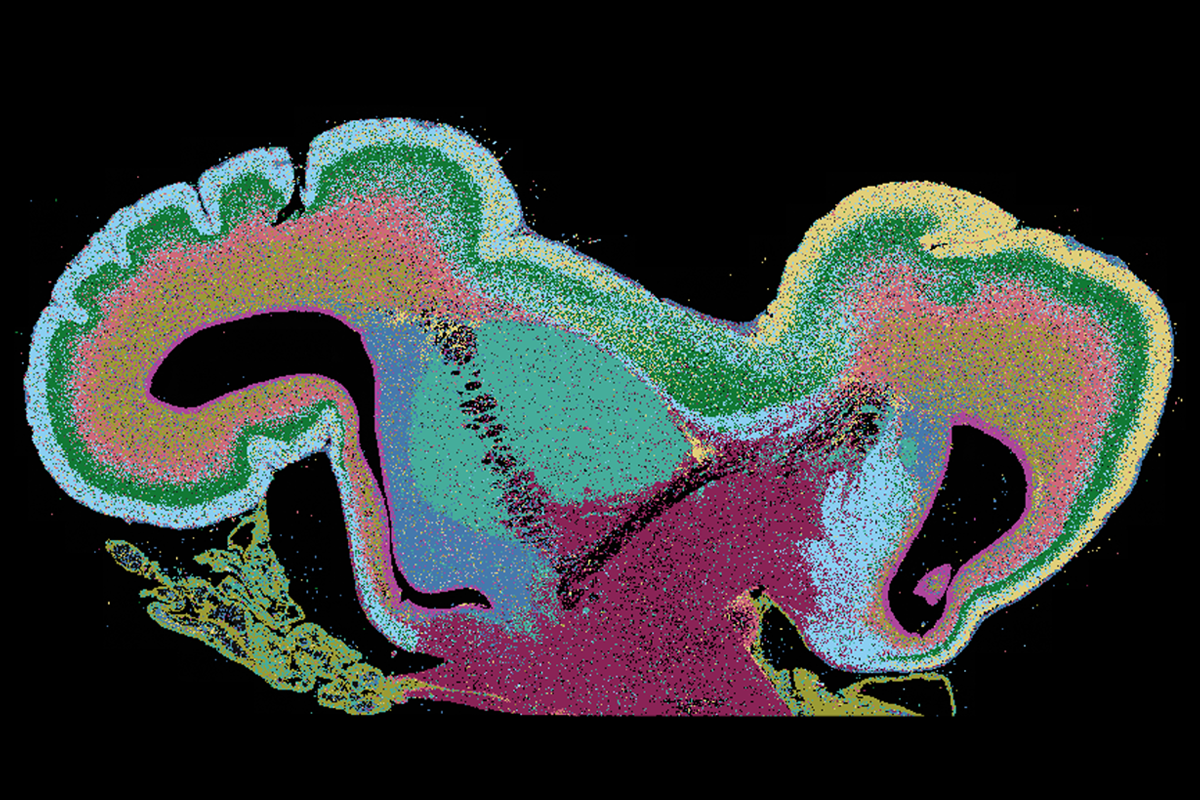
Complete coverage: An analysis of the developing human brain finds expression of most autism-linked genes in the thalamus.
Omer Bayraktar, Wellcome Sanger Institute
Autism research spotted this week:
- “Translatome profiling reveals opposing alterations in inhibitory and excitatory neurons of fragile X mice and identifies EPAC2 as a therapeutic target” Neuron
- “Multimodal imaging reveals resilient memory networks in carriers of pathogenic ARID1B variants” Translational Psychiatry
- “Emergence of long- and short-range functional connectivity shapes neonatal brain gradients” bioRxiv
- “Endogenous retrovirus-derived RNA-DNA hybrids induce microglial synaptic pruning in autism models” Neuron
- “Autism-like phenotypes and increased NMDAR2D expression in mice with KDM5B histone lysine demethylase deficiency” Science Advances
- “The hidden architecture of brain structural variability in 22q11.2 deletion syndrome: A multi-site study” medRxiv
- “Targeting UBE3A and downstream estrogen receptor-β signaling to restore oligodendroglial homeostasis in Angelman syndrome” bioRxiv
See also: “How oligodendrocytes may shape autism” - “Short naps, long hours: How autism clinics squeeze Medicaid dollars out of preschoolers” The New York Times
See also: “Private equity harms autism service market” and “Head of company that accredits autism service providers resigns after article retraction”
tags:
Explore more from The Transmitter
Among brain changes studied in autism, spotlight shifts to subcortex
By
Holly Barker
11 December 2025 | 5 min read

Glutamate receptors, mRNA transcripts and SYNGAP1; and more
By
Jill Adams
16 December 2025 | 2 min read
Cite this article: