Myriad contributions: Two new papers describe secondary influences on the autism-like traits that arise from CHD8 gene variants in mice. In the first study, comparing mice with heterozygous versus homozygous CHD8 variants revealed a gene dosage effect on behavior, brain structure and neural activity. The investigators also saw less sex specificity in the homozygous mice. In the second study, researchers sought to understand the heterogeneity of CHD8 variant effects in mice with different genetic backgrounds. They documented a range of pup-dam interactions and linked those to autism-like traits in weaned pups. Thus, genetic background, gene dose and early life experiences all appear to contribute to phenotypic variability in mouse models of autism.
Add us as a Preferred Source on Google
Set us as a Preferred Source to see The Transmitter more prominently in your Google Search results.
Outside influences on CHD8 variant phenotypes, and more
Here is a roundup of autism-related news and research spotted around the web for the week of 18 May.
By
Jill Adams
19 May 2026 | 2 min read
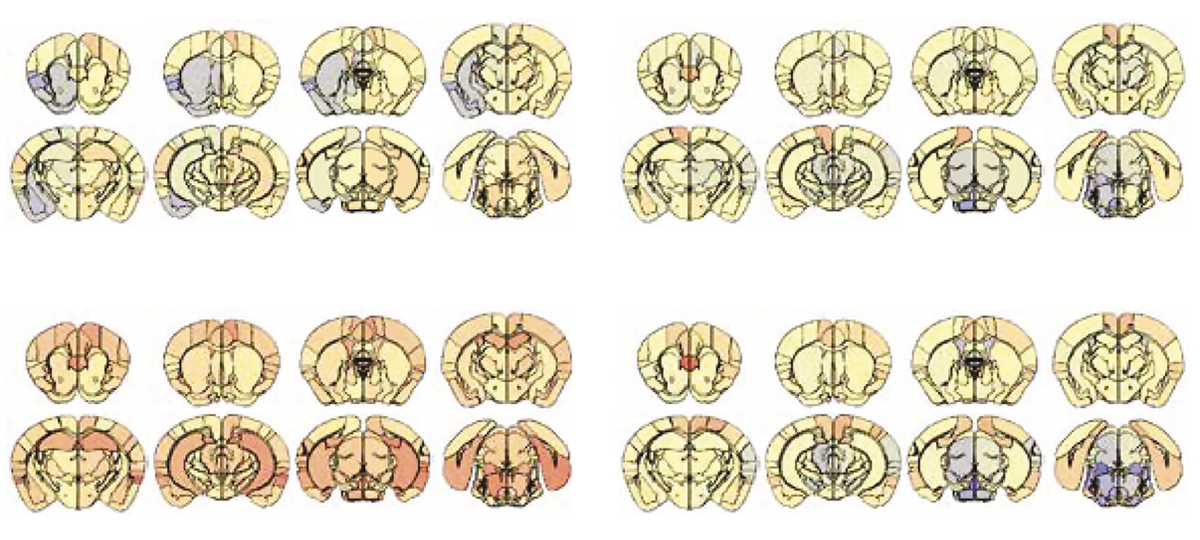
Sizing up: An autism-linked variant of the CHD8 gene gives rise to brain volume changes in mice (red indicates increases compared with wildtype mice; blue shows decreases). Homozygotes (bottom rows) show larger changes than heterozygotes (top rows), with regional differences between males (left) and females (right).
Autism research spotted this week:
- “Risk for autism across generations” Biological Psychiatry
- “Determinants of functional burden pleiotropy and gene dosage responses across human traits” medRxiv
- “SHANK3 mutations disrupt olfactory valence coding across species, with cortical amygdala mechanisms identified in mice” Science Advances
- “NeuroDev: Etiology and experience of neurodevelopmental disorders in Kenya and South Africa” medRxiv
See also: “African genetics study NeuroDev shares initial findings” - “Modeling rare coding variation on chromosome X provides insight into the genetics and differential sex prevalence of autism spectrum disorder” medRxiv
- “An X-linked long non-coding RNA, PTCHD1-AS, and the core features of autism” Nature
- “SHANK3-anchored reverse phenotyping identifies a rare-variant-enriched cognitive-motor subgroup of autism” medRxiv
- “Brain charts for neuroanatomical sex differences across the human lifespan” bioRxiv
tags:
Explore more from The Transmitter
Among brain changes studied in autism, spotlight shifts to subcortex
By
Holly Barker
11 December 2025 | 5 min read

Glutamate receptors, mRNA transcripts and SYNGAP1; and more
By
Jill Adams
16 December 2025 | 2 min read
Cite this article: