AI in neuroscience: Promise,
friction, progress
Recent articles
Neuroscientists reckon with the gap between artificial intelligence’s potential and the field’s reality.
How to use artificial intelligence to strengthen scientific processes and scholarly output
As AI-driven systems are integrated into all aspects of science, we need to make sure that they read and write to a shared data and knowledge space.
How to use artificial intelligence to strengthen scientific processes and scholarly output
As AI-driven systems are integrated into all aspects of science, we need to make sure that they read and write to a shared data and knowledge space.
AI can’t solve the brain without data that fit together
The brain's first foundation models exist because some areas of neuroscience did the slow work of developing and adopting standards to help integrate data. Artificial intelligence cannot do that work for us.
AI can’t solve the brain without data that fit together
The brain's first foundation models exist because some areas of neuroscience did the slow work of developing and adopting standards to help integrate data. Artificial intelligence cannot do that work for us.
Transforming AI models into useful model organisms
These systems were not built to explain the brain. But treating them as model organisms that we can perturb and evolve will move us closer to that goal.
Transforming AI models into useful model organisms
These systems were not built to explain the brain. But treating them as model organisms that we can perturb and evolve will move us closer to that goal.

Writing science that humans and machines can read
Large language models are now routinely used to search, summarize and synthesize the literature at scales impossible for any individual researcher—yet scientific publishing has not adapted to that reality.
Writing science that humans and machines can read
Large language models are now routinely used to search, summarize and synthesize the literature at scales impossible for any individual researcher—yet scientific publishing has not adapted to that reality.
Explore more from The Transmitter
Is it time for neuroscience to shift its focus from a computational mind to a navigating mind?
Andrea Hiott explains her navigational approach to the mind, and why now is the time to embrace seemingly paradoxical findings in neuroscience.
Is it time for neuroscience to shift its focus from a computational mind to a navigating mind?
Andrea Hiott explains her navigational approach to the mind, and why now is the time to embrace seemingly paradoxical findings in neuroscience.
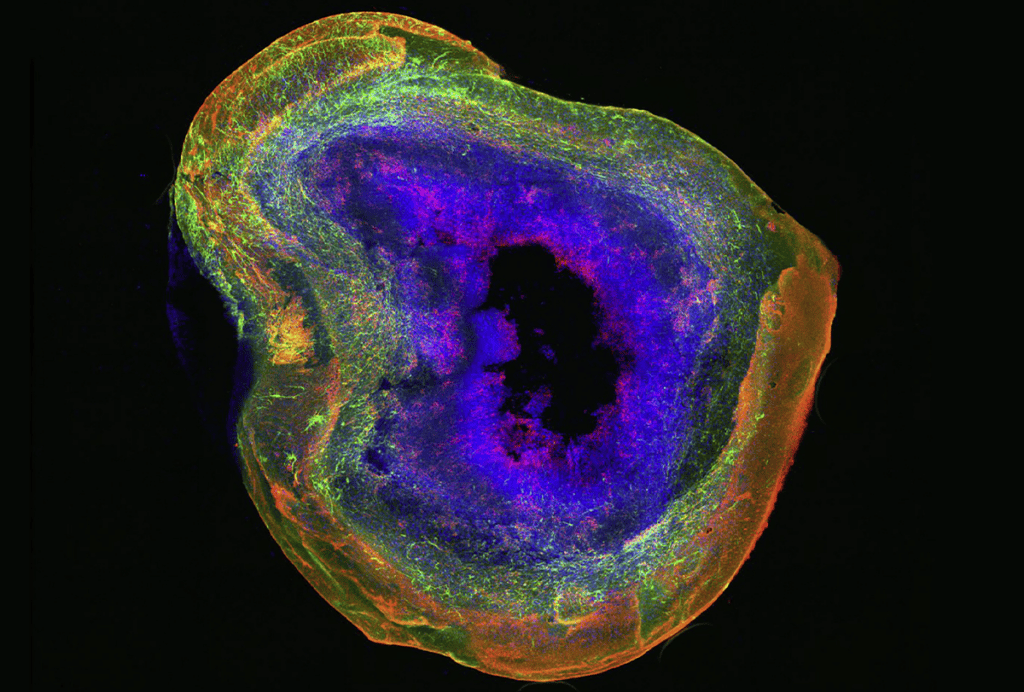
Human brain organoids come of age—but still have room to grow
The U.S. government has touted organoids as an alternative to animals for studying the brain. The model has improved since its debut in 2013, but scientists are still working to overcome key limitations: immaturity, consistency and the lack of vascularization.
Human brain organoids come of age—but still have room to grow
The U.S. government has touted organoids as an alternative to animals for studying the brain. The model has improved since its debut in 2013, but scientists are still working to overcome key limitations: immaturity, consistency and the lack of vascularization.
Finding neuroheterogeneity’s sweet spot
Once thought to be detrimental to memory processing, neuronal diversity—at the right ‘Goldilocks’ dose—is a new boon to theoretical neuroscience.
Finding neuroheterogeneity’s sweet spot
Once thought to be detrimental to memory processing, neuronal diversity—at the right ‘Goldilocks’ dose—is a new boon to theoretical neuroscience.