Deep brain stimulation
Recent articles
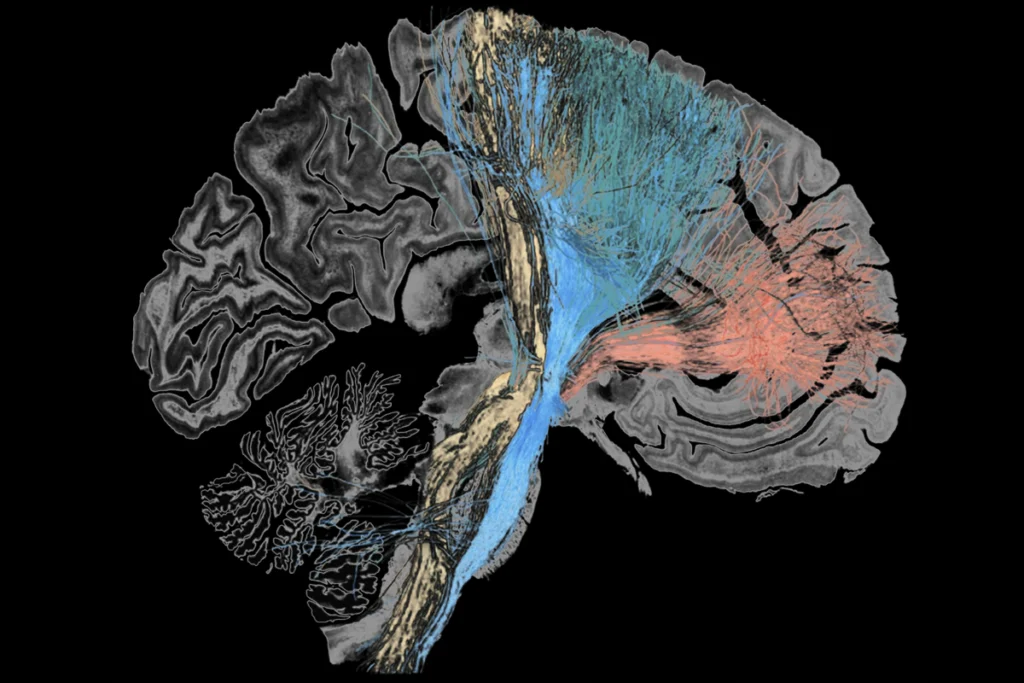
Drafting a ‘dysfunctome’: Faulty connections to subthalamic nucleus characterize disparate brain disorders
Different circuits between the millimeters-wide structure and the cortex go awry in Tourette syndrome, obsessive-compulsive disorder, dystonia and Parkinson’s disease, a new study of human brain scans suggests.
Drafting a ‘dysfunctome’: Faulty connections to subthalamic nucleus characterize disparate brain disorders
Different circuits between the millimeters-wide structure and the cortex go awry in Tourette syndrome, obsessive-compulsive disorder, dystonia and Parkinson’s disease, a new study of human brain scans suggests.
Explore more from The Transmitter
Govern neurodata by how it’s used, not where it’s from
New neurodata laws will shape how researchers gather, share and reuse brain data. A use-based governance protects basic researchers and those whose data are being used, without freezing science.
Govern neurodata by how it’s used, not where it’s from
New neurodata laws will shape how researchers gather, share and reuse brain data. A use-based governance protects basic researchers and those whose data are being used, without freezing science.
How new technologies can bring primatologists and systems neuroscientists together
The two groups study the same behavioral phenomena yet rarely interact or read each other's work—a mutual blind spot that weakens both fields. New technologies offer a chance to bring them together.
How new technologies can bring primatologists and systems neuroscientists together
The two groups study the same behavioral phenomena yet rarely interact or read each other's work—a mutual blind spot that weakens both fields. New technologies offer a chance to bring them together.

Creating community through grant support
Fiona Sanderson, a senior program manager at the Brain Canada Foundation, shares how she got into grant administration and how she helps connect researchers with funding and one another.
Creating community through grant support
Fiona Sanderson, a senior program manager at the Brain Canada Foundation, shares how she got into grant administration and how she helps connect researchers with funding and one another.