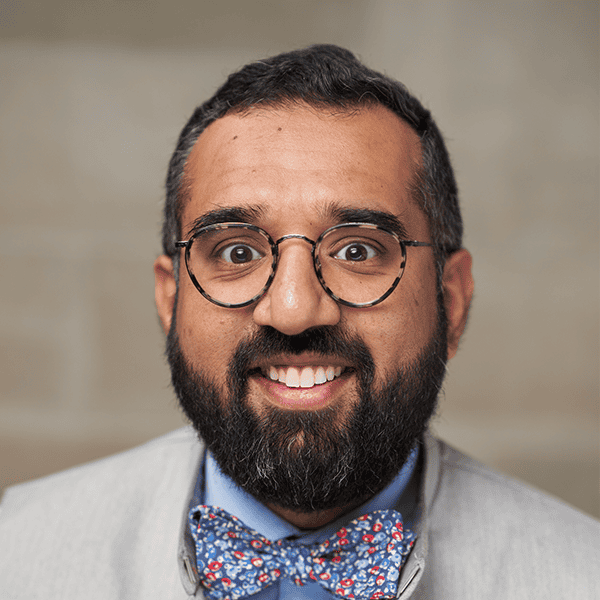
Jibran Khokhar is Canada Research Chair in Translational Neuropsychopharmacology and associate professor of anatomy and cell biology at the Schulich School of Medicine and Dentistry at the University of Western Ontario, where he also serves as associate chair of research. His lab studies the neurobiology of co-occurring substance use and mental illness, working to untangle the “chicken-or-egg” relationship between drug use—with an emphasis on cannabis, nicotine and alcohol—and psychiatric disorders such as schizophrenia. Combining preclinical models, multimodal neuroimaging, behavioral pharmacology and genetics, his group asks how adolescent exposure to drugs shapes the developing brain, and how substance use and mental illness reinforce each other. He is also a prominent advocate for open and reproducible science, and his lab develops open-source tools for behavioral neuroscience.
Khokhar earned his doctorate in pharmacology and toxicology at the University of Toronto in 2012, under Rachel Tyndale, following an honours B.S. in life sciences at Queen’s University. He completed postdoctoral training in psychiatry at the Geisel School of Medicine at Dartmouth College with Alan Green, and held a faculty position at the University of Guelph before moving to the University of Western Ontario.
His work has been recognized with the Canadian College of Neuropsychopharmacology Early-Career Investigator Award, the College on Problems of Drug Dependence Joseph Cochin Young Investigator Award, the International Cannabinoid Research Society William Devane Early-Career Investigator Award, the Society for Social Neuroscience Open and Reproducible Science Prize and an Ontario Early Researcher Award.