LISTEN TO THIS STORY:
0:00
/
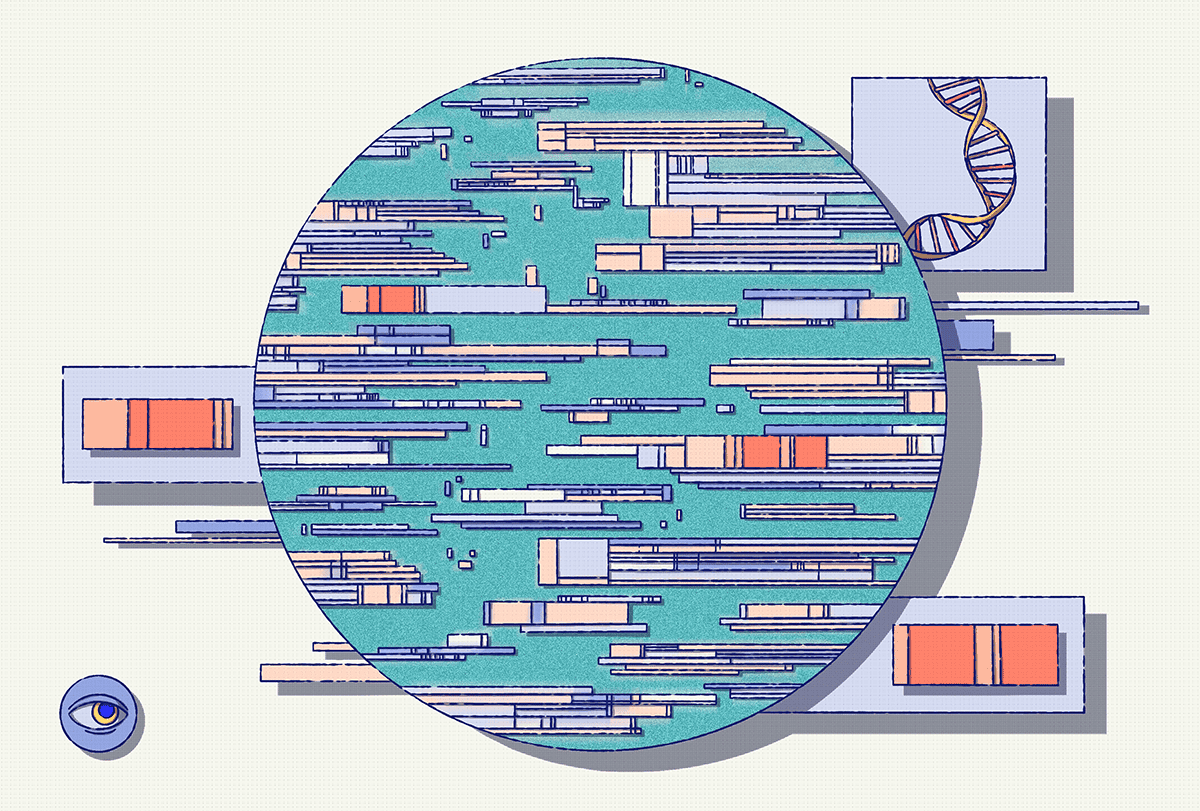
A 2011 Nature study found that loss of a nicotinic receptor subunit leads to increased nicotine intake in mice. The work set the standard for how to functionally validate genetic association study findings in neuroscience.
Answers have been edited for length and clarity.
What paper changed your life?
Habenular alpha-5 nicotinic receptor subunit signalling controls nicotine intake. Fowler C.D., Lu Q., Johnson P.M., Marks M.J., Kenny P.J. Nature (2011)
This paper provided one of the clearest demonstrations of how researchers can use genome-wide association studies (GWAS) to pinpoint genetic risk signals and better understand causal neurobiological mechanisms.
In 2008, CHRNA5, a gene that encodes the alpha-5 nicotinic receptor subunit, started popping up in a few GWAS that were searching for genes linked to nicotine dependence and smoking. But these studies could only tell us that a particular genetic variant was associated with smoking. They could not tell us whether CHRNA5 was actually causing differences in nicotine intake, or how it might do so in the brain.
That’s where mice come in. Christie Fowler and her colleagues took this human genetic finding and asked a much more fundamental question: What happens if you remove the mouse homolog of CHRNA5? They found that mice lacking the alpha-5 nicotinic receptor subunit consumed dramatically more nicotine and, unlike normal mice, failed to titrate their intake as the available nicotine dose increased.
They then went even further, showing that restoring CHRNA5 specifically in the medial habenula could rescue the phenotype and identifying the habenulo-interpeduncular pathway as the circuit that generates an aversive signal to limit nicotine consumption. By restoring gene expression in this specific circuit, they were able to rescue the phenotype—to stop animals from self-administering nicotine ad infinitum—establishing a direct gene-to-circuit-to-behavior link.
This work was transformative for addiction neuroscience because it moved beyond correlation and identified a concrete mechanism through which genetic risk influences drug-taking behavior. More broadly, it set a standard for how to functionally validate GWAS findings in neuroscience.
When did you first encounter this paper? What were you working on at the time?
I first read this paper as a Ph.D. student when it was published in 2011—and presented it to my lab in a journal club. At the time, I was studying the effects of nicotine on metabolism in the brain and thinking about how pharmacological processes influence addiction-related behaviors. I was also trying to understand how individual differences in vulnerability emerge. This paper provided a completely different approach than what I had been exposed to. Rather than starting with the effects of nicotine on the brain and resulting behavior, Fowler and her colleagues started with a human genetic association and worked in the opposite direction, from a genetic variant to a specific gene, then to a brain circuit, and, ultimately, to behavior. That idea of connecting human genetic variation to a causal neurobiological mechanism was completely new to me, and it fundamentally changed how I think about approaching questions in addiction neuroscience to this day.
Why is this paper meaningful to you?
This paper captured something that felt almost impossible at the time. GWAS produce many signals, and finding one that is biologically meaningful can feel like searching for a needle in a haystack. This study showed what it looks like when you find that signal and use it to uncover a biological truth. It made the idea of genetic risk concrete by linking it to a specific receptor, circuit and behavioral outcome.
How did this research change how you think about neuroscience and influence your scientific trajectory?
This research fundamentally changed how I think about bridging levels of analysis in neuroscience. It showed that it is possible to connect genes to circuits to behavior in a rigorous and causal way. When I first read it, I remember thinking that I wanted to do the same kind of work someday. That idea has directly influenced my lab’s approach, especially in our efforts to take GWAS hits related to cannabis use, such as CADM2, and identify their underlying neurobiological mechanisms. In many ways, this paper helped define the kind of science I currently pursue as an independent investigator.
Is there an underappreciated aspect of this paper you think other neuroscientists should know about?
One underappreciated aspect is how forward-thinking the study was. For a long time, I thought that the authors initiated this study based on the initial GWAS findings (between 2008 and 2010). I later learned that much of the experimental work had already been completed when the key human genetic associations emerged. I found this out in 2023, when I had dinner with Paul Kenny and Christie Fowler after Paul gave the plenary lecture at the Society for Research on Nicotine and Tobacco meeting.
They told me that their work on alpha-5 nicotinic receptors and the habenulo-interpeduncular pathway had already been underway, based on their understanding of the basic biology of nicotinic acetylcholine receptors and the availability of transgenic animals in which they could manipulate the alpha-5 receptor subunit. In other words, they were not simply starting with a GWAS hit and designing an experiment to test it. Rather, they had developed the experimental systems and biological understanding that allowed them to recognize the significance of the GWAS findings when they emerged.
This paper also highlights that successful interpretation of GWAS findings often depends on having the right experimental systems in place, in this case transgenic animals, targeted manipulation of gene expression and a strong understanding of the underlying nicotinic acetylcholine receptor biology and the habenulo-interpeduncular circuit.
What new progress has been made since this paper was published?
Since this study, there has been a growing emphasis on functionally validating GWAS hits across neuroscience. Advances in genetic tools, circuit manipulation and multi-omics approaches have made it more feasible to move from association to mechanism.
At the same time, the number of GWAS findings has increased dramatically, making it even more important to identify which signals are biologically meaningful. Despite this progress, relatively few studies achieve the same level of mechanistic clarity. This is why the paper remains influential and continues to inspire efforts, including in my own lab, to translate genetic findings into actionable neurobiology.