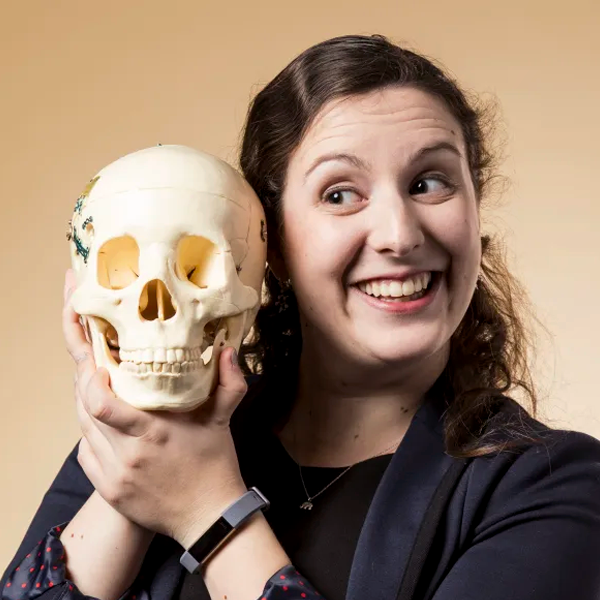
Kaitlyn Casimo.

Kaitlyn Casimo

Manager of the Education and Engagement Program
Allen Institute

Kaitlyn Casimo created and leads the Education and Engagement Program at the Allen Institute. The program uses the Allen Institute’s open-science resources and cutting-edge research to engage with educational, scientific and public communities. As part of this work, she is the principal investigator on a National Science Foundation Improving Undergraduate STEM Education award and a National Institutes of Health U24 dissemination award. In addition to her own work in science education and communication, she also trains and coaches scientists in effective science communication informed by theater approaches. 

Casimo earned her B.A. in neuroscience with minors in psychology and theater at Pomona College; her Ph.D. in neuroscience at the University of Washington, where she also received certificates in neural computation and engineering, and in science, technology and society studies; and her M.Ed. in instructional design at Western Governors University.

Explore more from The Transmitter

Speech bubbles progress from light- to dark- colored.

Amid funding uncertainty, neuroscientists report a mix of cynicism, persistence

Two years into one of the most tumultuous tenures in U.S. federal funding, researchers outline how they are coping with ongoing changes and reflect on the impact these changes are having on the system more broadly.

By Emily Singer
28 August 2026 | 5 min read
Stages of neurodegeneration: Neurofibrillary tangles at different stages of neurodegeneration are labeled with phosphorylated tau antibodies (green and blue).

Reimagining Mexico’s brain bank

Since Alzheimer’s disease researcher José Luna-Muñoz assumed leadership of the facility—Latin America’s oldest—in 2011, he has been acquiring additional tissue types and is working to expand donor recruitment to rural areas.

By Alejandra Manjarrez
28 August 2026 | 7 min read

Revealing how crabs make their escape

Houdini-like Neohelice granulata offers a rare opportunity to record intracellularly from awake, behaving animals.

By Natalia Mesa
28 August 2026 | 0 min watch