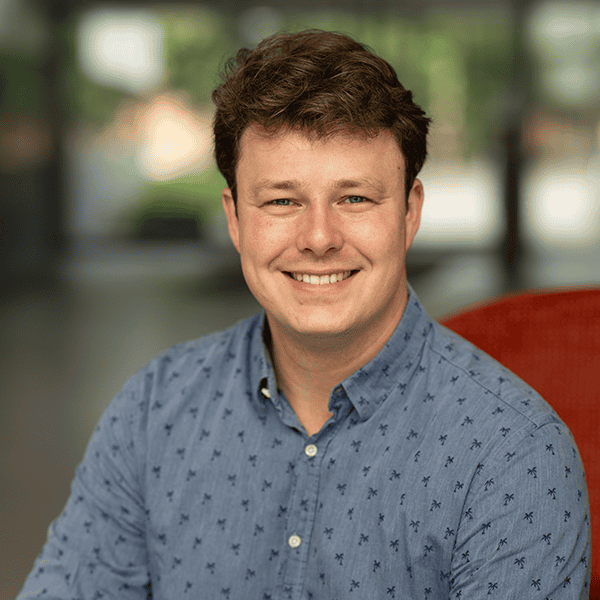
Maxime Beau is a postdoctoral researcher in Carlos Brody’s lab at the Princeton Neuroscience Institute. He is interested in how circuits distributed across the brain implement attention control: how they select the information relevant to the task at hand and turn it into a decision. To watch this happen, he records from up to eight Neuropixels probes at once in freely moving rats, pairs these recordings with optogenetic and pharmacological perturbations, and interprets the data through dynamical systems models of inter-area communication. He believes theory and experiments progress fastest when developed together by the same people. Beau is an open-science advocate: He builds open-source software to analyze large-scale neuronal data (NeuroPyxels, PixelMap) and co-founded the Princeton Neuroscience Institute Open Science Awards.
Beau trained in medicine and neuroscience in Paris, through an M.D.-Ph.D. program shared between the Université Paris Descartes, the Université Pierre et Marie Curie and the École Normale Supérieure, where he worked with Boris Barbour. He earned his Ph.D. at University College London in 2025, in Michael Häusser’s lab, where he used high-density electrophysiology to study how the cerebellum’s output pathway transmits information in behaving mice and investigated reward signals in the cerebellum’s teaching pathway. He also led a collaboration among five labs that developed a deep-learning method to predict neuron types from their electrical signatures. This method lets cerebellar physiologists identify five cell types in the same recordings without genetic tools, in rodents and primates, which opens the way to deciphering their respective computational roles. For his doctoral work, Beau received University College London’s Jon Driver Prize in 2024. He joined the Brody Lab in 2025 and teaches in several experimental and computational research training courses, including the “Methods in Computational Neuroscience” course at the Marine Biological Laboratory in Woods Hole, Massachusetts.