The gene UBE3A, the loss of which is known to cause Angelman syndrome, codes for an enzyme that tags proteins for degradation. The failure to break down one particular substrate, asparagine synthetase (ASNS), activates stress pathways and leads to reduced protein synthesis in neurons, according to new findings.
This work helps to parse the mechanisms underlying Angelman syndrome, says Rebecca Burdine, professor of molecular biology at Princeton University and chair of the science advisory committee for the Angelman Syndrome Foundation, who was not involved in the study. The syndrome is characterized by epilepsy, developmental delays, intellectual disabilities and, in some cases, autism.
Over the past 20 years, multiple labs have tried to figure out the downstream consequences of UBE3A loss, but it has been difficult because an enzyme’s interactions with its substrates can be fleeting, Burdine says. Addressing UBE3A loss directly requires complex interventions such as gene therapy, so it’s important to find other ways to intervene, she adds. “It’s not like you’re going to take a pill and UBE3A is going to reappear, but if there’s a substrate that maybe there’s too much or too little of, that starts to get into the realm of a tractable problem.”
U
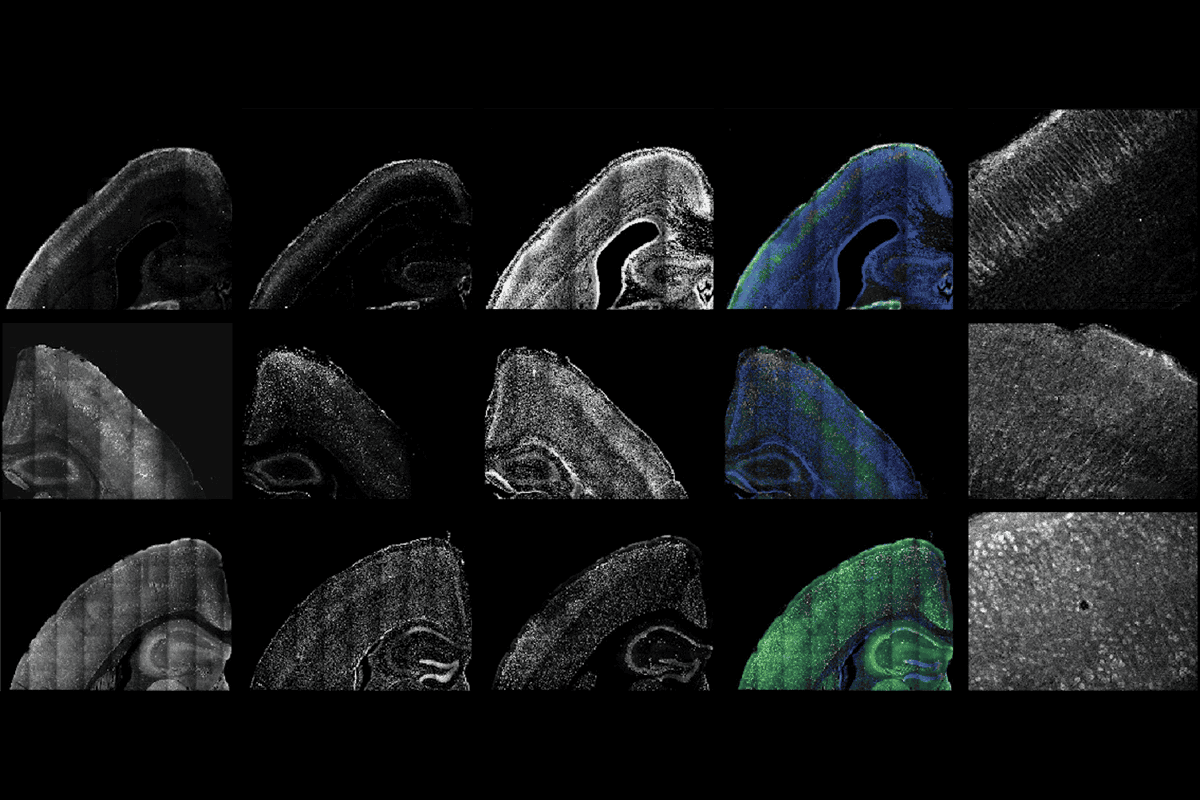
BE3A has more than 50 substrates. ASNS, which synthesizes the amino acid asparagine, emerged as a top substrate in a variety of biochemical assays in the study. It binds to UBE3A in human embryonic kidney cells, the study shows, and when UBE3A was knocked out, ASNS did not get tagged for degradation.Despite normally being found across cells of various tissue types, ASNS was expressed primarily in neurons in mouse brains. “We were very surprised to see that,” says study investigator Jason Yi, assistant professor of neuroscience at Washington University in St. Louis.
A mouse model of Angelman syndrome has elevated levels of ASNS, Yi’s team found. When ASNS fails to be degraded, asparagine builds up, along with other amino acids, including phenylalanine, glycine and proline, in the neurons of Angelman mice. This excess of amino acids triggers the integrated stress response pathway and halts the production of neuronal proteins, the researchers found. The work was published last month in Nature.
New protein synthesis rates in Angelman mice were four to five times slower than in wildtype mice, leading to reduced brain mass and sparser neuronal packing.
Knocking out ASNS in Angelman mice improved the rate of protein synthesis and some of their traits, such as adult obesity, sustained hind-limb clasping and lack of movement in the open field test. The animals’ poor motor coordination and aberrant sleep patterns did not improve, though.
“While there are many UBE3A substrates, this one seems to be fairly important in contributing to many, but not all, of the symptoms that are associated with Angelman syndrome,” says Mark Zylka, professor of cell biology and physiology at the University of North Carolina at Chapel Hill. Zylka was not involved in this study, but Yi collected some of the data while he was a postdoctoral researcher in Zylka’s lab.
The complexity of the pathways downstream of UBE3A loss, and the fact that knocking out ASNS did not improve every Angelman syndrome symptom in mice, makes unlikely that targeting only one substrate will resolve all, says Lawrence Reiter, professor of physiology at Tulane University School of Medicine, who was not involved in the study.
Yi says that when he started his laboratory, he got advice to not continue studying UBE3A because it was already possible to replace the paternal copy responsible for Angelman syndrome, using gene therapies. But even so, therapeutic progress has been a rocky road.
“I think a study like this one says that we still have other things we’re going to explore,” Burdine says. “We’re not going to give this up. We’re going to figure this out.”