Large language models
Recent articles
How artificial agents can help us understand social recognition
Neuroscience is chasing the complexity of social behavior, yet we have not answered the simplest question in the chain: How does a brain know “who is who”? Emerging multi-agent artificial intelligence may help accelerate our understanding of this fundamental computation.
How artificial agents can help us understand social recognition
Neuroscience is chasing the complexity of social behavior, yet we have not answered the simplest question in the chain: How does a brain know “who is who”? Emerging multi-agent artificial intelligence may help accelerate our understanding of this fundamental computation.

The BabyLM Challenge: In search of more efficient learning algorithms, researchers look to infants
A competition that trains language models on relatively small datasets of words, closer in size to what a child hears up to age 13, seeks solutions to some of the major challenges of today’s large language models.
The BabyLM Challenge: In search of more efficient learning algorithms, researchers look to infants
A competition that trains language models on relatively small datasets of words, closer in size to what a child hears up to age 13, seeks solutions to some of the major challenges of today’s large language models.
‘Digital humans’ in a virtual world
By combining large language models with modular cognitive control architecture, Robert Yang and his collaborators have built agents that are capable of grounded reasoning at a linguistic level. Striking collective behaviors have emerged.
‘Digital humans’ in a virtual world
By combining large language models with modular cognitive control architecture, Robert Yang and his collaborators have built agents that are capable of grounded reasoning at a linguistic level. Striking collective behaviors have emerged.
Are brains and AI converging?—an excerpt from ‘ChatGPT and the Future of AI: The Deep Language Revolution’
In his new book, to be published next week, computational neuroscience pioneer Terrence Sejnowski tackles debates about AI’s capacity to mirror cognitive processes.
Are brains and AI converging?—an excerpt from ‘ChatGPT and the Future of AI: The Deep Language Revolution’
In his new book, to be published next week, computational neuroscience pioneer Terrence Sejnowski tackles debates about AI’s capacity to mirror cognitive processes.
Explore more from The Transmitter
U.S. national primate research centers face an uncertain future
The facilities were meant to last 100 years. Four decades shy of that mark, amid flatlined funds and mounting political pressure, their directors are trying to find a path forward.
U.S. national primate research centers face an uncertain future
The facilities were meant to last 100 years. Four decades shy of that mark, amid flatlined funds and mounting political pressure, their directors are trying to find a path forward.
What if nonhuman primate research goes away?
As the U.S. government takes steps to stop using nonhuman primates in research, The Transmitter investigates what that shift could mean for neuroscience.
What if nonhuman primate research goes away?
As the U.S. government takes steps to stop using nonhuman primates in research, The Transmitter investigates what that shift could mean for neuroscience.
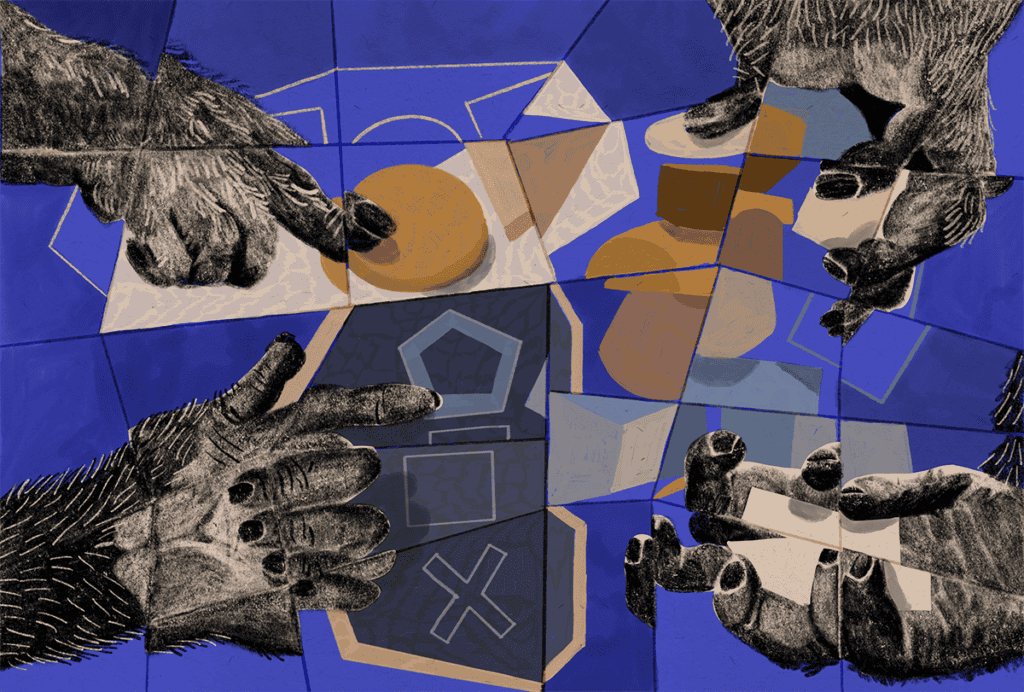
The neuroscience questions that need nonhuman primates
The Transmitter asked 17 neuroscientists what questions might remain unanswered if support for nonhuman primate research continues to decline.
The neuroscience questions that need nonhuman primates
The Transmitter asked 17 neuroscientists what questions might remain unanswered if support for nonhuman primate research continues to decline.