Leptin
Recent articles
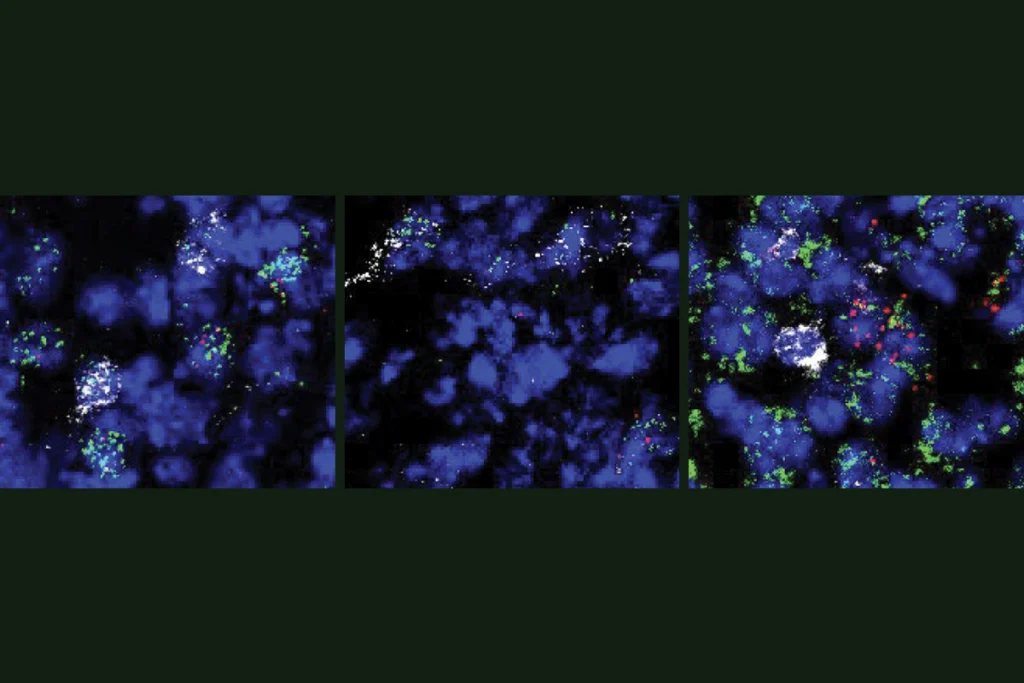
Novel neurons upend ‘yin-yang’ model of hunger, satiety in brain
The new type of leptin-sensitive cells curb hunger quickly—adding to an increasingly complex picture of brain circuits that control feeding behaviors.
Novel neurons upend ‘yin-yang’ model of hunger, satiety in brain
The new type of leptin-sensitive cells curb hunger quickly—adding to an increasingly complex picture of brain circuits that control feeding behaviors.
Explore more from The Transmitter
Is it time for neuroscience to shift its focus from a computational mind to a navigating mind?
Andrea Hiott explains her navigational approach to the mind, and why now is the time to embrace seemingly paradoxical findings in neuroscience.
Is it time for neuroscience to shift its focus from a computational mind to a navigating mind?
Andrea Hiott explains her navigational approach to the mind, and why now is the time to embrace seemingly paradoxical findings in neuroscience.
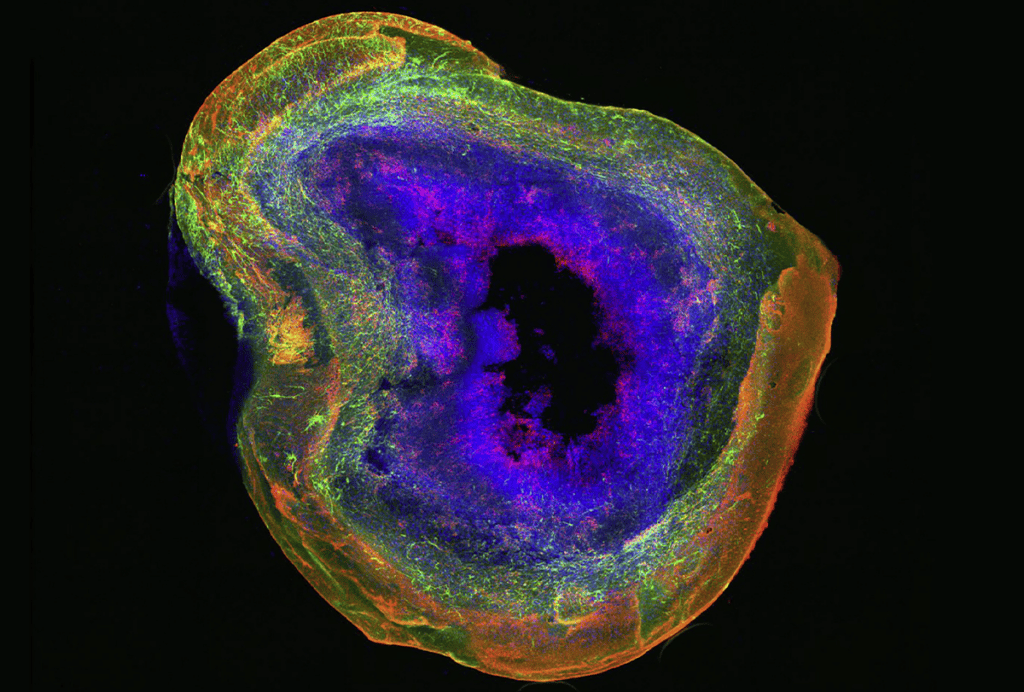
Human brain organoids come of age—but still have room to grow
The U.S. government has touted organoids as an alternative to animals for studying the brain. The model has improved since its debut in 2013, but scientists are still working to overcome key limitations: immaturity, consistency and the lack of vascularization.
Human brain organoids come of age—but still have room to grow
The U.S. government has touted organoids as an alternative to animals for studying the brain. The model has improved since its debut in 2013, but scientists are still working to overcome key limitations: immaturity, consistency and the lack of vascularization.
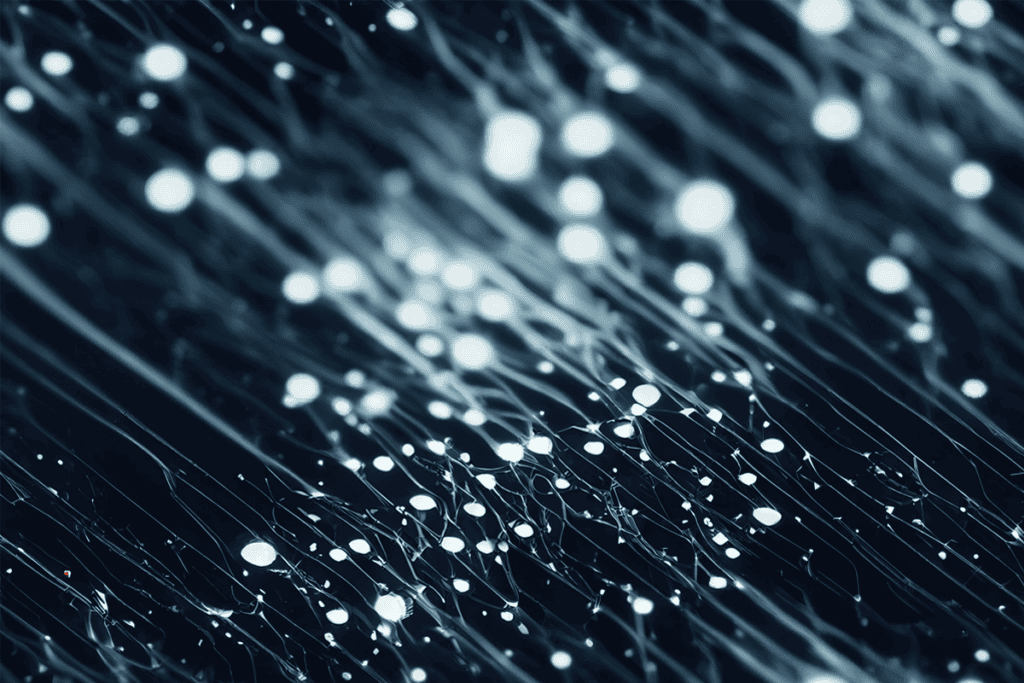
Finding neuroheterogeneity’s sweet spot
Once thought to be detrimental to memory processing, neuronal diversity—at the right ‘Goldilocks’ dose—is a new boon to theoretical neuroscience.
Finding neuroheterogeneity’s sweet spot
Once thought to be detrimental to memory processing, neuronal diversity—at the right ‘Goldilocks’ dose—is a new boon to theoretical neuroscience.