LISTEN TO THIS STORY:
0:00
/
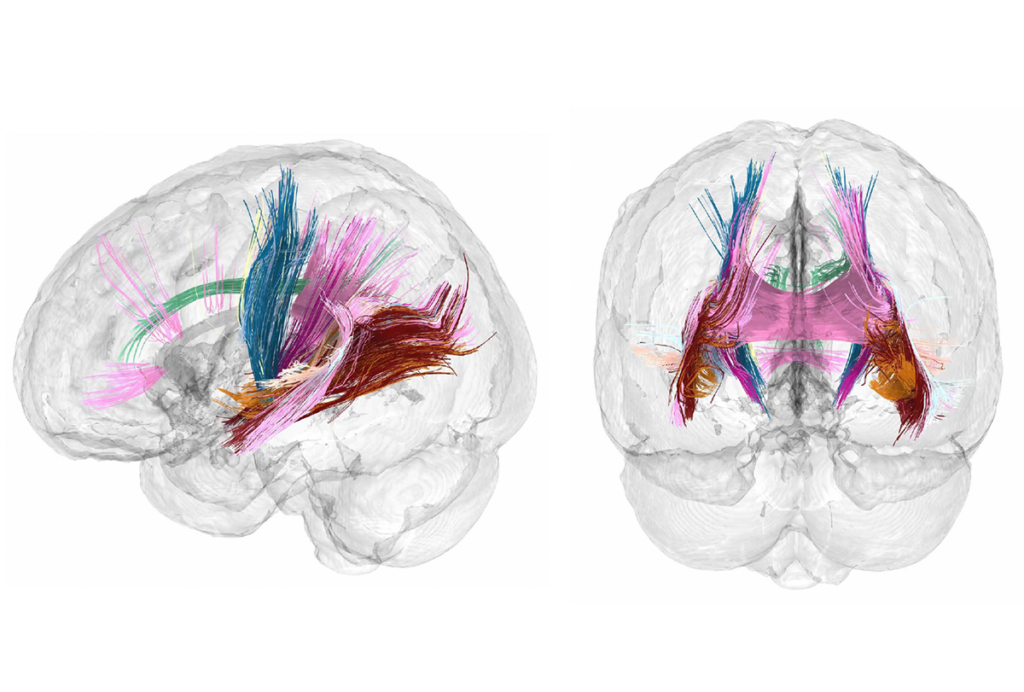
The findings add to a small but growing body of research on neurological changes linked to pregnancy, birth and parenting.
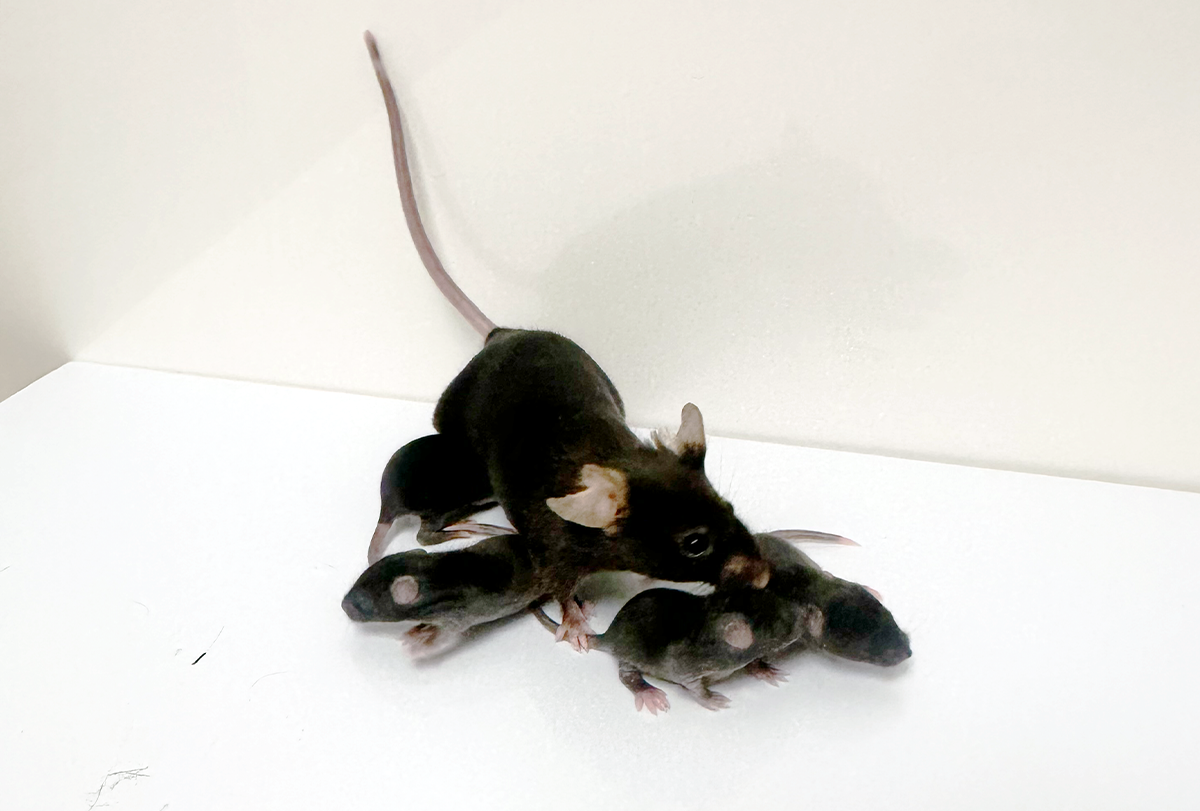
Motherhood creates a broad swath of long-term gene-expression changes in the brains of mice, according to a new study. This is accomplished by dopamine attaching to the histones of neuronal DNA and regulating gene expression, particularly in the hippocampus.
The findings suggest that “pregnancy fundamentally changes the body and brain,” says study investigator Jennifer O’Chan, instructor in neuroscience at the Icahn School of Medicine at Mount Sinai. “And these are long-lasting effects.”
Similar patterns of gene regulation appeared in postmortem samples from five women of varying ages who had all given birth in their past, O’Chan and her colleagues found. The work thus adds to a small but growing body of research on neurological changes linked to pregnancy, birth and parenting.
“The maternal brain is woefully understudied, and so the molecular profiling that they do … it’s really an enormous resource,” says Catherine Peña, assistant professor of neuroscience at Princeton University, who was not involved with the paper.
O
f 11 brain regions linked to maternal behaviors in mice that the group studied, the dorsal hippocampus and associated subiculum—together called the dorsal hippocampal formation—exhibited the greatest differences in gene expression between virgin mice and those that experienced the full spectrum of motherhood, from mating to weaning. This region doesn’t usually top the list of brain areas linked with maternity, says Robert Froemke, professor of neuroscience at New York University Langone Health, who wasn’t involved in the study. But hippocampal functions such as temporal sequencing and synthesizing different memory streams could certainly apply to pup-rearing, he says. “It’s not a total surprise, but it’s fair to say this paper makes me consider its importance more strongly.”Spatial learning, another canonical hippocampal function, is a key skill for a new mother mouse, O’Chan says. They must find a safe place to nest, navigate to collect resources and evade predators.
Indeed, in a contextual fear-conditioning experiment, the seven maternally experienced mice were better at learning and remembering the location where they had received a series of mild foot shocks the day before, freezing about 75 percent of the time compared with 50 percent for 10 virgin mice. This difference persisted even four months after the pups had been weaned and removed from the dams’ cages. Additional tests confirmed the differences were related to spatial learning and not anxiety.
This neural plasticity in the face of the natural stressors of pregnancy, birth, lactation and pup care appears to be adaptive, but during such times of neural remodeling, the brain can also be vulnerable to negative experiences, noted Frances Champagne, professor of psychology at the University of Texas at Austin, in a commentary accompanying the paper.
Dams that experienced negative stressors—being provided with just one-third of the normal amount of nesting material and having their pups removed for a few hours each day—showed gene-expression profiles more like those of virgin females, and they lost the learning and memory benefits in the foot-shock test. In other words, the extra stress prevented or unwound the motherhood-induced changes at both the behavioral and genetic levels.
T
he neurons most altered in the added-stress mothers also expressed more receptors for dopamine, a neurotransmitter already linked to maternal behaviors, than did the same cells in low-stress mothers.But dopamine has a second job: It can be hooked onto DNA’s histones, where it acts epigenetically to regulate gene expression. Sure enough, this “dopaminylation” was higher in the dorsal hippocampal regions of the stressed mothers, as well as in virgin mice, than in mothers that had been provided with a comfortable postpartum experience.
When the researchers experimentally manipulated the animals’ levels of dopamine or histone dopaminylation, their contextual fear-conditioning responses trended in the same direction as in previous experiments, with lower dopamine linked to mother-like advanced cognition. The researchers concluded that motherhood diminishes dopamine labeling of chromatin, which then alters expression of several genes across the dorsal hippocampus and subiculum, boosting learning and memory as a result. The findings were published in May in Nature.
Histones and epigenetic tags are quite stable, so the epigenetic mechanism of the maternal transition “definitely explains why it is such a long-lasting thing,” says Dayu Lin, professor of psychiatry and neuroscience at NYU Langone Health, who wasn’t involved in the study.
Lin says she was surprised at the strength of the effect of dopamine alone. Indeed, O’Chan says that although it’s a “key mediator,” it’s hardly the only maternal manager. Other signals and hormones, such as oxytocin and estrogen, also contribute. “I think they all work together,” she says.
The researchers also tested whether similar genetic patterns might exist in human mothers; neuroimaging studies have already found structural differences in the brains of women that persist for years after giving birth. The team analyzed gene expression and histone dopamine profiles in the dorsal subiculum of postmortem brain samples from eight women who had given birth once, twice or never.
The history of the brains didn’t include how long ago each woman had given birth, however, so the researchers couldn’t analyze whether the brain changes induced by motherhood dissipated over time. Still, the patterns of gene expression and dopamine tagging in the human mothers’ brains lined up nicely with the mouse dam profiles.
The finding of similarities between human and mouse gene regulation “tells us that mice are good models for understanding this particular neurobiology,” Peña notes. And the neural consequences of maternity—mouse and human—are worth understanding, O’Chan says, given that it’s a change “that is able to be experienced by 50 percent of the population.”