Coding
Recent articles

How to collaborate with AI
To make the best use of LLMs in research, turn your scientific question into a set of concrete, checkable proposals, wire up an automatic scoring loop, and let the AI iterate.
How to collaborate with AI
To make the best use of LLMs in research, turn your scientific question into a set of concrete, checkable proposals, wire up an automatic scoring loop, and let the AI iterate.
AI-assisted coding: 10 simple rules to maintain scientific rigor
These guidelines can help researchers ensure the integrity of their work while accelerating progress on important scientific questions.
AI-assisted coding: 10 simple rules to maintain scientific rigor
These guidelines can help researchers ensure the integrity of their work while accelerating progress on important scientific questions.
Should neuroscientists ‘vibe code’?
Researchers are developing software entirely through natural language conversations with advanced large language models. The trend is transforming how research gets done—but it also presents new challenges for evaluating the outcomes.
Should neuroscientists ‘vibe code’?
Researchers are developing software entirely through natural language conversations with advanced large language models. The trend is transforming how research gets done—but it also presents new challenges for evaluating the outcomes.
Explore more from The Transmitter
U.S. national primate research centers face an uncertain future
The facilities were meant to last 100 years. Four decades shy of that mark, amid flatlined funds and mounting political pressure, their directors are trying to find a path forward.
U.S. national primate research centers face an uncertain future
The facilities were meant to last 100 years. Four decades shy of that mark, amid flatlined funds and mounting political pressure, their directors are trying to find a path forward.
What if nonhuman primate research goes away?
As the U.S. government takes steps to stop using nonhuman primates in research, The Transmitter investigates what that shift could mean for neuroscience.
What if nonhuman primate research goes away?
As the U.S. government takes steps to stop using nonhuman primates in research, The Transmitter investigates what that shift could mean for neuroscience.
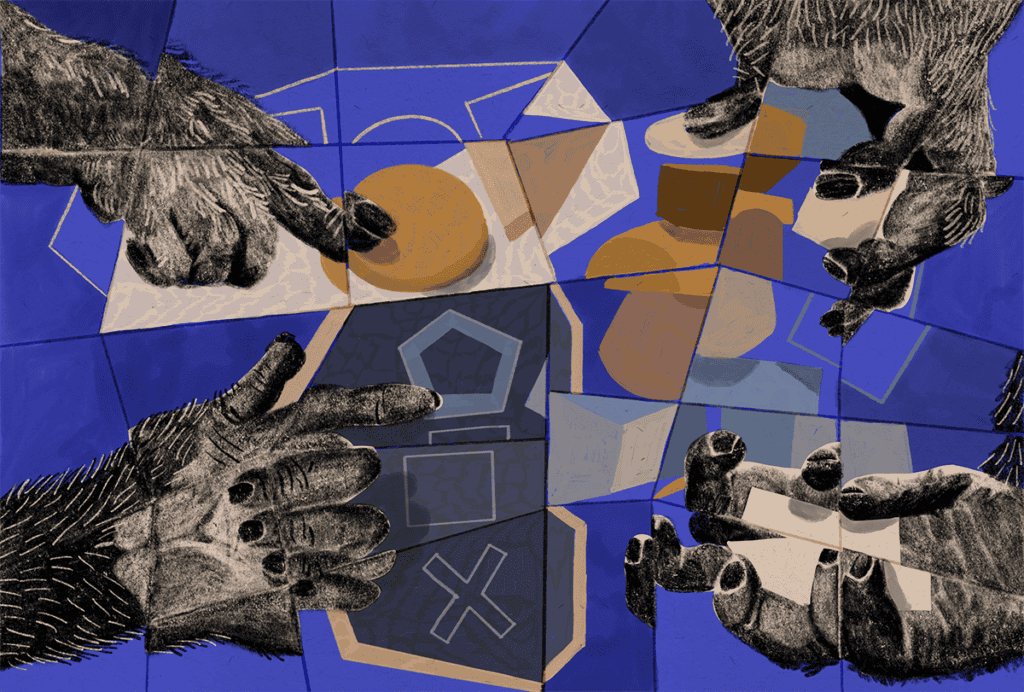
The neuroscience questions that need nonhuman primates
The Transmitter asked 17 neuroscientists what questions might remain unanswered if support for nonhuman primate research continues to decline.
The neuroscience questions that need nonhuman primates
The Transmitter asked 17 neuroscientists what questions might remain unanswered if support for nonhuman primate research continues to decline.